Facebook
 Google
 GitHub
 Linkedin
Sun and Nuclear Queens: 4 Women Who Pioneered Energy Solutions
During Women’s History Month, EEPower highlights Lise Meitner, Chien-Shiung Wu, Leona Woods, and Maria Telkes for their significant contributions to energy science.
Energy research and engineering were male-dominated fields in the early 20th century, but that didn’t stop four notable women determined to learn more about physics and apply their knowledge in practical ways.
In honor of Women’s History Month, EEPower salutes Lise Meitner, Chien-Shiung Wu, Leona Woods, and Maria Telkes for their significant contributions to energy science.
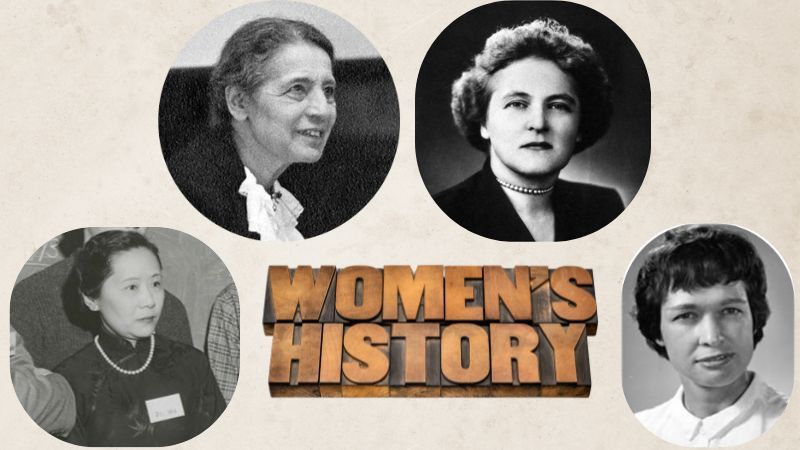
Physicists (clockwise from top) Lise Meitner, Maria Telkes, Leona Woods, Chien-Shiung Wu. Adapted from images used courtesy of Environmental Protection Agency, U.S. Patent and Trademark Office, National Park Service, and Brookhaven National Laboratory
1. Lise Meitner, Nuclear Fission
Physicist Lise Meitner (1878-1968) discovered nuclear fission and gave the process its name.
How did Meitner discover nuclear fission? Video used courtesy of OpenMind
In 1938, Meitner worked in a German laboratory with her nephew, Otto Hahn. The researchers hypothesized that hitting an atom's nucleus with neutrons would create an element with a heavier mass than uranium. However, they ended up with two lighter elements.
Meitner worked on the problem and discovered that the process split the nucleus and released energy. In a 1939 paper in Nature, Meitner and Hahn called it fission. In 1944, Hahn won the Nobel Prize for Chemistry, but Meitner was excluded.
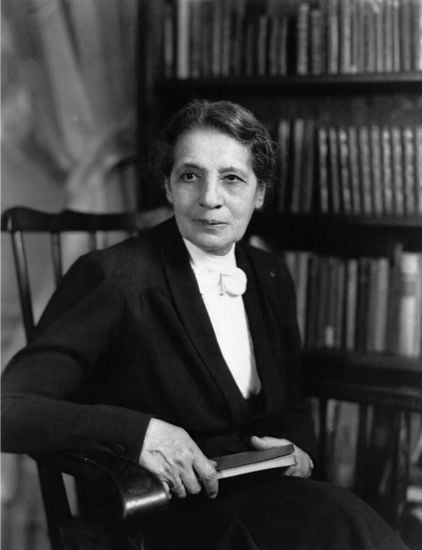
Lise Meitner in 1960. Image used courtesy of Wikimedia Commons
Meitner, who had Jewish ancestry, fled to Sweden due to Nazi prosecution. She continued to work on nuclear physics. She was nominated for Nobel Prizes 49 times but never won. She won numerous other awards, including the Enrico Fermi Award for nuclear physics in 1966.
In 1997, an element with atomic number 109 was named meitnerium in her honor.
2. Chien-Shiung Wu, Uranium Research
Chien-Shiung Wu (1912-1997) helped develop uranium 235 and 238 isotopes while working for the Manhattan Project at Columbia University.
What were Wu’s contributions to nuclear science? Video used courtesy of Brown University Department of Physics
After earning her PhD at Berkeley University in 1940, she taught physics at Princeton University and Smith College before joining the Manhattan Project in 1944. Her contributions focused on radiation detectors.
After the war, she continued to work with radiation and, in 1949, demonstrated Enrico Fermi’s theory of beta decay.
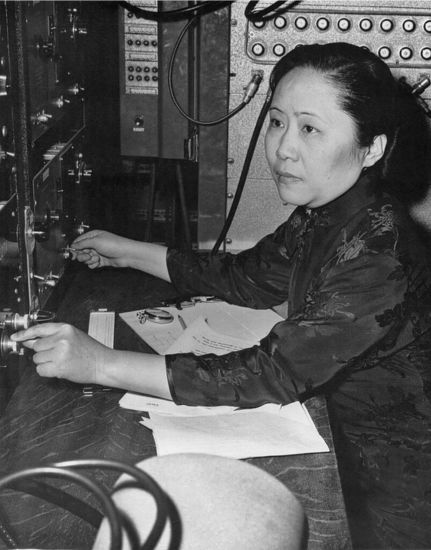
Chien-Shiung Wu in 1963. Image used courtesy of Wikimedia Commons
In the 1950s, she worked with Chinese physicists Tsung-Dao Lee and Chin Ning Yang on the law of conservation of parity. Wu’s experiment proved Lee and Yang’s theory that in weak nuclear interactions, parity is not conserved. In 1957, Lee and Yang won the Nobel Prize for Physics, but the Nobel Committee did not acknowledge Wu’s contributions.
Later, Wu improved on Geiger counters to measure nuclear radiation.
3. Leona Woods, Nuclear Reactor
In 1942, Leona Woods (1919-1986) was finishing her PhD at the University of Chicago and working with Enrico Fermi on Chicago Pile 1, the nuclear reactor that achieved the world’s first self-sustaining nuclear reaction.
Fermi’s team was part of the Manhattan Project, and Woods’ work with neutron activity and chain reactions contributed to the development of the atom bomb.
Leona Woods was the youngest and only woman on the nuclear reactor team. Video used courtesy of Lyceum
After the war, she continued working with Fermi to refine the third version of the nuclear reactor. She discovered a method for 100% spin-polarized neutron beams and measured their interactions with other components.
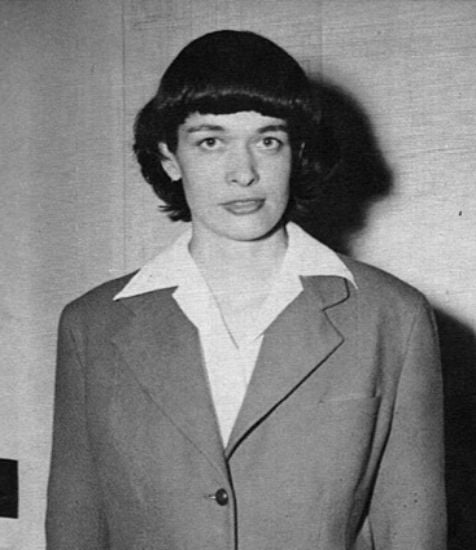
Leona Woods in 1946. Image used courtesy of Wikimedia Commons
Later, Woods worked at several universities and laboratories and published more than 200 papers on nuclear physics and other sciences. As a visiting professor at UCLA, she taught nuclear engineering, aerospace, and environmental studies. Woods used isotopes of oxygen, carbon, and deuterium to study climate patterns in tree rings. She also worked on food irradiation.
In her honor, the Brookhaven National Laboratory annually awards the Leona Woods distinguished postdoctoral lectureship award to female and minority physicists.
4. Maria Telkes, Solar Energy
Maria Telkes (1900-1995) earned the nickname “The Sun Queen” for her research into solar energy and invention of solar-powered devices. During her 13 years at MIT, Telkes created the first thermoelectric heating device using solar energy, a solar water desalination method, and a solar oven.
Why is Maria Talkes “The Sun Queen?” Video used courtesy of PBS
During World War II, the U.S. military used Tekles’ solar water desalination device to help deployed soldiers obtain clean water. The inflatable plastic device operated like a still, using the sun’s heat to evaporate and then condense the water to remove salts.
After the war, Telkes was determined to find an environmentally friendly way to heat buildings. She created a device using phase-change materials like molten salts. Solar heat initiated the phase change, melting the salts and then storing thermal energy when the salts solidified again. In 1977, she invented another solar heater using metal plates to capture the sun’s heat. The movable plates could be angled to direct the heat into the house when needed or toward the outdoors on warmer days.
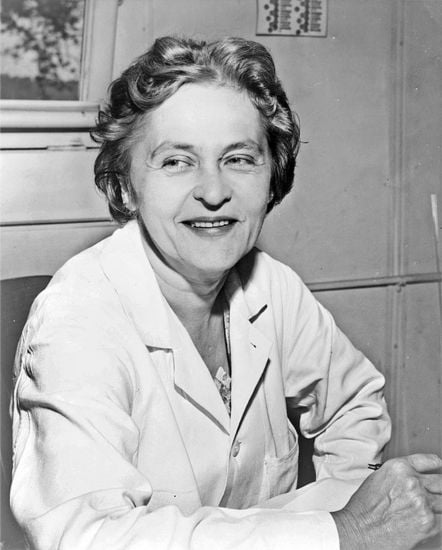
Maria Telkes in 1956. Image used courtesy of Wikimedia Commons
In 2012, Telkes was inducted into the National Inventor’s Hall of Fame.