Facebook
 Google
 GitHub
 Linkedin
Rural Renewables: Toolkit Targets Local Energy
A renewable energy toolkit answers questions and guides North East England residents wanting to develop local projects.
The North East of England is a hotbed of energy technology research and development, and a robust ecosystem has been developing for many years now. The North East Battery Alliance is working with the Faraday Institution to spearhead university-industry relationships and investments in local energy technologies. Many local universities are focusing research on energy technologies, from energy storage to energy harvesting.
At Northumbria University, economists and environmental scientists have partnered with leaders across the North East—including the National Farmers' Union, the National Trust, and industry experts—to design a renewable energy toolkit. The kit is designed to specifically address the energy challenges across the North East of England, which comprises around 2.5 million people, many living in rural communities spread over a wide area.

Dogger Bank Wind Farm under construction in North East England. Image used courtesy of Dogger Bank
Given the energy challenges in the U.K., the toolkit was put together to help protect against any medium- or long-term volatility in supply and create a more self-sufficient region based on tailored local energy solutions. Diversifying the energy supply will be key to reaching the U.K.’s net zero by 2050.
Answers to Renewable Energy Questions
The toolkit offers practical guidance for individuals and communities in the North East interested in developing local renewable energy projects. The toolkit focuses on actions to be taken at local and regional levels and prioritizes individual farms and landholdings rather than large-scale projects.
Local experts worked with university professors to design the toolkit to provide information about developing small-scale renewable energy projects to individuals and communities.
The toolkit addresses residents' main questions about renewable energy projects regarding the logistics, financing, and planning considerations for solar panels, onshore wind turbines, heat pumps, and hydropower. Some questions the toolkit addresses are:
- How can animal co-products be effectively utilized to produce electricity as an alternative to diesel? What are the requirements for implementing bioenergy solutions?
- What subsidies or financial incentives are available to support small-scale energy projects?
- How can rural projects on renewable energy also contribute to biodiversity net gain and other incentives for nature-friendly farming, such as Environmental Land Management Schemes?
- How can rural households navigate the planning process to implement renewable energy initiatives?
The toolkit considers the region’s energy needs and electricity generation alongside heat, energy efficiency, and energy storage.
Biodiversity and Net Zero
The toolkit also considers the impact on local wildlife and the local ecosystems. It aims to encourage renewable energy projects that benefit local wildlife and biodiversity.
The toolkit references an interactive Renewable Energy Planning Database map created by the Department for Energy Security and Net Zero. The map provides a snapshot of the current and planned renewable energy projects in the U.K. Toolkit designers view the map as a useful first step for evaluating local project options. The map currently identifies 99 renewable energy projects operating in the North-East region, including solar, wind, geothermal, hydro, and biomass energy projects.
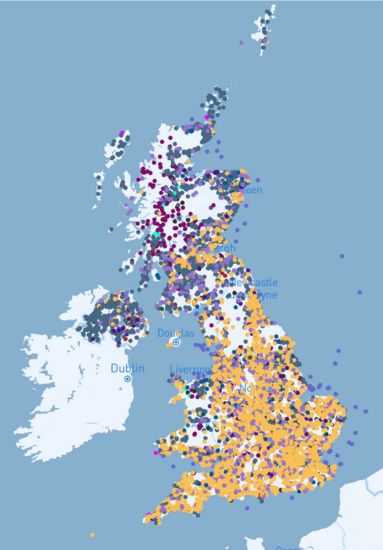
Interactive map showing renewable energy projects in the U.K. Image used courtesy of Renewable Energy Planning Database
The toolkit provides useful information for residents to help them get started on their renewable energy journey and addresses questions that are not always the easiest to answer. Projects like this could help the North East region and the entire U.K. transition toward net zero by 2050—especially if more regions follow suit and tailor local energy solutions to local people to meet local needs.