Facebook
 Google
 GitHub
 Linkedin
How Does a Hippo Influence Grid Performance?
An algorithm patterned after hippopotamus behavior could optimize grid capacity for integrating renewable energy sources and electric vehicle chargers.
Many grids integrate distribution static compensators (DSTATCOM), electronic devices that provide dynamic power injection and reactive power absorption. Due to renewables’ fluctuating nature and EVs’ unpredictable demands, their placement must be optimized to enhance grid performance.
Researchers are using a hippopotamus optimization algorithm to enhance grid performance by optimizing these placements.
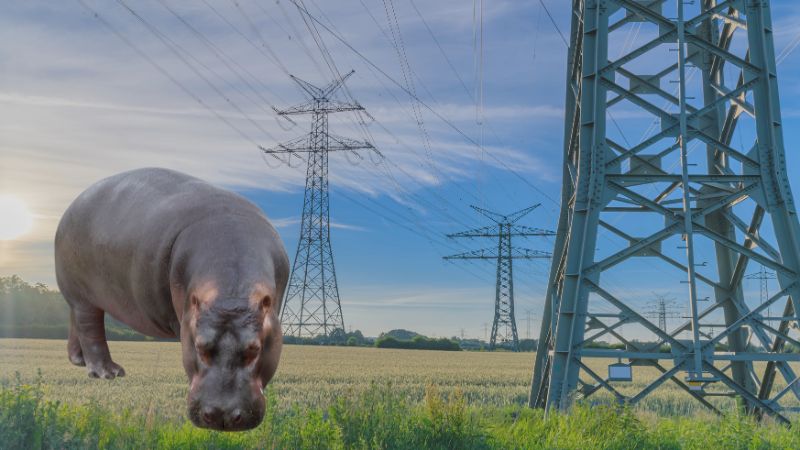
How can a hippopotamus optimize the grid for EV and renewable energy integration? Adapted from images used courtesy of Canva
Grid Impact of EV Charging Stations
With more EVs on the road, charging stations must be integrated into distribution networks. Much work has been done to optimize where these charging stations should be placed. Still, the decisions are based on operational and driver needs and account only for user satisfaction, driving range, and waiting time.
The impacts of EV charging station placement on distribution network loads are poorly understood. Rolling out charging stations en masse could negatively affect the grid if they are located too close together. This placement would cause energy bottlenecks that could destabilize and reduce the grid's reliability.
EVs can already create unexpected energy demand spikes, so optimizing their location in the grid is important to minimize the impacts on local areas. However, these considerations must be based on the actual load on the grid.
A Key Part of the Optimization Puzzle Not Often Considered
Some studies have examined minimizing power losses and voltage deviations while considering the hosting factors. Yet many studies consider only the EV hosting factors (EV-HF) or only the renewable distributed generation hosting factors (RDG-HF) without considering the other.
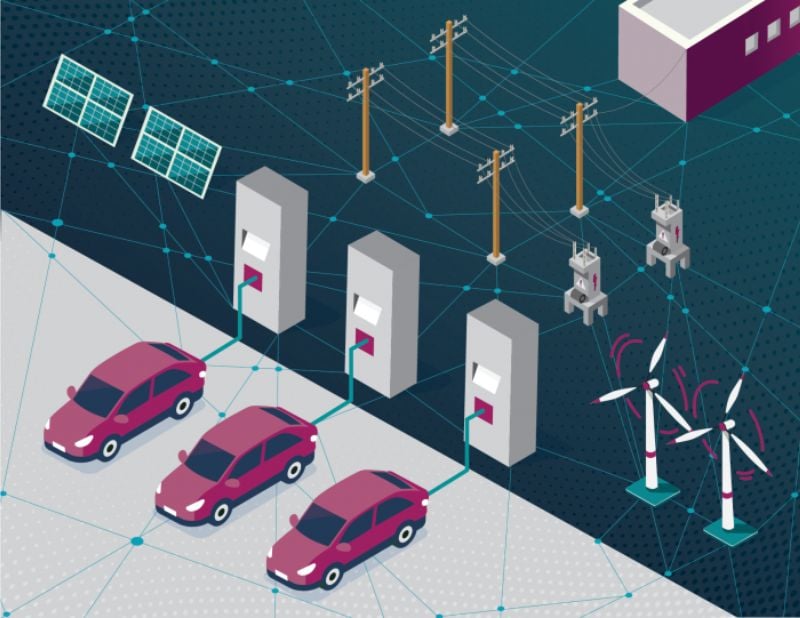
Grid-integrated EVs and renewable energy. Image used courtesy of Sandia National Laboratories
The hosting factor, or capacity, is the maximum power generation (with a focus on renewables’ power generation) that a specific part of the grid can host without overloading the system, causing operational issues, or compromising reliability and stability.
Other efforts to improve charging station integration focused on network components, such as DSTATCOMs and distributed generators. However, the process has been more difficult due to the limited consideration of many approaches toward EV-HF and RDG-HF.
Integrating renewables at charging stations reduces grid demand, but optimization processes often ignore RDG-HF. Many approaches to examining how EV loads affect the local grid overlook the hosting factor and study the impacts of the number of vehicles within the distribution network, which is not an accurate measure of the local grid’s actual load.
Hippopotamus Optimization Algorithm Paints a Clearer Picture
In a study published in Scientific Reports, researchers used a framework with RDG-HF and EV-HF as key metrics to determine the placement and integration of EV charging stations, solar panels, and DSTATCOMs. They combined these metrics with the hippopotamus optimization (HO) algorithm to strategically plan the integration of an EV charging system within an IEEE 69-bus system.
An HO algorithm simulates a hippopotamus herd’s behaviors to protect itself against threats. The algorithm decides to defend or avoid threats based on each hippo’s (or agent’s) position in the herd.
The researchers’ simulations covered five scenarios considering RDG-HF and EV-HF values. Each scenario integrated constraints and hosting capacities of RDGs to operate within safe limits without using battery storage (to ensure that stability could maintained within the grid without relying on external storage).
The model examined both the technical and economic aspects of charging station placement. The economic side centered on the investment cost and payback period for DSTATCOMs and RDGs. The technical side evaluated how charging placement could minimize power losses and voltage deviations while maximizing voltage stability to look at the best location and charging station size within the IEEE 69-bus system.
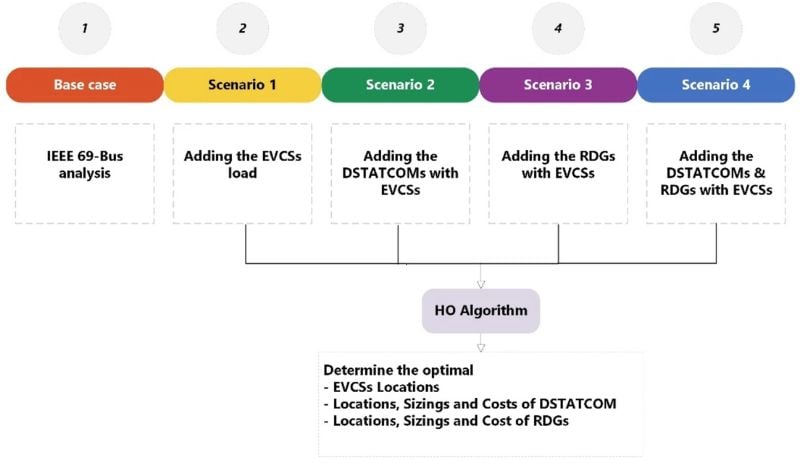
The five scenarios. Image used courtesy of Abdelaziz et al.
The simulation showed that optimizing the placement of the EV charging stations with solar cells and DSTATCOMs could reduce power losses by up to 31.5% and reduce reactive power losses by up to 29.2%. On the economic side, the study concluded the payback time would range from 2.7 to 10.4 years based on the scenario, with potential profits of up to $1,052,365 over 25 years.
Algorithm Allows Better Smart Grid Planning
The results demonstrate that technical and economic aspects are important when optimizing EV charger placement to reduce the grid’s load for balancing network efficiency and yielding local economic benefits, effectively addressing the challenges posed by increased EV adoption and renewables integration, and offering insights into optimal infrastructure planning for future smart grids.