Facebook
 Google
 GitHub
 Linkedin
Faster, Cheaper, Safer. Iron Cathodes for EVs
Iron-based cathodes can provide greater energy density at a lower price than the current leading cathode materials in EV batteries.
Lithium-ion batteries are the mainstay in the battery industry. However, their reliance on scarce and expensive metals like cobalt and nickel for their cathodes raises concerns about cost, long-term sustainability, and ethical sourcing. As electric vehicle adoption accelerates, the demand for these metals could outpace supply.
Scientists have achieved a breakthrough in cathode material development using iron that could solve these challenges. They developed an iron-based cathode that could lead to safer, more affordable, and sustainable battery technologies.
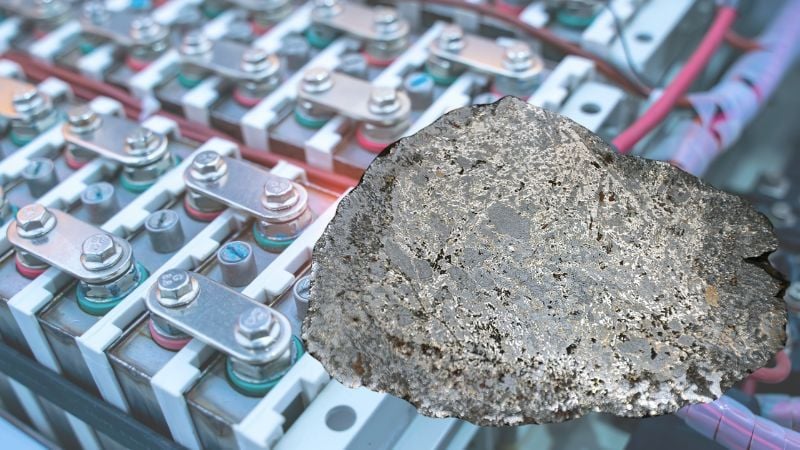
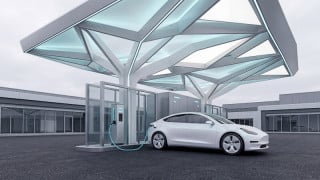
Can iron help EV batteries? Image used courtesy of Canva and Wikimedia Commons
EV Trends and Challenges
The transition to EVs is happening at a blistering pace. The International Energy Agency reports that global EV sales reached nearly 14 million in 2023, a 35% increase from 2022. This positive growth trend continued in 2024, with a 25% sales increase in the first quarter compared to the same period in 2023. Projections now estimate 17 million sales by year's end, which would effectively make EVs constitute 20% of total car sales. This trend is only expected to continue until EVs eventually become the dominant vehicle in the automotive market.
However, EVs rely on lithium-ion batteries, which use nickel-rich layered metal oxide cathodes. These materials, which constitute over half the cell’s cost, face impending challenges due to the relative scarcity and difficulty in extracting materials like cobalt and nickel. Moreover, cathodes based on these chemistries are quickly approaching their maximum energy density within safety parameters, limiting their future potential for EV range and performance. This dual constraint has instigated a significant need for alternative cathode materials in EV batteries.
The Ironclad Solution
In a study published in Science Advances, scientists reported a novel iron-based cathode material for lithium-ion batteries they believe addresses many existing challenges for cathode technology.
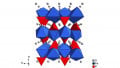
This breakthrough utilizes a specially designed chemical environment to enhance iron's reactivity. It combines fluorine and phosphate anions to enable the reversible conversion of iron powder, lithium fluoride, and lithium phosphate into iron salts. The resulting cathode offers higher energy density than current state-of-the-art materials while significantly reducing costs. Iron is priced at less than a dollar per kilogram compared to the expensive nickel and cobalt.
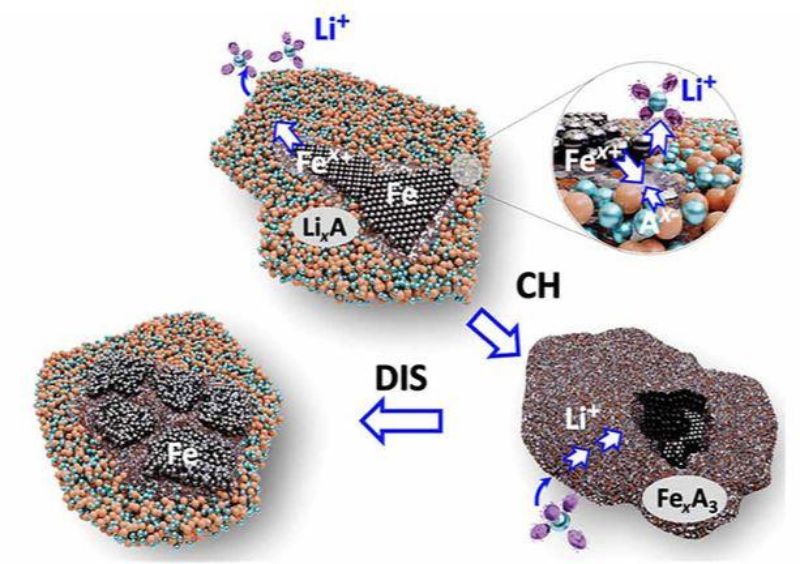
The operation of iron-based cathode. Image courtesy of the Yu et al.
The researchers claim that lithium salt composite cathodes containing an amorphous solid solution of anions enhance the reactivity of iron active mass, improving utilization, accelerating reaction kinetics and ion transport, and ensuring stable cycling. The design enhances safety through greater thermal stability and ensures long-term sustainability due to iron's abundance.
Most importantly, this cathode can be integrated into existing battery designs without modifying anodes, production lines, or overall battery architecture.
Element of Change
Iron-based batteries are a promising alternative to traditional lithium-ion battery technology. By offering increased energy density, enhanced safety features, and reduced production costs, iron cathodes can help promote the mainstreaming of EVs and contribute to reduced carbon emissions.