Facebook
 Google
 GitHub
 Linkedin
CATL Unveils 3 EV Batteries for Longer Range and Fast Charging
Chinese battery giant CATL will begin mass production of its sodium-ion battery later this year. It also introduced a super-fast charging battery and a dual-power battery.
Chinese battery maker CATL has unveiled its plans for a mass-produced sodium-ion battery called Naxtra, a dual-power battery, and a second-generation superfast charging battery. The advancements mark industry firsts in a growing battery market.
CATL’s products all have major potential for advancing electric vehicle technology and could meet the performance and cost needs for EV designers and manufacturers. The company announced the products at its Super Tech Day in April.
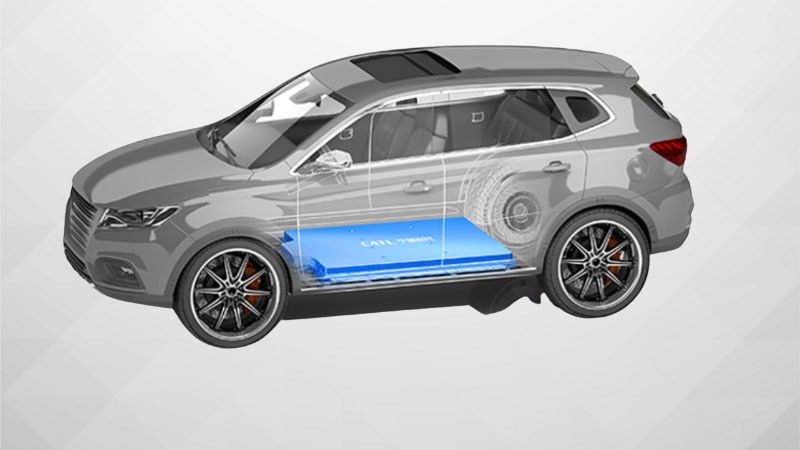
CATL batteries in an EV. Image used courtesy of CATL
The Sodium-ion Battery Naxtra
Sodium-ion batteries have gained attention due to sodium’s abundance, its lower cost, and enhanced safety compared to lithium-ion batteries. CATL’s version is the Naxtra Battery, the world’s first commercially scalable sodium-ion battery. The Naxtra delivers an energy density of 175 Wh/kg, comparable to that of lithium iron phosphate (LFP) batteries. The highlight is the reliable operation of the battery, from -40°C to +70°C, and it retains 90% usable power at -40°C. At 10% state of charge (SOC) and in extreme cold, it maintains consistent output. It can also achieve over 10,000 charge-discharge cycles, which extends operational lifespan.
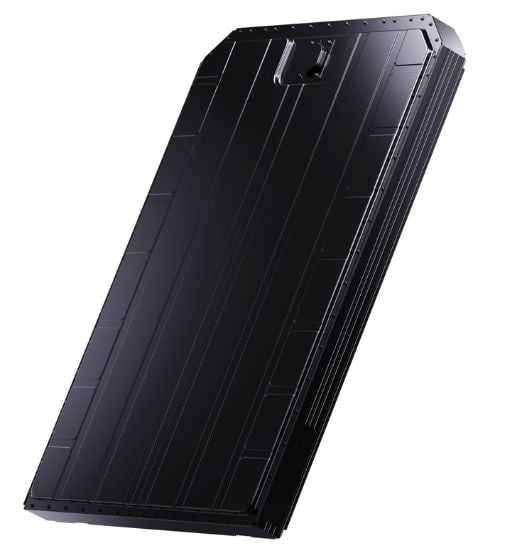
Naxtra sodium-ion battery for EVs. Image used courtesy of CATL
According to CATL, the Naxtra 24 V Heavy-Duty Truck Integrated Start-Stop Battery provides a service life exceeding eight years. It lowers total lifecycle costs by 61% compared to lead-acid alternatives in trucking applications. Ultimately, CATL projects that sodium-ion could eventually replace up to 50% of the LFP battery market.
The Freevoy Dual Power Battery
CATL also introduced the Freevoy Dual-Power battery, which directly aims for uninterrupted power in L3-L4 autonomous vehicles.
The Freevoy battery is a traction pack incorporating two electrically and thermally independent energy zones to deliver dual high- and low-voltage buses, dual structural pathways, dual thermal loops, and dual thermal-runaway barriers. Each zone can house a distinct cell chemistry, allowing the control system to allocate current dynamically to match load and driver profile.
It also features a self-forming anode technology that deposits lithium-rich species onto a nano-engineered current collector during the first formation cycles to build a dense, host-free anode framework. Eliminating inactive binders and copper foil cuts dead weight and frees volume, which raises gravimetric energy density by roughly 50 % and volumetric density by about 60 %.
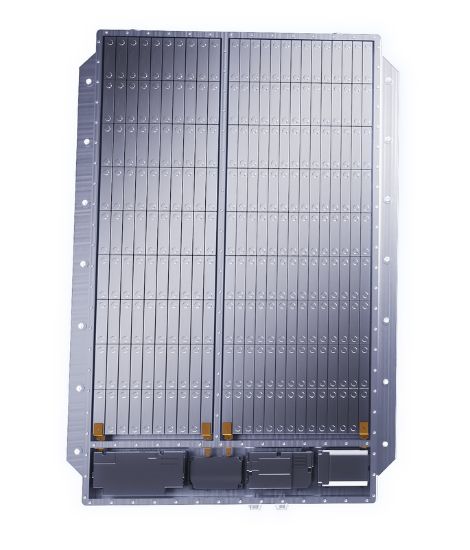
Freevoy. Image used courtesy of CATL
In the NCM-dominant configuration, the main zone charges at up to 12 C and delivers peak power above 1 MW, while it still supplies over 600 kW at 20% SOC. CATL also disclosed sodium-LFP, LFP-LFP, and NCM-hybrid variants to cover extreme-cold duty, ultra-fast urban charging, and long-haul use, respectively.
ShenXing Superfast Charging Battery
Finally, CATL unveiled the second-generation Shenxing Superfast Charging Battery, an LFP pack that pairs an 800 V EV’s DC bus with a 12C charge acceptance rate to deliver 1.3 MW peak power. The architecture integrates low-impedance tab welding and high-surface-area nano-graphitic anodes to enable 2.5 km of range addition per second of charging and to cut 5 to 80 % SOC time at -10 °C to 15 minutes.
CATL’s engineers shortened ionic path lengths and raised electrolyte conductivity to sustain 830 kW discharge power across the full temperature window and at deep-depleted charge levels. The drivers retain full 0-100 km h^-1 acceleration capability in sub-zero climates. The battery also features thermal management channels that allow the coolant to travel directly through cell-to-pack gap fillers and hold core temperature within a ±3°C gradient during 112C bursts to prevent lithium plating.
Ultimately, the module-less cell-to-pack layout achieves 800 km NEDC range in a mid-size sedan while preserving LFP cycle life.
Outlook for Beyond
CATL’s tri-chemistry roadmap is a clear shift from conventional single-chemistry power solutions to a more “mix-and-match” energy architecture paradigm. If the company meets its stated production start in Q4 2025, fleets will start evaluating how these technologies coalesce and what future infrastructures these technologies will enable.