 Facebook
 Google
 GitHub
 Linkedin
Unlocking AI Capacity: Why DC Power Architecture Will Be a Competitive Advantage
Grid queues now stretch up to a decade, making power access AI's new constraint. Here is how DC distribution, layered with AC, frees capacity on existing connections.
The AI industry faces a growing power density challenge, with electrical infrastructure emerging as its next major constraint. According to the IEA, global data center electricity consumption is projected to more than double, from 415 TWh in 2024 to 945 TWh by 2030. At the same time, grid queues in some markets stretch up to a decade. Alongside capital, equipment, and permitting, access to reliable power has become a defining constraint on AI deployment. Direct current (DC) power architecture is fundamentally a capacity allocation play. It eliminates redundant conversion stages, improving a facility's energy efficiency by more than 5% and releasing millions of watts for revenue-generating computing on the same grid connection.
And critically, the answer is not to tear down what already exists to build only new hyperscale facilities. It is a hybrid of AC and DC, intelligently layered, that unlocks growth across data centers, factories, hospitals, and beyond. It also drives greater energy efficiency and makes better use of existing infrastructure.
Running 21st-century artificial intelligence (AI) on 20th-century legacy power systems is a barrier to growth. The new energy sources and loads of today – solar panels, batteries, electric vehicles, and GPU server clusters – are all natively direct current (DC). For more than a century, power distribution has been built around alternating current (AC). Integrating today’s growing number of DC-native technologies and loads requires multiple conversions. That made sense when the biggest challenge was moving power across hundreds of miles of transmission lines. However, today’s challenge is how to push a megawatt of compute through a data center rack.
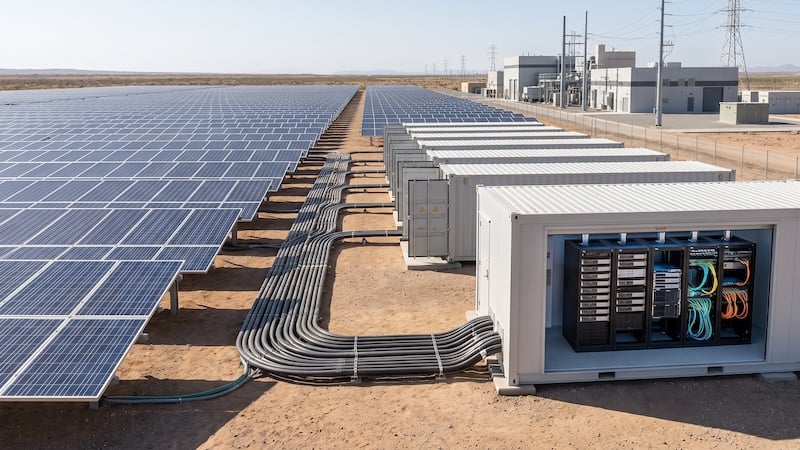
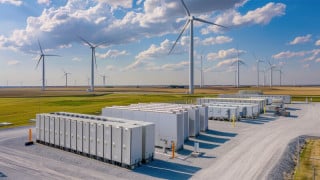
Many new energy sources and loads today are natively direct current (DC). Image used courtesy of Adobe Stock
This challenge isn't abstract; the grid cannot keep pace with demand. The International Energy Agency projects global data center electricity consumption will more than double from 415 TWh in 2024 to 945 TWh by 2030.
Grid interconnection queues now stretch up to seven years in Northern Virginia and up to ten years across Europe's major hubs. The next generation of AI factories will need one gigawatt of electricity, roughly equivalent to the power consumption of a mid-sized city. For any operator committing capital today, the approved grid connection is the primary constraint. More so than GPUs. More so than capital.
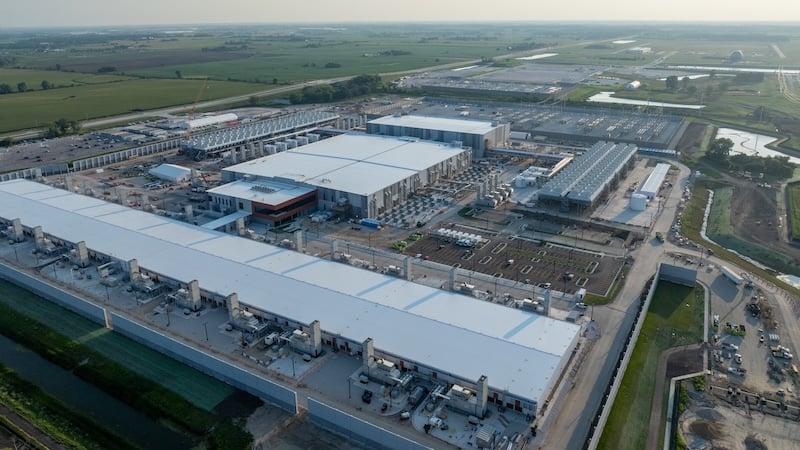
The next generation of AI factories will need one gigawatt of electricity, roughly equivalent to the power consumption of a mid-sized city. Image used courtesy of Southport Image / Adobe Stock
Reimagining Power Architecture to Reduce Grid Constraints
To solve this bottleneck, we must think beyond how much more power you can procure from strained local grid reserves. We must also ask how much more compute you can reliably fit behind the connection you already have. DC power architecture can help alleviate some of these challenges.
DC architecture can eliminate conversion stages that exist throughout a conventional data center. Power enters a facility as medium-voltage AC, but the chips and servers that power the AI economy run on DC. That transition happens multiple times, at every layer of the distribution chain before power reaches the server racks. Each conversion loses energy and generates heat.
By moving to 800 VDC distribution, delivered directly to the rack, we can eliminate most of that loss. The result is a facility energy efficiency gain of more than 5%. That is energy savings equivalent to powering Washington, D.C. for almost a full week. Applied across projected 2030 global data center consumption, that represents tens of terawatt-hours of electricity that does not need to be generated, transmitted, or paid for.

Moving to 800 VDC distribution can provide energy savings equivalent to powering Washington, D.C. for almost a full week. Image used courtesy of Adobe Stock
Capacity Strategy and Technology
When a hyperscale data center centralizes AC/DC conversion and distributes 800 VDC directly to the rack, there are exponential benefits in addition to the efficiency gains. For example, according to a 2026 report published by BCG in collaboration with ABB, a 100 MW reference campus could release 5 to 6 MW of power for additional revenue-generating IT load on the same grid connection. It could also free up as much as 3,000 square meters of floor space previously consumed by distributed power conversion equipment. In a gigawatt-scale data center, that difference is measured in tens of megawatts of reclaimed compute capacity.
The 2026 report also shows that DC distribution reduces the need for copper by up to 45%. On the surface, this means lower input costs and less supply-chain pressure at a time when global copper supplies are strained. But the deeper impact is a systems-level efficiency gain. Fewer conversion stages reduce electrical losses and heat, which eases the load on cooling systems.
Centralizing power conversion also reduces the amount of space required for distributed power-conversion equipment. Operational savings can be significant for colocation and enterprise facilities that move from distributed, conversion-heavy power architectures to more centralized hybrid AC/DC architectures.
Above roughly 200 kW per rack, conventional AC distribution becomes increasingly impractical. At those power densities, the copper cable required for multiple AC conversion stages grows so thick and unwieldy that it cannot be routed through a standard raised floor. This is not a far-future state. AI chips being developed today will exceed the physical limits of existing AC power distribution systems. The architecture must change to accommodate them.
The Smart Strategy Is a Hybrid One
AC remains the right architecture for the vast majority of transmission, regional distribution, and much of the existing installed base. We are not suggesting the answer is to rebuild the grid. AC became the global standard in the 1890s because it is the most efficient way to move electricity from power plants to homes and businesses across miles of lines. That remains true, but we can change what happens behind the meter.
A hybrid architecture is the smart strategy for greenfield AI hyperscale data centers and for existing facilities looking to squeeze more compute out of constrained connections. It uses AC where it works, DC where it delivers, and intelligent integration where they meet. For operators of existing infrastructure, the hybrid model means you do not have to replace everything you have built. You can evolve it. Centralizing power conversion, protection, and storage can unlock substantial capacity and resilience gains without a full redesign.
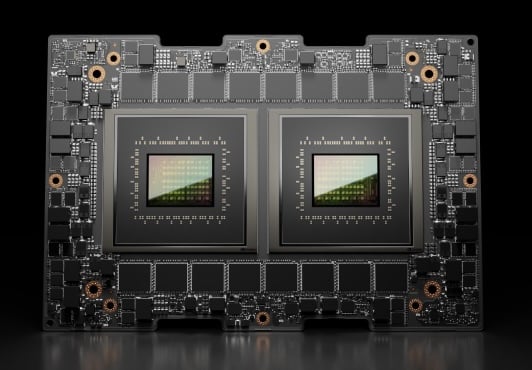
New AI chips, like this Grace CPU Superchip, will eventually exceed the physical limits of existing AC power distribution systems. Image used courtesy of NVIDIA.
None of this scales without standards. DC voltage levels, protection protocols, and interoperability specifications are evolving across the industry. Engineering breakthroughs in solid-state power electronics have already enabled the transition to high-efficiency DC architectures. A rapidly growing ecosystem of chipmakers, semiconductor providers, and power system builders is collaborating to grow this capability together.
What completes the picture is consistent standards. Without them, we risk fragmented ecosystems and stranded investments. With them, confidence grows, capital flows, and technology can accelerate at the pace that the market demands.
Data Centers Are Just the Beginning
The same logic that makes DC compelling for hyperscale AI data centers applies across the built environment. The modern factory is already partly DC-native. Today, variable-frequency drives controlling conveyor lines, industrial robots, and automated handling equipment all perform internal AC/DC conversion. A plant-wide shared DC bus eliminates those redundant conversion stages. It also facilitates the recovery of braking energy from machinery and reduces peak demand charges.
According to BCG's 2026 report, a 10 MW automation-intensive manufacturing plant using DC distribution can achieve approximately US$1.2 million in capital savings and US$500,000 in annual operating savings.
In commercial buildings, rooftop solar, battery storage, EV charging infrastructure, LED systems, and modern climate control are all DC-native. Yet conventional AC architecture forces each through its own conversion stage. A shared DC backbone that consolidates these loads can capture roughly 7% of the building's annual electricity bill. It can also reduce construction cost and complexity and support resilience and power stability.
Hospitals, laboratories, and other mission-critical facilities stand to gain significant uptime advantages. The role and significance of DC will grow in the coming years as the infrastructure and standards evolve to make it economically viable.
The Time for Change Is Now
The grid as we know it cannot keep pace with the demands of the digital economy. Data center operators wait years for new connections. Hyperscalers are already hitting the physical limits of AC distribution. DC architecture is a capacity-allocation strategy focused on deploying more compute. More customers will be served with less strain on a grid that the rest of the economy also depends on.
Today's question is how we blend DC and AC technologies effectively. That means standardizing interfaces, building confidence in hybrid and DC-native models, and moving with urgency to make DC a capacity multiplier. For data center operators, the first step is evaluating centralized DC conversion at the facility level. For policymakers and industry bodies, it is accelerating the standards work already underway. For manufacturers, building owners, hospitals, and utilities, it is recognizing that what is proven in data centers today can help reshape every critical industry tomorrow.
DC architecture will fundamentally change the way we manage power infrastructure. The bold infrastructure shift is happening now right before our eyes, and those who embrace it first will have a competitive advantage.
Featured image used courtesy of ABB