Facebook
 Google
 GitHub
 Linkedin
Examining IGBT Development Challenges
This article explores the challenges IGBT faces and the trends in IGBT technology development.
Insulated gate bipolar transistor (IGBT) technology has become a hot topic in electronics, semiconductors, automotive, energy, power, and control systems. As a fairly new technology, IGBT, with its efficient power management capabilities, is indeed facilitating the transformation and upgrade of these sectors.
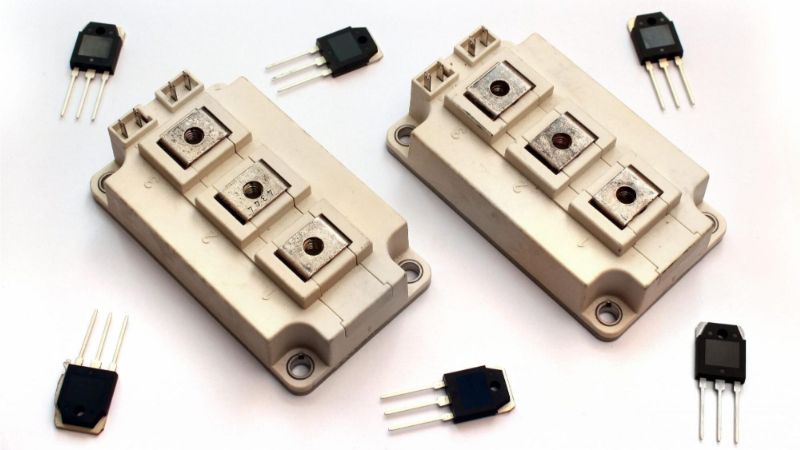
IGBT technology
IGBT Applications
IGBT is used in AC and DC motor drives, unrestricted power supplies (UPS), switch-mode power supplies (SMPS), traction motor control, induction heating, and inverters, among other applications. In the industrial sector, IGBT technology is extensively used in frequency converters and rail transit systems like high-speed trains, subways, and light rails. In the aerospace and military fields, it’s used in aircraft, warships, and more. Furthermore, the new energy field has been widely adopted in electric vehicles and wind power generation.
The Importance of IGBT
For new energy vehicles, IGBT accounts for about half of the cost of the motor drive system. Not only are IGBTs used in motor drives, but they are generally also required in new energy generators and air conditioning parts. For instance, in the Tesla Model 3, by changing the AC motor's frequency, the motor's speed can be accurately changed, thus precisely altering the speed and acceleration capabilities of the vehicle. The robust ability of EVs to go from 0 to 100 km in three seconds is due to the particularly fast startup speed of AC motors, which is a credit to IGBT.
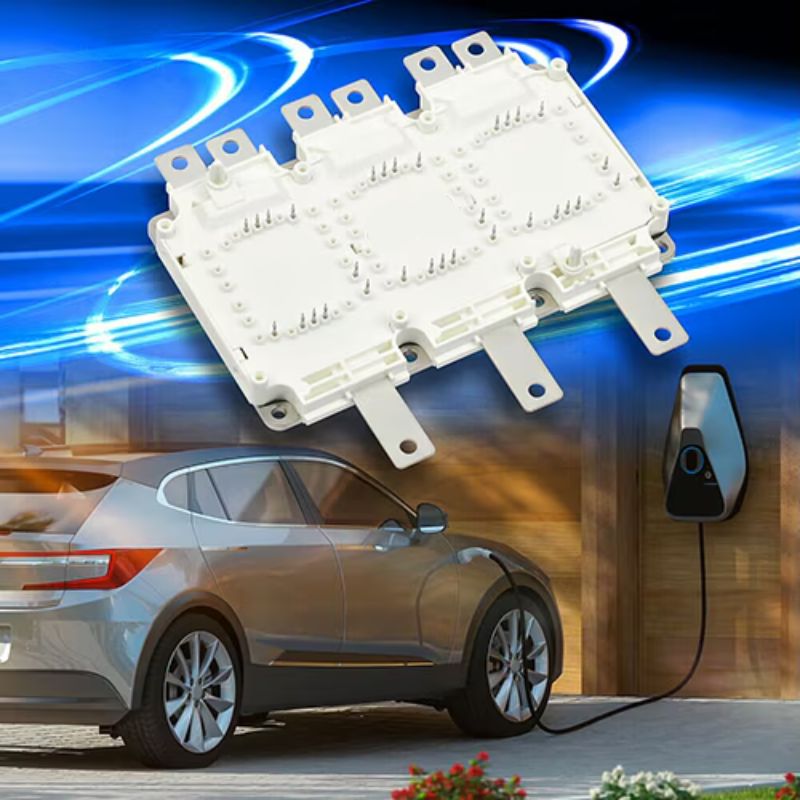
Electric vehicles and charging stations using IGBT
Standard 220 V AC is drawn from the grid at charging stations. However, the batteries in Tesla electric vehicles need to be charged with DC power. This requires IGBT to convert AC power into DC power and raise the voltage to the 400 V required by electric vehicles. IGBT performance directly determines electric vehicle charging efficiency and speed.
When turned on, an IGBT can withstand currents of several tens to several hundred amperes. When turned off, it can withstand voltages of several hundred to several thousand volts. Moreover, even under huge current and voltage, IGBT can maintain a high switching speed, reaching 10,000 times per second. Therefore, the quality of an IGBT directly determines EV acceleration, maximum speed, power consumption, start time, smooth gear changing, and other core performances. So, it is not an exaggeration to call the IGBT the "heart" of an electric vehicle. Despite such importance, this core component is only the size of a fingernail.
IGBT Challenges
IGBT technology has excellent performance in many aspects but also faces some challenges. Here are some main challenges:
- Switching Losses: Although the conduction loss of IGBT has drastically improved compared to its predecessor technology, switching losses are still an issue. The effects of switching losses can be more pronounced when the IGBT operates under high-power and high-frequency applications.
- Active Impedance Driving Strategy: When controlling a larger power system, such as a type of motor drive system, IGBT still needs an effective active impedance driving strategy. IGBT needs more refined driving control to minimize its impact on the system.
- Thermal Management: In high-power applications, excessive heat reduces the reliability and stability of IGBT devices. Therefore, developing efficient cooling and thermal management systems for IGBT in high-power applications is still challenging.
- Cost Issues: Compared with other similar devices, the manufacturing cost of IGBT is relatively high. Although its performance is superior to other transistors, the high cost might prevent its usage in some applications.
- New Materials: Semiconductor materials like silicon carbide (SiC) and gallium nitride (GaN), used to manufacture IGBT, could offer better performance. However, this also brings new challenges, such as maintaining the process while integrating new materials.
- Design and Modeling: Since IGBT is a fairly complex device, the development of more advanced modeling and simulation tools is still necessary to achieve more efficient designs and integrate them into larger systems.
The research and resolution of these challenges will further promote IGBT technology development and help it find applications in more fields.
Emerging IGBT Trends
With the advancement of science and technology and the pressure to meet more complex application needs, development and innovation in the IGBT field are ongoing. Several emerging trends are forming and could significantly impact the future of IGBT technology.
First, the miniaturization of hardware and the increase in power density are significant trends. With the advancement of microelectronics process technology and the increasing demand for miniaturized devices, IGBT devices are expected to become smaller and have higher power density. Miniaturization solves space constraints and improves the flexibility and portability of devices. At the same time, a higher power density means that devices can output more power in the same volume.
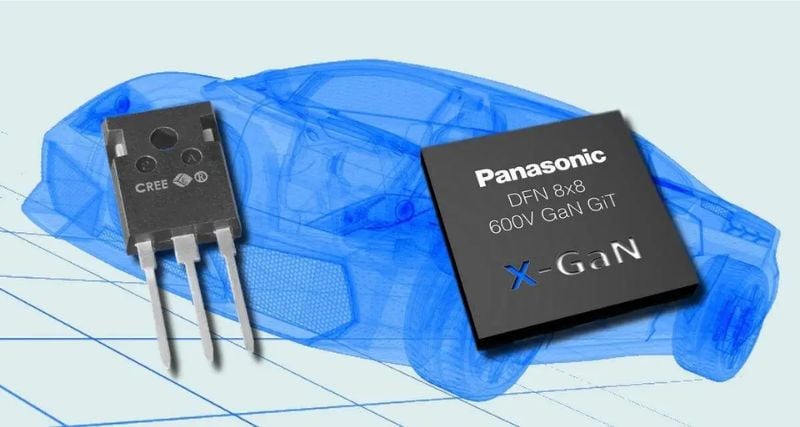
SiC and GaN technology
Second, SiC and GaN semiconductor materials are important. These materials have better performance than traditional silicon (Si) materials, such as higher threshold voltage, faster switching speed, and lower power consumption. This means that IGBT devices made with these new materials will have higher work efficiency and longer lifespan.
Thermal management is also an important direction for development. As power density increases, how to effectively dissipate the heat generated by IGBT is becoming increasingly important. Therefore, improvements and innovations are needed in thermal management, from material science to device design.
Finally, modular design provides greater flexibility for the application of IGBT devices. Packaging multiple IGBTs in one module can simplify system design, reduce size, improve system reliability, and lower cost.
The Future of IGBTs
The future development of IGBT will mainly focus on improving performance, reducing cost, and optimizing new application scenarios. Among them, one key trend is the application of new materials science knowledge. Silicon material IGBT is already mature; however, facing the demand for higher performance, WBG semiconductor materials such as SiC and GaN will be more widely used. Compared with silicon, they can work in high-voltage, high-frequency, and high-temperature environments, so they are expected to lead the development of high-performance IGBTs.
Furthermore, future IGBTs will become even smaller, yet the power density will be higher. This is driven by the trend of miniaturization of power electronic devices, requiring new packaging techniques, advancements in materials science, and innovations in thermal management designs. Regarding thermal management, as the heat generated by IGBTs in operation continues to increase, solving overheating problems will be key to improving efficiency and device life. From a technical perspective, liquid cooling technologies and certain new materials, like graphene, may solve this issue.
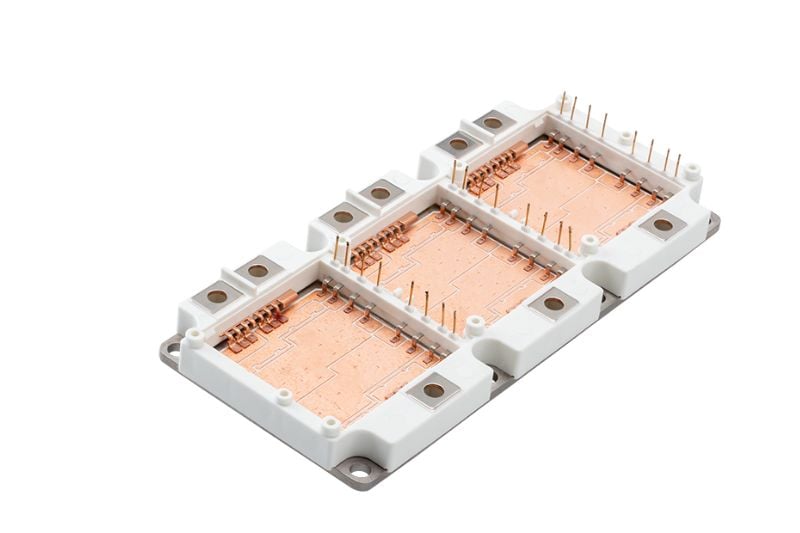
Industrial automotive standard IGBT modules
Moreover, the production process of IGBT will become more efficient, and the cost benefits will also increase. With the progress of process technology and design methodology, future IGBT devices are expected to improve in performance while, at the same time, cost-effectiveness will improve. This will make IGBT more competitive in a broader range of fields. High-growth areas, from electric vehicles to renewable energy, all may benefit from the optimization of IGBT technology.
IGBT is an important part of power semiconductor technology, and its future development will be guided by market demands, including but not limited to performance improvement, cost reduction, and new applications. IGBT will always have new challenges to solve and opportunities to utilize.
Choosing IGBT Now and in the Future
Choosing IGBT as the core component of power electronic devices has several advantages, both now and in the future, and these characteristics will continue to make IGBT play a key role in its use scenarios.
The high efficiency, excellent switching characteristics, and good performance in high-voltage IGBT environments have already been used in various power conversion and supply systems. IGBT has high input impedance and low on-resistance, providing a relatively high current carrying capacity without sacrificing switching speed. The technology’s maturity, efficiency, and eco-friendly properties give IGBT great potential in applications such as electric vehicles, renewable energy systems, and other power conversion and control systems.
In the future, with the widespread use of wide-bandgap semiconductor materials like SiC and GaN, the performance of IGBT is expected to be further improved. The new materials will enable IGBT to operate normally at higher voltages, currents, and temperatures while providing faster switching speeds and higher working efficiency. With the advancement of process technology, design methods, and packaging technology, the cost-effectiveness of IGBT improves, making it competitive in more fields.
At the same time, due to the global increase in demand for reducing carbon emissions and encouraging the use of green energy, IGBT devices for power electronics are considered one of the key technologies to achieve these goals. With its exceptional performance, IGBT is widely used in wind and solar equipment for efficient, low-loss power conversion. Therefore, in the long run, choosing IGBT will be a wise decision in line with future environmental protection and high-efficiency needs.
All images used courtesy of Nantian