Facebook
 Google
 GitHub
 Linkedin
Examining Pollution’s Impact on Insulator Flashover in HV Systems
Learn how pollution affects flashover characteristics in silicon rubber insulators and explore essential considerations to ensure reliability in handling high-voltage transmission.
In high-voltage systems, insulation is a critical component that needs to be closely considered for safe and reliable electric power transmission and distribution. Insulation directly affects grid efficiency as it is designed to prevent unwanted paths for current or current leakage by isolating the high-voltage conductors from supporting structures. Over the life of insulation installed in high-voltage distribution systems, exposure to harsh weather and contaminants in the environment greatly impacts their reliability. It may result in costly damages or outages.
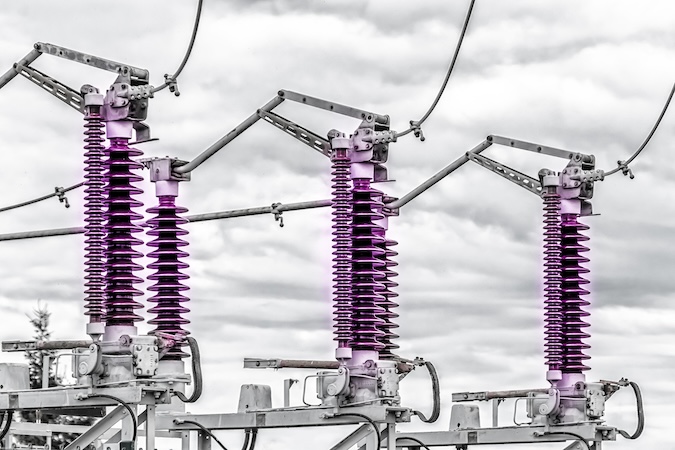
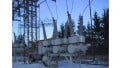
Figure 1. Insulator for high-voltage transmission systems. Image used courtesy of Pixabay
With advancements in material science, the evolution of outdoor power insulators has witnessed a great deal of progress in modern grids, from the use of glass and porcelain to silicon rubber (SiR). SiR insulator’s hydrophobicity lowers the risk of flashover under polluted or wet conditions. These types of insulators are resistant to aging and ultraviolet (UV) rays, and they often feature a lightweight design. Despite offering reliable high-voltage insulation, SiR insulators face environmental pollutants that degrade their performance over time. To address premature degradation, it is essential to have a comprehensive understanding of how equivalent salt deposit density (ESDD) and non-soluble deposit density (NSDD) influence insulator performance over time.
AC Flashover Mechanism on SiR Insulators
Flashover on SiR insulators is observed when the surface insulation properties on an electrical conductor are compromised due to factors like pollution, humidity, wetting, or stress from high voltage. Under severe pollution, SiR insulators may lose their hydrophobicity, which ultimately affects the insulators’ resistance to flashover. Insulators can fail when there is localized arcing resulting from uneven drying and wetting and can further escalate to flashover. When planning the development of high-voltage systems, the selection of insulating material is an essential aspect of consideration. Before selecting the material, it is also important to conduct simulations and experiments on the material's performance when exposed to different environmental factors. In this case, let's consider some common tests that can be used to evaluate the flashover performance of SiR over traditional porcelain insulators.
One of the common tests that can be conducted to simulate marine environments is the salt fog test, in which conductive pollution layers are created on the insulator after salt-laden air is left to settle. Through the variations of ESDD levels, the salt level in the mist can be adjusted, high-voltage AC power can be applied across the insulator, and the flashover voltage can be recorded. From this simulation, it is easy to consider the hydrophobicity of the insulator to be chosen for the high-voltage application. In this case, SiR’s hydrophobicity properties prevent a continuous conductive film from forming on the insulator surface as opposed to porcelain insulators, which allow layers of salt on their surface to quickly conduct electricity in wet conditions. In both insulator types, the flashover voltage decreases as the ESDD levels increase. However, the SiR insulators have high flashover voltages under ESDD levels similar to those of porcelain insulators. The contamination levels on SiR insulators can be further affected by NSDD levels, affecting the conductivity and adhesion of contaminants in wet or moist conditions. Expressed in mg/cm2, NSDD focuses on how pollutants on the surface of the insulator interact with the moisture in the environment concerning hydrophobicity. When ESDD and NSDD are combined, the risk of AC flashover reduces by up to 50%. However, the risk of flashover greatly increases when the ESDD is at a critical threshold greater than 0.3 mg/cm2 and NSDD at a threshold of 0.15 mg/cm2.
Modeling Flashover Probability With ESDD and NSDD
To best quantify the risk of flashover related to contaminants on SiR insulators in high-voltage systems, it is essential to have a more anchorable insight through models like linear regression. With linear regression, the relationship between flashover voltage, which is a dependent variable, and independent variables like ESDD and NSDD can be compared to quantify factors that affect flashover events. This is essential for decision-making in the design process and for predictive maintenance purposes. The first step in this model is to collect experimental data on flashover events and analyze the data by providing descriptive statistics to understand the distribution of the flashover voltage, NSDD, and ESDD. To evaluate the flashover voltage (Vf) of SiR insulators, unmodeled factors like humidity and temperature can be accounted for with the error term (ϵ). Regression coefficients (β1) and (β2) can be derived by applying linear regression to the collected data showing the change in the flashover voltage for one unit increase in NSDD or ESDD levels. Vf can be modeled using the formula:
\[V_{f}=\beta_{0}+\beta_{1}\times ESDD+\beta_{2}\times NSDD +\epsilon\]
Where (β0) is the intercept of the baseline flashover voltage at zero contamination.
Another model that can help optimize the design of high-voltage insulators that have improved pollution performance is the physics-based model. This model requires no field experiments and is best used for testing the interaction of material property, environmental factors, and contamination in extreme conditions with heavy industrial pollution. To better estimate the flashover events using a physics-based model, the severity of the ESDD and NSDD are first assessed, and environmental factors such as humidity and temperature are factored in. The geometry of the insulator is considered, and the profile of the insulator's surface, shed shape, and creepage distance are examined to assess the distribution and accumulation of pollutants. Electric field distribution forms the foundation of this model, expressing the relationship between surface conductivity, voltage stress, and the leakage current. This interaction is typically described by solving for the electrical field (E) using Laplace's equation by considering the electric potential (ϕ).
\[\nabla^{2}\phi=0,E=-\nabla\phi\]
The effective electric field strength reduces when the creepage distance (L) is increased, further improving the flashover performance of the SiR insulator. The surface conductivity (σ) is often represented as a relationship between the surface moisture, ESDD, and NSDD levels where (k1) and (k2) are exponential constants. The surface conductivity can be calculated as:
\[\sigma=\sigma_{0}+k_{1}\times ESDD \times k_{2}\times NSDD\]
With the surface conductivity determined, the critical flashover voltage (Vf) can be determined when the leakage current surpasses a predetermined threshold.
\[V_{f}=\frac{C}{\sqrt{\sigma L}}\]
The above evaluations are important aspects not only for the design optimization of high-voltage SiR insulators but also essential for maintenance planning for a reliable grid. With linear regression and physics-based models, a basis can be created for insights that ensure efficient and safe power transmission.
Advancing Grid Technology
Other than optimizing the design of SiR insulators, the grid can further be improved by integrating IoT with the smart grid. Combining ESDD and NSDD models with IoT sensors can automate maintenance decisions by providing real-time pollution insights, further allowing for dynamic grid management. When it comes to AI-driven solutions, adaptive approaches use machine learning for accurate predictions of environmental factors. By leveraging historical data, recommended actions can ensure reliability in predictive maintenance. Engineers can leverage advanced modeling techniques to design standard insulators that are reliable and efficient and adhere to regulatory requirements.