Facebook
 Google
 GitHub
 Linkedin
Defending the Digital Highway: Cybersecurity for Software-Defined Vehicles
Learn how evolving regulations, lifecycle security strategies, and quantum-ready cryptography are reshaping automotive cybersecurity.
The shift to software-defined, connected, and electrified vehicles is transforming how engineering teams design, validate, and maintain mobility systems. Today’s platforms span embedded ECUs, zonal Ethernet, cloud services, and EV charging infrastructure—delivering new capabilities while expanding the cyberattack surface. As automakers add ADAS, over-the-air (OTA) updates, and vehicle-to-everything (V2X) communication, cybersecurity must be treated with the same rigor as functional safety and engineered across the full lifecycle.
This article outlines a practical path to resilient mobility: applying ISO/SAE 21434 and UNECE R155/R156; hardening EV charging and Vehicle-to-Grid (V2G) interfaces with ISO 15118 and modern OCPP; and preparing for post-quantum cryptography (PQC) by building algorithm agility into roots of trust and OTA pipelines.
We detail threat modeling, defense-in-depth architecture, runtime monitoring, secure diagnostics, and discipline for OTA governance, with attention to heavy-duty and off-highway requirements where duty cycles, connectivity, and service models differ. The takeaway: cybersecurity is not a bolt-on product—it’s a system property created by engineering choices, organizational habits, and supply-chain collaboration.
Key Takeaways
- Cybersecurity must be embedded across design, production, operation, and decommissioning—not treated as a late-stage add-on.
- ISO/SAE 21434, UNECE R155/R156 (CSMS/SUMS), and ISO 15118 provide the backbone for vehicle and charging-infrastructure security.
- EV infrastructure, V2G/V2X, and fleet back-ends require the same rigor as in-vehicle networks.
- Quantum computing threatens legacy crypto; begin migration planning to NIST PQC (ML-KEM, ML-DSA, SLH-DSA) with hybrid approaches.
- Resilience comes from defense-in-depth, runtime monitoring, cryptographic agility, robust OTA, and disciplined incident response.
Cybersecurity as a Core Design Discipline
Connectivity, electrification, and automation have pushed the modern vehicle far beyond its mechanical roots. A contemporary light-duty EV, a long-haul truck with advanced telematics, or an autonomous-ready off-highway machine is a distributed computing platform on wheels. Dozens of electronic control units (ECUs), zonal architectures, Ethernet backbones, and cloud links create a rich environment for innovation—and a large attack surface. A vulnerability in a telematics gateway, a misconfigured charger, or a third-party mobile app can propagate laterally and affect functions that are safety-critical.
Cybersecurity can therefore no longer be treated as a late-stage add-on. It must be engineered into requirements, architecture, and verification, and maintained through operations and decommissioning. This demands an explicit coupling of functional safety (ISO 26262) with cybersecurity engineering (ISO/SAE 21434), so that hazards and threats are evaluated together and mitigations are complementary rather than competing.

Figure 1. Cybersecurity is no longer optional—it’s a foundational pillar of modern vehicle design and infrastructure.
Threat Modeling and Architectural Guardrails
Security begins with system definition and threat modeling. Engineers should enumerate assets (keys, credentials, firmware images, sensor data), trust boundaries (vehicle-to-cloud, charger-to-vehicle, workshop-to-ECU), and likely adversaries (criminal groups, insiders, hobbyist attackers). From there, attack trees and misuse cases inform architectural guardrails: domain separation between safety-critical and non-critical networks; message authentication and freshness to defeat spoofing and replay; secure boot to block unsigned firmware; and hardware roots of trust to anchor identities.
Within zonal architectures, isolate perception and motion-control stacks from infotainment and consumer devices. Gateways should enforce least-privilege routing and filter malformed or rate-abusive traffic. For cloud paths, mutual TLS with certificate pinning and short-lived credentials minimizes the blast radius if a secret is exposed.
Lifecycle Security—From Concept to Retirement
Unlike consumer devices, vehicles live for a decade or more and pass through multiple owners and use cases. A lifecycle view is mandatory.
- Design & Development: Apply secure coding standards, static/dynamic analysis, and secret-free builds. Provision development and manufacturing environments with least privilege, enclave signing keys in HSMs, and maintain a software bill of materials (SBOM) for all ECUs and companion apps.
- Production & Validation: Enforce secure boot, component attestation, and end-of-line cryptographic credentialing. Validate OTA pipelines end-to-end, including rollback logic, power-fail recovery, and delta-update integrity for bandwidth-constrained fleets.
- Operation & Maintenance: Run intrusion detection at the edge (ECU-level anomaly monitors) and centrally (fleet analytics). Monitor certificate expiry, rotate keys, and orchestrate patches based on risk. Harden diagnostic paths (UDS) with role-based access and time-bound tokens for service tools.
- Decommissioning: Erase keys and personal data, revoke credentials in back-end systems, and attest that ECUs return to a non-personalized state prior to resale or salvage.
Regulatory and Compliance Landscape
Security is now a type-approval issue, not just a best practice. ISO/SAE 21434 provides the engineering framework for cybersecurity risk management across the V-model. UNECE WP.29 R155 and R156 require OEMs to operate a Cybersecurity Management System (CSMS) and a Software Update Management System (SUMS), with auditable processes covering design through post-production. For EV charging, ISO 15118 enables Plug & Charge with certificate-based mutual authentication; OCPP 2.0.1 strengthens charger-to-backend links and device management; newer profiles add bidirectional energy support as V2G scales.
Compliance is not a paperwork exercise. It institutionalizes threat analysis, ensures traceability between risks and controls, and creates the operational discipline to monitor and react when the threat landscape changes.
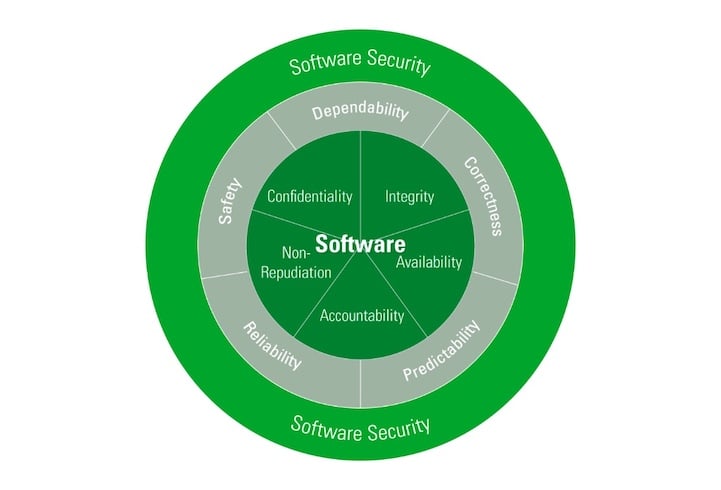
Figure 2. With software now driving vehicle innovation, securing code, data, and connectivity is mission-critical.
Electrification and Infrastructure—Securing the Grid Edge
As electrification scales, vehicles are tightly coupled to energy infrastructure. That brings unique risks and opportunities:
- Charger Integrity: Compromised firmware can manipulate billing, deny service, or inject malformed messages into the vehicle. Secure boot, signed updates, and device identity anchored in a hardware security module are non-negotiable for charge points.
- Vehicle-to-Grid (V2G): Bidirectional power flow increases value—and risk. ISO 15118-20 formalizes cryptography and contract certificates; back-end systems must enforce revocation and promptly quarantine misbehaving nodes.
- Fleet Operations: Mixed fleets (light vehicles, heavy trucks, and yard equipment) span depots, public corridors, and remote jobsites. Connectivity may be intermittent. Designs should support store-and-forward logging, resumable updates, and risk-based patch staging to avoid bricking assets during a duty cycle.
- Off-Highway Specifics: Harsh EMC environments and limited bandwidth argue for lightweight telemetry formats, high-tolerance OTA recovery, and physical tamper detection on ECUs that may be exposed to untrusted service procedures.
From Reactive Defense to Proactive Resilience
Attackers iterate quickly; purely reactive patch cycles lag behind. A resilience-oriented design blends prevention, detection, and recovery.
- Defense-in-Depth: Layer application whitelisting, ECU attestation, network segmentation, and rate limiting. Gateways should enforce least-privilege routing between zones and throttle anomalous storms.
- Runtime Monitoring: Combine rule-based anomaly detectors with ML models trained on normal behavior. Prioritize explainability so field engineers can triage alerts without guesswork.
- Safe Degradation: If a subsystem is compromised or unstable, the vehicle should enter a defined safe state—limp-home modes, feature gating, or controlled restart—while preserving forensic data for post-incident analysis.
- Cryptographic Agility: Build keystores, APIs, and OTA logic so algorithms and key sizes can evolve without hardware swaps. Hybrid signatures (e.g., classical + post-quantum) can smooth transitions while standards mature.
Preparing for the Post-Quantum Era
Quantum computing threatens the hardness assumptions underlying RSA and ECC. Automotive systems depend on digital signatures for ECU firmware, OTA pipelines, V2X, and charger authentication. To future-proof these trust anchors, the industry is moving toward NIST’s PQC portfolio: ML-KEM (Kyber) for key establishment, ML-DSA (Dilithium) for signatures, and SLH-DSA (SPHINCS+) as a conservative, hash-based alternative.
Migration requires more than swapping libraries. Key material lifetimes, certificate chains, ECU compute budgets, and message sizes must be revisited. Many teams will adopt hybrid cryptography during transition—signing artifacts with both classical and PQC algorithms—so existing devices remain compatible while new ones gain quantum-resistant guarantees. OTA update frameworks and hardware security modules should be upgraded now to accept multiple algorithms and key types without refactoring the entire stack.

Figure 3. Future mobility depends on proactive, quantum-ready cybersecurity strategies across the ecosystem.
Practical Engineering Patterns
To convert strategy into shippable systems, adopt the following patterns:
- Secure Boot + Measured Boot: Verify firmware authenticity and record measurements in a TPM-like component for remote attestation.
- Partitioned Zonal Architecture: Route external connectivity through a hardened gateway; keep perception, motion control, and power electronics behind authenticated firewalls.
- Robust OTA: Use delta updates, signed manifests, and phased rollouts with canary vehicles. Require dual-bank flash and power-loss-tolerant installers in every ECU.
- Hardening Diagnostics: Replace universal passwords with time-limited, role-scoped credentials tied to dealer identities; log tool actions cryptographically.
- SBOM and Vulnerability Posture: Maintain SBOMs for each software release; correlate with advisories and prioritize remediation by exploitability and safety impact.
- Data Governance: Anonymize telemetry at the edge, minimize personal data collection, and implement retention policies aligned to regional privacy law.
ADAS, Autonomy, and AI Robustness
Perception and planning stacks introduce new attack classes. Spoofed GNSS, tampered lidar returns, or adversarial patches on camera imagery can mislead fusion algorithms. Countermeasures include sensor diversity, plausibility checks (cross-validating modalities), authenticated high-definition maps, and randomized challenge-response protocols for critical sensors. For machine-learned components, data lineage and model provenance are essential. Keep training datasets under change control, sign and version models, and verify that inference engines match approved binaries at runtime.
Commercial vehicles and off-highway equipment face distinct operational constraints: extreme duty cycles, roadside maintenance, and integration with third-party body builders. Standardize secure add-on interfaces so vocational equipment can be enabled without exposing the base vehicle. Telematics units should support multi-tenant credential stores so the OEM, fleet, and body builder can coexist with scoped privileges. Because downtime is costly, design maintenance workflows that stage updates when the asset is off-duty, with resume-safe installers that survive power interruptions.
People, Process, and Culture
Technology alone cannot guarantee security. A mature program blends engineering discipline with organizational habits:
- Education: Train developers and calibration engineers on threat modeling, secure coding, and key hygiene; refresh regularly as attack techniques evolve.
- Red/Blue/Purple Teaming: Exercise systems before attackers do. Tabletop incidents across engineering, legal, PR, and customer support to refine playbooks.
- Supplier Governance: Flow cybersecurity requirements to Tier-1 and Tier-2 partners; audit their development practices and incident readiness.
- Metrics: Track mean time to detect (MTTD), mean time to remediate (MTTR), patch adoption rates, and compliance findings; make them visible to leadership.
Standards and Interoperability in Practice: Security cannot be bolt-on if platforms are multi-vendor. AUTOSAR SecOC provides message authenticity and freshness on in-vehicle networks; SOME/IP over Ethernet should be paired with TLS and certificate pinning at gateways; and CAN-FD segments that carry calibration or diagnostics should be isolated behind authenticated bridges. For road-side connectivity, prioritize TLS 1.3 with modern cipher suites and mutual authentication; avoid weak, legacy options. In charging ecosystems, align charger PKI with ISO 15118 trust lists and enforce revocation to contain compromised devices.
Governance for OTA and Incident Response: Successful OTA programs run on governance as much as technology. Define who can publish, approve, and schedule updates; implement segregation of duties so no single administrator can push code to production. Maintain per-VIN update histories linked to software baselines and compliance artifacts. When incidents occur, enable “security hotfix” lanes that bypass feature freezes with elevated testing focused on regression and safety interactions. Communication templates for fleets, dealers, and drivers shorten response time and reduce confusion.
Test and Validation at Scale: Security claims must be verified under realistic conditions. Establish continuous security testing: fuzz in-vehicle services, run protocol analyzers on gateway interfaces, and simulate degraded links during OTA. Hardware-in-the-loop (HIL) benches should include adversarial scenarios—replayed CAN frames, malformed SOME/IP payloads, and corrupted update manifests. At the fleet layer, chaos engineering techniques can validate that monitoring and rollback behave as designed when hundreds of vehicles experience partial failures.
Case Vignettes—Turning Principles into Outcomes
- Telemetry Storm in a Regional Fleet: After a backend misconfiguration, a truck fleet began uploading excessive logs that saturated cellular links and delayed driver communications. Rate limiting at the gateway, prioritization of safety-critical channels, and adaptive backoff algorithms restored service without roadside interventions.
- Rogue Charger on a Worksite: A third-party portable DC fast charger attempted non-standard sessions. Mutual authentication failed as designed, the vehicle quarantined the session, and telemetry flagged maintenance to remove the device.
- Workshop Tool Exposure: An old service laptop with cached universal passwords connected to a bus. Modernized UDS access control rejected the attempt, prompting a guided workflow that issued a one-time credential tied to the VIN and technician ID.
Economics and Performance Considerations: Security has cost and latency implications; designing with them in mind avoids tradeoffs late in the program. Choose cryptography that fits ECU compute budgets; offload heavy operations to HSMs; and exploit batching (for logging) to conserve bandwidth. Use compression and delta strategies to keep OTA within cellular allowances. For suppliers, modular compliance evidence—reuse of threat models, SBOMs, and test artifacts—shortens integration cycles without sacrificing rigor.
Looking Ahead—Trust as the Product
Software-defined vehicles will only scale if users trust them. Trust is earned by predictable updates, transparent communications during incidents, and consistent performance when components fail. The goal is not absolute invulnerability—an impossible standard—but resilient operation in a hostile environment.
By engineering cybersecurity into architecture, process, and culture, manufacturers can deliver connected and autonomous functions without compromising safety or uptime. That same diligence must extend to charging infrastructure and fleet back-ends so the entire ecosystem operates as one trustworthy system.
The result is a mobility platform that improves with age—one whose security posture strengthens with every update, whose cryptography keeps pace with new mathematics, and whose defenses remain layered, monitored, and measurable throughout the machine’s working life.
To learn more about cybersecurity solutions for software-defined vehicles, contact us at [email protected].
Lead image from Adobe Stock (licensed).
All other images used courtesy of Littelfuse.