Facebook
 Google
 GitHub
 Linkedin
Combined Heat and Power Systems Enable Resilient, Sustainable Infrastructure
In this article, learn how combined heat and power (CHP) systems help buildings and businesses remain operational when needed most.
As the commercial market in the United States continues to grow, so does the demand for reliable, efficient, and cost-effective energy solutions. ENERGY STAR states that energy use is already the largest operating expense in commercial buildings, accounting for roughly one-third of a typical operating budget. Yet nearly 30 percent of that energy is wasted.
They also estimated that a simple 10 percent reduction in overall energy usage can lead to an impressive 1.5 percent increase in net operating income (NOI), which could be reinvested into the business for continued growth.
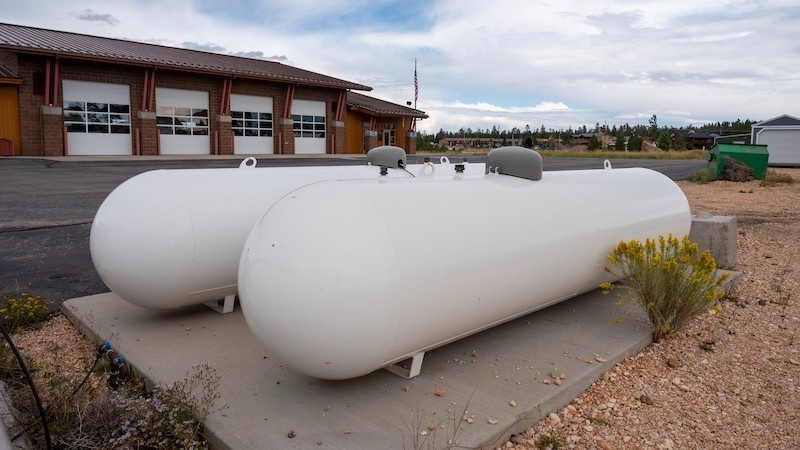
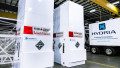
Figure 1. Two commercial-size propane tanks supporting essential operations at a resort near Bryce Canyon.
Looking ahead, the need to improve a building’s efficiency will only increase. By 2035, an estimated 75 percent of buildings in the U.S. will be newly built or significantly renovated. This gives engineers and facility managers a unique opportunity to rethink how buildings use and manage their energy.
At the Propane Education & Research Council (PERC), we work with commercial decision-makers to strengthen their facility’s energy infrastructure. One solution we’ve identified as both reliable and highly efficient is a combined heat and power (CHP) system.
How CHP Systems Work
CHP, also referred to as cogeneration systems, is known for its sustainability benefits, reducing energy waste, and improving cost efficiency. These systems generate on-site electricity by capturing waste heat to support space heating and hot water needs, ultimately reducing dependence on the electric grid.
Excess electricity can even be sent back to the grid to support those who rely on it. CHP units are used in more than 4,400 facilities across the United States and are suitable for buildings with a high demand for electricity and hot water, such as hospitals, laundromats, hotels, and restaurants.
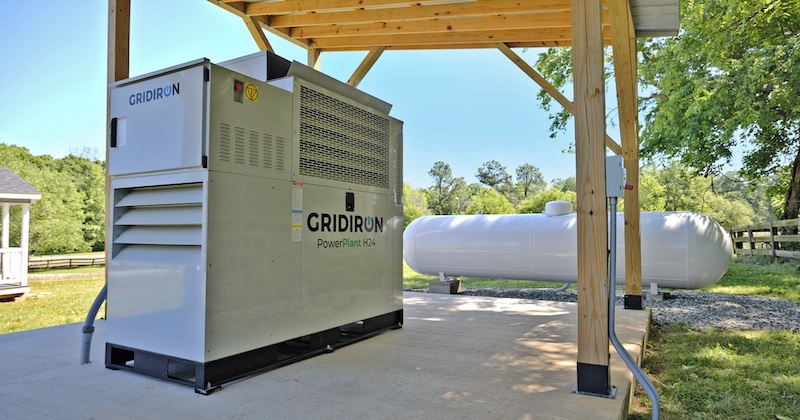
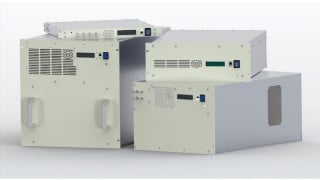
Figure 2. A combined heat and power unit, paired with a supporting propane tank, occupies minimal space while delivering reliable and scalable power.
For smaller-scale applications, micro-combined heat and power (mCHP) systems are also available. mCHP systems operate similarly to larger CHP units, but are used in situations with lower energy demands, such as small commercial buildings or residential homes.
They can achieve efficiency ratings of 60 to 80 percent, compared with typical electric generation at power plants (which is only about 33 percent efficient). Although CHP and mCHP units can run on various fuels, propane will enhance the system’s overall performance.
The Benefits of Propane-Powered CHP Units
In CHP applications, propane produces 15 percent fewer greenhouse gas (GHG) emissions than diesel (a common fuel used in commercial operations) and up to 50 percent fewer than electricity produced from coal or oil-fired plants. Additionally, propane generates 13 percent fewer nitrogen oxides (NOx) than natural gas and as much as 50 percent less NOx than conventional electric sources.
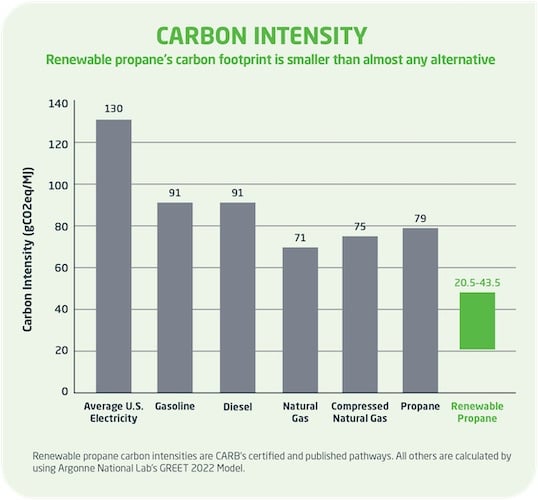
Figure 3. Renewable propane enhances the clean energy benefits of conventional propane.
The same goes for propane-powered mCHP units, as they emit around 50 percent fewer NOx than comparable electric systems. This is because of propane’s clean, low-carbon properties.
Renewable propane also offers a pathway to cleaner energy and can enhance the sustainability benefits of CHP.
Made from renewable feedstocks like plant and vegetable oil or animal fat, renewable propane has the same chemical structure and physical properties as propane and can be used for all the same applications without modifications to existing units or infrastructure. For renewable propane, the carbon intensity score ranges from 20.5 to 43.5, while the average U.S. electric grid score is 130.
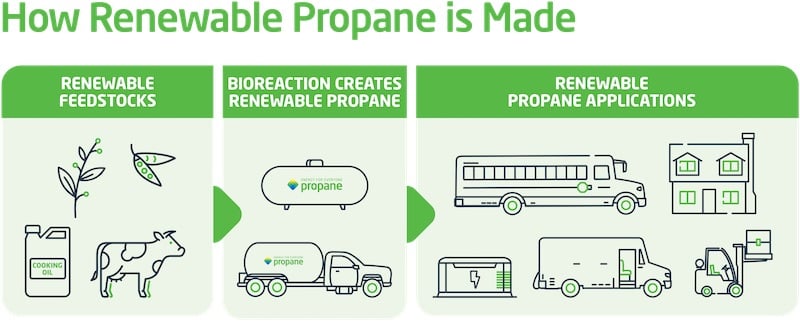
Figure 4. Renewable propane offers the same benefits as conventional propane with its reliability, portability, power, and reduced carbon emissions, with even lower carbon emissions when compared with other energy sources.
Propane-powered CHP systems are also resilient and ideal in areas prone to severe weather or power outages. They offer peace of mind by providing reliable backup power and maintaining important heating functions. One example is the Army National Guard facility in Connecticut, where a propane-powered CHP system is used to improve energy efficiency. Designed and installed by Dalkia Aegis, the system significantly reduced the facility’s energy use and cut overall operational costs.
“We know it has cut 30 percent of the facility’s energy consumption, creating about $60,000 of savings per year,” said Dan Burke, vice president of sales and marketing at Dalkia Aegis.
Another successful implementation happened in Puerto Rico when the electric grid was disrupted by Hurricane Maria, leaving more than half of the island’s businesses and households without electricity. Rincon Beach Resort, a resort on the island’s west coast, maintained business as usual thanks to its on-site energy generation from 2G Energy.

Figure 5. Whether building from the ground up or updating existing infrastructure, it's important to choose energy sources that are reliable, efficient, and scalable for future growth.
2G Energy had installed a 240 kW CHP unit, which included a prime mover, generator, control panel, and heat exchanger, all in a 30-foot container. The unit kept the property’s 112 rooms and 24 condos fully powered and operational while neighboring properties went dark.
“The 2G propane CHP system allowed us to continue operations through the storm while the majority of facilities struggled to remain online,” said Eduardo Somoza, the resort’s owner.
These are just a few examples where CHP systems have proven to be reliable and efficient during power outages or in the event of extreme weather.
Incentives and Trends Driving CHP Adoption
More than half of U.S. states have included CHP in their Energy Efficiency Resource Standards or Portfolio Standards and several states have even introduced specific incentive programs to encourage CHP adoption. Launched by PERC, the Alternative Technology Demonstration & Research Program is a nationwide research program gathering insights on propane adoption and use in the commercial building sector.
Figure 6. Commercial and industrial businesses can earn compensation by providing valuable data on propane-powered cooling and CHP systems.
Participants complete a survey sharing details on performance, emissions, gallon usage, run hours, cost data, and energy savings post-installation. Qualifying participants are offered financial compensation depending on the size of the installation such as:
- $30,000 for propane CHP units on sites greater than 15kW
- $12,000 for propane CHP units on sites less than 15kW
- $300/ton for propane cooling equipment ranging from light commercial (5T-25T) to heavy commercial (100T+)
Beyond financial incentives, our conversations with those in the industry have revealed an increased focus on reducing costs, improving efficiencies, energy diversification, and the growing demand for resilient power solutions. These key focuses are all areas where propane has been proven to be a reliable and effective partner.
CHP Will Play a Critical Role
As energy demands rise, efficient technologies like CHP will play a critical role in how commercial facilities manage their power. With proven cost savings, greater resilience, and eco-friendly benefits, CHP continues to be a solution for the commercial energy market. To learn more about CHP and the benefits of propane, visit propane.com/combined-heat-power.
All images used courtesy of Propane Education & Research Council (PERC).
Related Content