Facebook
 Google
 GitHub
 Linkedin
AI Data Centers Can Lower Communities’ Power Bills Using Our Existing Grid
Physics-based analysis and operational flexibility safely unlock unused infrastructure capacity. This strategy connects massive computing loads faster while reducing expenses for ratepayers.
The conversation around AI and energy has turned alarmist. We are told that AI will overwhelm the grid, drive up electricity prices, and force massive new infrastructure spending. This does not have to be the way that history is written. We have another choice.

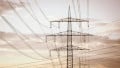
Consumers are concerned that the expansion of AI data centers will lead to higher electricity bills. Image used courtesy of Adobe Stock
With the right approach, AI data centers can actually lower electricity rates and improve grid reliability if we recognize that the constraint is not actually a lack of power, but a lack of granular visibility into the power system we already have. By efficiently utilizing existing assets, data centers can drive value creation for both utilities and the communities they serve.
Unlocking Grid Capacity Through Flexibility
For most of the year, the U.S. electric grid operates at roughly one-third of its capacity. Even as interconnection queues stretch for a decade, vast amounts of infrastructure sit idle. This is not a bug. The grid was designed decades ago to withstand rare peak conditions, when utilities had limited visibility into demand and little ability to shape it.
The grid is built for extremes that occur only a few hours a year under rare scenarios. For the remaining thousands of hours, much of that capacity goes unused.
That unused capacity can now be unlocked through flexibility. In practical terms, the ability to adjust how power is produced, moved, and consumed instantaneously in response to changing conditions. It shows up in batteries that store energy for peak hours, virtual power plants that aggregate distributed resources, real-time monitoring and control that let operators see stress before it becomes a problem, and operational tools such as dynamic line ratings and generation redispatch that safely increase capacity without new construction. Increasingly, flexibility also comes from AI workloads themselves, as many training and inference tasks can shift across hours and locations to follow available power.
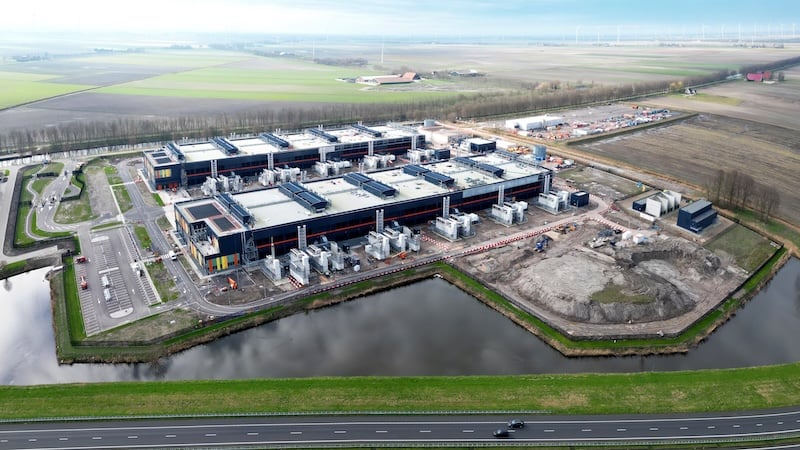
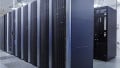
Grid flexibility can be enhanced by shifting AI workloads across time and locations to follow available power. Image used courtesy of Adobe Stock
When these forms of flexibility are coordinated during the relatively few hours when the grid is stressed, they unlock massive capacity that already exists. Instead of forcing expensive upgrades that push rates higher, flexible supply and demand allow the grid to carry more load, more often at lower cost.
The payoff is faster growth and lower bills, since serving more load on existing infrastructure spreads fixed grid costs across more kilowatt-hours, lowering rates. This is increasingly how system planners see the challenge: as a utilization problem rather than a shortage of assets. Planned flexibility is one of the few tools that can unlock idle capacity without shifting costs onto ratepayers.
The math behind this is compelling. Unlocking just 1 gigawatt of capacity on existing infrastructure can translate into a 5 percent rate reduction for customers, more than $1 billion in grid investment that utilities never have to pass on to ratepayers, and $25 billion in regional economic development. It also gives utilities a path to revenue growth without the stranded-asset risk that comes with building new generation or transmission on the assumption that demand will keep climbing indefinitely.
Utility leaders are already seeing this effect. Portland General Electric’s CEO, Maria Pope, has noted that AI-driven load growth is helping spread fixed system costs across a larger base, supporting affordability for all customers. Pacific Gas and Electric has published similar analyses showing that one gigawatt of new data-center load could reduce customer rates by 1 to 2 percent.
Why Utilities Haven't Done This Before
If this approach lowers costs, why has it not been widely adopted until now? Because until recently, the problem was simply too complex to analyze.
The power grid is a network, and reliability depends on how it handles combinations of failures, not just individual ones. Even a grid with roughly 10,000 components has tens of millions of possible single- and double-outage combinations to consider. Those scenarios must be analyzed across all 525,600 minutes of the year, across multiple years, across hundreds of locations and interconnection requests, and across myriad scenarios at each point on the system, a tricky engineering challenge with trillions of interacting parameters.
For decades, utilities managed this complexity by simplifying it. They focused on a small number of worst-case-scenario snapshots and ran studies that still took incredibly skilled engineers months to complete with the tools they had. That approach was intentionally prudent and conservative, keeping the lights on, but leaving enormous amounts of usable capacity invisible and unused.
Advances in high-performance and accelerated computing now make it possible to quickly evaluate grid behavior across time, locations, contingencies, and flexibility options to inform real planning and operational decisions.
This is no longer hypothetical. Forward-looking utilities are now leveraging physics-based AI to run quadrillions of scenarios. This enables large-load interconnection, coupled with the flexibility to maintain reliability and make better use of existing infrastructure.
Portland General Electric (PGE), for example, is deploying Power Acceleration to identify excess grid capacity, activate large load interconnection, and incorporate ongoing flexibility and real operational constraints directly into system planning. This approach uncovered sufficient existing capacity in a single region to support more than 400 megawatts of new data-center load years earlier than traditional approaches would have allowed, without requiring new grid upgrades. By coordinating flexibility across providers and allocating costs so that new load funded the flexibility it required, PGE was able to rely on existing infrastructure while improving grid utilization.
The same pattern is playing out on the East Coast. National Grid is applying the same real-time, physics-based AI system intelligence to its New York network, identifying 650 megawatts of connection capacity for large, flexible loads on existing infrastructure. That analysis is expected to help reduce interconnection lead times from several years to as little as six to twelve months, a timeline previously considered unattainable for loads of this size. National Grid's leadership has since pointed to this work as a model for how utilities can serve surging demand without resorting to costly new construction.
Collaboration, Not Automation
These outcomes do not happen automatically. They require the grid and large data-center loads to be planned and operated collaboratively. Both parties must treat flexibility as a system resource that can create mutual benefit. The real wins are faster interconnection, increased revenue and reliability, and potentially lower rates and participatory benefits for communities.
Making this work at scale requires a neutral party that understands both utilities and data centers and is focused on optimizing system-wide outcomes to create a bridge that allows everyone to meet in the middle. Someone must assess tradeoffs across the network, unlock hidden grid capacity, determine where flexibility creates the most value, continuously monitor and validate each party's obligations, and ensure that costs are allocated to the specific projects that benefit. This is where an independent vendor, working across utilities, data centers, and flexibility providers, can translate system-wide analysis into actionable capacity.
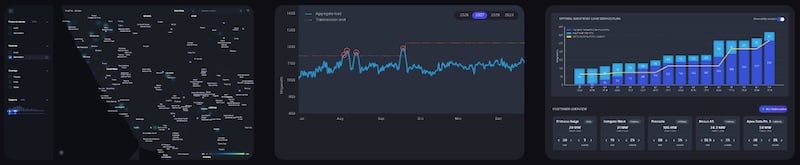
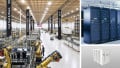
GridCARE’s Energize Platform can identify regions of opportunity, unlock capacity, and enhance operational efficiency. Image used courtesy of GridCARE
Flexibility must also be real, not theoretical. Providers need to be integrated into utility planning, control rooms, and day-to-day operations, with real-time coordination between planners, operators, flexibility providers, and large customers. Flexibility that exists only on paper is not capacity.
The stakes could not be higher. The United States is in a global competition for AI leadership, and access to power is the bottleneck that will decide it. At the same time, millions of Americans are struggling with rising electricity bills.
We do not need to choose between growth and affordability. Using the grid we already have more intelligently allows us to deliver both.
AI will grow. The real question is whether that growth is choked by outdated planning assumptions or unlocked by collaboration that turns flexibility into capacity, capacity into affordability, and the grid we already have into the grid the future needs.