Facebook
 Google
 GitHub
 Linkedin
What Are ‘Eddy Currents’ and Why Do They Matter to Motors?
Electromagnetic devices like motors and transformers rely on electric currents that drive magnetic fields which, in turn, can drive current on their own. That’s not always a good thing.
Electric motors and transformers are common industrial devices. Transformers are found outside and inside the main electrical supply to a facility and are often installed in electrical cabinets to further reduce voltage. Motors, of course, are also found on nearly every electrical motion machine.
There is one common theme to both devices: They run on the concept of electromagnetic induction. Current flowing through a coil of wire magnetizes an iron core, which, in the transformer, drives its own current in a secondary coil. In the case of a motor, this magnetic field forces the rotation of the center of the device (the rotor).
This is great in theory because the electrical conduction of the coil is entirely insulated from the iron core, so we do not expect to see any current in the iron itself. But in making this assumption, we forget about the concept of "eddy currents."
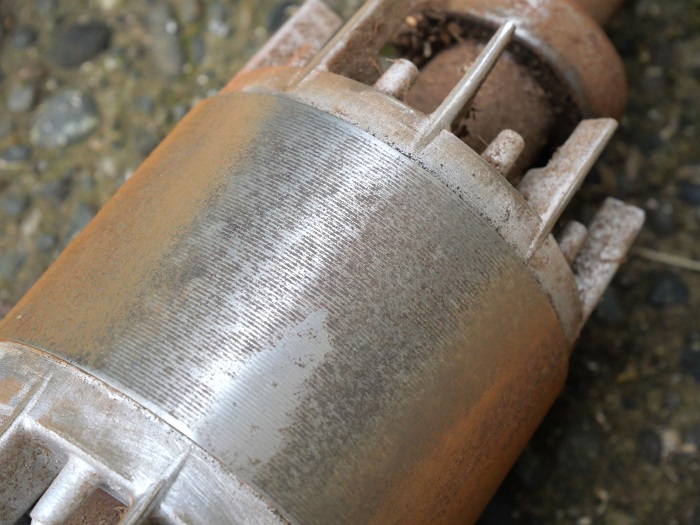
Figure 1. The rotor of a motor. This rotor, although long out of service and rusty, is created with iron in order to respond to the magnetizing of the motor coils.
What Is an Eddy Current?
Those solid iron cores, also known as "ferrous" cores because of iron’s periodic table title of Fe, store energy when they are magnetized by an alternating current. As the alternating wave collapses and reverses, the energy is released into two things. In a motor, the energy is converted into the motion of the rotor. In a transformer, the energy becomes the current in the secondary coil circuit.
However, if there is a chance for the core to release its stored energy into some other nearby conductive piece of metal, it will certainly try to do so.
This current that drives inside nearby ferrous elements is called an eddy current, and it appears inside the iron core itself. The release of the magnetic field attempts to drive current in a small circuit inside the iron itself, which is a conductive metal. Eddy currents can also appear in chunks of metal near the transformer or motor, which is why grounding is so critical, even if there isn’t a wiring failure.
Why Is Eddy Current so Bad?
When a small circuit is completed inside the iron core itself, there are several negative results.
Lower Efficiency
This first problem is that it simply consumes more energy. The efficiency of the entire electrical system is reduced; there is a cost in the increased power consumption and the increased sizing of the components to accommodate the extra input power needed to drive both the load and the eddy current in the core. Some of the magnetic field is driving the load, but some is now diverted to the eddy current, so a larger input current supply is required.

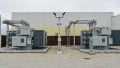
Figure 2. The core of a transformer in which a current can drive with very little resistance, but still enough to generate heat and waste energy.
Overheating
Perhaps more important, however, is the increase in temperature, which is a compounding effect and can be catastrophic to the device. If an eddy current circuit is induced, the current is running through the resistance of the iron. The resistance of iron is fairly low but still over 7x the resistance of copper. This means that the total current in an eddy circuit will be fairly high, but the resistance will cause that power dissipation to come off as heat.
Since the device is not designed to cool the rotor (or the core of the transformer), it will simply continue heating up, drawing more and more current through the coil to keep the load in operation until either a circuit breaker/fuse is tripped, or the coil insulation begins overheating and melting.
Laminations: Preventing Eddy Currents
The answer to eddy currents is fairly simple, yet more difficult to manufacture.
The ferrous iron of the core is first cut into many thin slices. These slices are re-assembled with a coating of varnish or paper material that forms an insulating barrier between each slice. The insulation blocks an electrical circuit from being completed. However, the total amount of iron in the core is still the same as before, so it has the same ability to store the magnetic energy.

Figure 3. This transformer has a laminated iron core to block the flow of the eddy currents.
Very small eddy circuits may still be induced in each slice, but the thickness of each layer determines how much energy will be lost due to eddy currents. In fact, the loss from eddy current is proportional to the square of the layer thickness, meaning that if the layer is reduced by a factor of 2, the losses will be reduced by a factor of 4. How thin is too thin? The cost of manufacturing becomes the limitation, so most layers in a modern iron core are between 0.25 and 0.5 mm thick.
Lamination Orientation and the Right-Hand Rule
In physics, many natural forces follow a ‘right-hand rule,’ which is really just a convenient way of illustrating how two relational forces, like current and magnetism, tend to influence each other in nature.
To see why this makes a difference in the core of a motor or transformer, look at the following image.
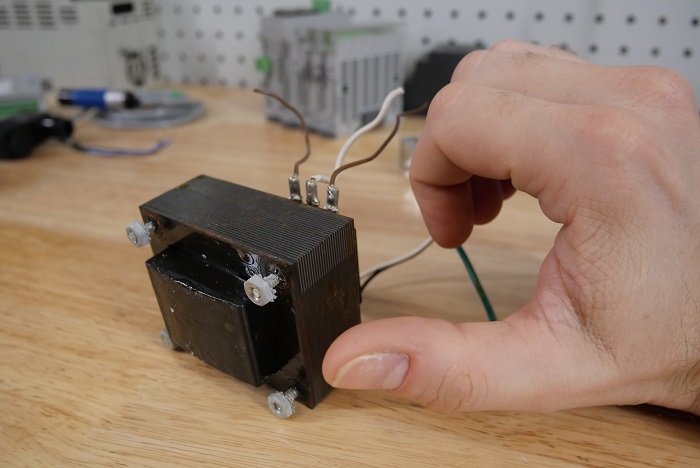
Figure 4. The ‘"right-hand rule’" is applied to this transformer.
First, the current from the primary coil magnetizes the iron core, which is the large laminated structure around the transformer. The stored energy in the core is represented by my curled fingers. As a result, this magnetic energy will try to force a current to travel in the direction of the thumb on the right hand (hence the "right-hand" rule).
As you can see, the lamination slices are perpendicular to the thumb direction. This means that the insulation layer will prevent current as the magnetic field (and the direction of my thumb) rapidly switches directions.
Minimizing Energy Losses
We often think about efficiency as a sustainability goal, but it’s really far more than that. Careful design of components like motor cores and transformers can reduce energy losses through heat. While this is great for sustainability initiatives, it also results in lowered operating costs, longer lifetime of equipment, and massive downtime savings, a huge win for the entire organization.