Facebook
 Google
 GitHub
 Linkedin
Thermal Management: A Look at Junction Temp with Fiber Optic Sensors
Junction temperature is critical to determining the power cycling capability of power semiconductor devices. A new generation of fiber optical temperature sensors enables more reliable direct measurement to improve the analysis of power modules' aging and failure modes.
This article is published by EEPower as part of an exclusive digital content partnership with Bodo’s Power Systems.
Junction temperature (Tj) is critical to determining the power cycling capability of semiconductor devices. It is essential for the extraction of thermal characteristics of IGBT, the elaboration of lifetime laws, and the study of power die stability. A new generation of fiber optical temperature sensors enables more reliable direct measurement of these critical parameters to improve power module aging and failure modes analysis. They can predict module end of life with embedded instrumentation and enable preventive maintenance over corrective actions through condition monitoring.
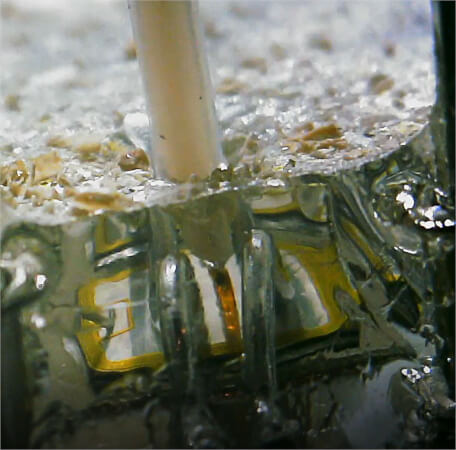
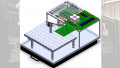
Figure 1. Sensor deployed on die through silicon gel (Courtesy of Aalborg University)
Power Cycling and Mission Profiling
Accurate junction temperature is critical and essential for extracting the thermal characteristics of IGBTs, elaborating lifetime laws, and studying the stability of power dies. These processes have elaborated on the aging and failure modes of power modules. These measurements are usually done in controlled conditions over a relatively short period of time. Sensors are rarely fixed permanently to the die or the wire, allowing reuse.
Fiber optic sensors offer:
- Repeatability and consistency of measurements
- Sensor package with and without gel
- Small rigid head for precise placement
- No energy transfer risk to technicians
- Response time in the ms range
Condition Monitoring
Active monitoring aims to predict potential problems on power modules that are hard to reach or integrated with critical systems such as offshore power generators, subsea environments, high-power density multichip modules, and critical infrastructures (high-speed trains).
Wind turbines usually operate in remote, harsh environments and are subject to various subsystem failures. The IGBT module is a top-ranked subsystem contributing to the overall failure rate and downtime of wind turbines. Owing to rising concern over the long-term reliability of wind turbines, there has been significant interest in developing online health monitoring technologies for major wind turbine subsystems. Therefore, to ensure safe operation and reduce the maintenance cost via condition-based maintenance for wind turbines, it is critical to monitor online the aging of the IGBTs used in wind turbine power converters.
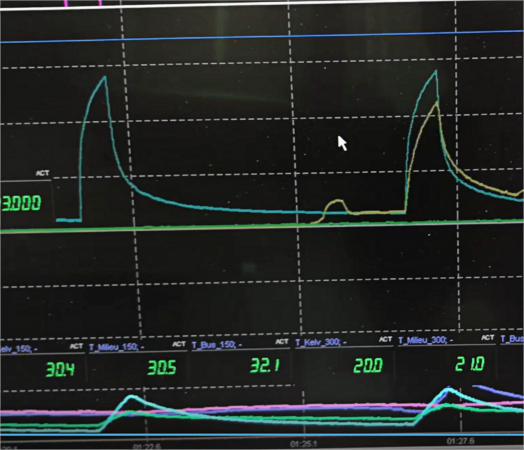
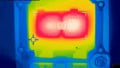
Figure 2. Sharp temperature variations during power cycling (Courtesy of Gustav Eiffel University)
Optical sensors are the perfect tool to predict aging based on temperature because they do not require any maintenance/calibration after installation. Further, the industrial converter design and package do not require any modifications. Finally, the power module can operate at full power and full voltage (representing real operating conditions) after instrumentation.
This article originally appeared in Bodo’s Power Systems [PDF] magazine.
Related Content