 Facebook
 Google
 GitHub
 Linkedin
Optimal Cooling Element Geometry
Efficient cooling of electronic components requires balancing thermal performance with precise geometric tolerance specifications to ensure system reliability and operational lifespan.
This article is published by EEPower as part of an exclusive digital content partnership with Bodo’s Power Systems.
The cooling of electronic components to ensure their operational lifespan is essential and indispensable. The entire range of cooling concepts, whether passive or active, must first be fitted to the thermal margin parameter. Equally important is monitoring the geometric tolerance aspects of the range of concepts with regard to individual assembly conditions.
Temperatures of Electronic Components and Component Groups
Thermal cooling concepts for cooling electronic components are essential and necessary in order to operate the applied components in a specified temperature range. Over the long term, correctly selected and correctly adjusted cooling solutions ensure lasting components and keep them from being destroyed or removed from operation.
The main application fields for efficient solutions are found in the electronics industry, among others, and especially in defense technology. Thermal design in this area demands a balanced interplay of reliability, power density, robustness, and durability. Electronic defense systems, as well as the necessary individual parts, work under extreme conditions and demand high precision and stability.
A reliable cooling concept ensures that sensitive electronic components remain within established safe temperature limits and can be operated over the long term. Reliable temperature control influences the operational capability, operational lifespan, and safety of systems.
Passive cooling systems are often selected for military applications because of their high reliability and low susceptibility to faults. Among these are attachable extruded heat sinks (Figure 1), heat-conducting materials or thermal masses, for example, milled aluminum components that dissipate heat into the surrounding environment by means of active physical principles.
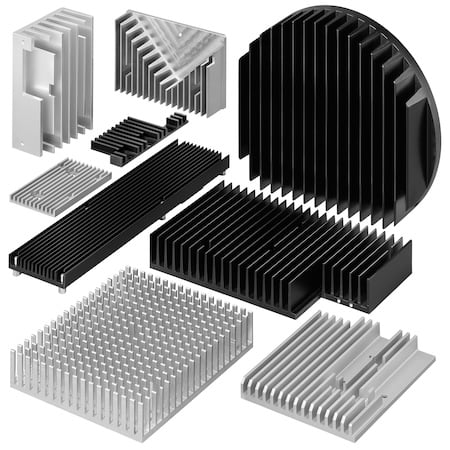
Figure 1. Extruded aluminum heat sinks offer effective solutions for a range of cooling tasks and not only for financial reasons. Image used courtesy of Bodo’s Power Systems [PDF]
Passive solutions are also low maintenance and offer advantages in electromagnetic camouflage, because they possess no moving parts or loud fans. Active cooling systems, such as fan aggregates (Figure 2), provide better Performance with regard to heat removal and are used in those places where passive solutions are insufficient. The operation of fan aggregates with robust and redundant fan motors is simple to use but requires additional protection against dust and dirt.
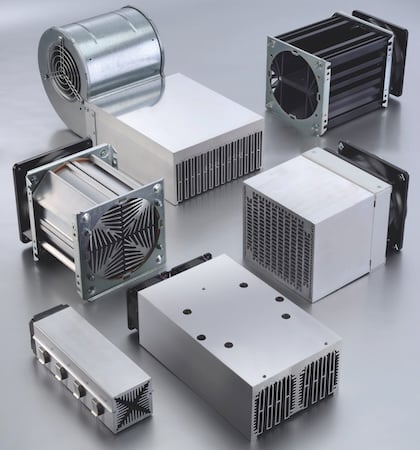
Figure 2. Because of their construction, fan aggregates available in various models are a very efficient means of heat removal. Image used courtesy of Bodo’s Power Systems [PDF]
In many electronic applications, AI and maintenance based on actual plant and equipment conditions are already improving thermal management through proactive fault recognition and adaptive control. Multiple sensors monitor temperatures occurring in the application in real time and the volume of air generated by fan motors.
AI algorithms also optimize fan speeds and thereby extend the component’s operational lifespan. Digital twin technology makes computer simulation-assisted prognoses possible under changing conditions and simplifies testing of new cooling designs without perfect physical prototypes.
However, both practical application and years of experience in the area of component cooling show that each concept should not be seen as a stand-alone solution but should always be viewed as one component built into a device in interplay with other components. Keeping this in mind, the ranges of tolerance the manufacturer specified must always be analyzed and evaluated as well as matched to the installation building parameters.
Correctly Evaluating Manufacturer Tolerances
Cooling concepts based on components that rely on passive extruded heat sinks or active fan aggregates require, in addition to the calculation of their thermal performance, a detailed analysis of the recommended tolerance parameters in their respective assembly situations.
Attachable extruded heat sinks or profile components for fan aggregates that are often used to cool components in the electronics industry are manufactured in an aluminum extrusion press model and are subject, depending on the dimensions of their geometry, to international DIN norms.
Manufacturer-verified tolerance ranges according to profile dimensions and complexity are described in these Norms. To summarize, the fact is that the bigger the manufactured geometry, the larger the deviations in their tolerance ranges will turn out to be in the desired geometry.
Tolerance deviations of from a few tenths to up to a few millimeters are not uncommon and must be carefully observed in the pre-planning stage of heat management. This spares the user's time and nerves in the long term and may also, in retrospect, save on expensive reworking costs.
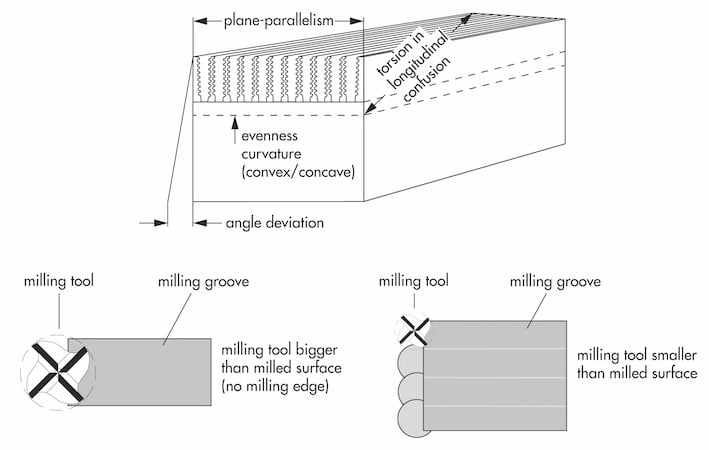
Figure 3. Many mechanical tolerances for standard cooling elements and for mechanical processing require application-specific attention. Image used courtesy of Bodo’s Power Systems [PDF]
In the case where extruded attachable heat sinks are built into the overall concept as components, it is not only critical to observe the mechanical machining parameters, like, for example, the heat sink length in the form of cutting tolerances, but also the profile width and height, the angle/corner deviation, torsion and plane parallelism as well as the wall thickness tolerance or curvature (convex/concave) of the cross-section.
Often, incidental and manufacturer-conditioned unavoidable deviations in tolerance lead to changes in the assembly situation or to additional mechanical adjustments, with the goal of making the cooling concept currently being used truly efficient.
One example of this we could name is the heat sink base, which in most customer-side use cases serves as the semiconductor assembly surface. In the tolerance-technical description of the quality of the heat sink assembly surfaces, one must distinguish between the concepts of evenness and roughness.
Plane-parallel semiconductor assembly surfaces are only achieved through CNC optimization and have a very important role to play in the correct heat-technical contact of the electronic component on the heat sink.
Poor heat exchange from the electronic component to the cooling element reduces heat conduction along the thermal path, raises the component temperature considerably, and can, in addition to possibly compromising function, also lead to the destruction of the component.
It fundamentally applies that, by the contacting of two flat surfaces with each other, as for example in the case of a semiconductor mounted onto a heat sink, the effective contact surfaces without additional mechanical adjustment should lie between 2 and 5 percent. The remaining surface serves as a kind of air pocket or gap in which the air, because of its poor contact and its very poor thermal conductivity, works as a thermal isolator.
Smart Improvements
The quality of high-value complete aluminum cooling concepts starts at Fischer Elektronik with the storage of the intended raw materials. Different kinds of extrusion press sections are stockpiled in an innovative and fully automatic honeycomb storage system with added temperature regulation as well as moisture monitoring. (Figure 4). Constant temperatures and controlled air moisture protect the aluminum sections from so-called corrosion. From a technical point of view, pre-corrosion is a reaction of the base material with its environment.
The effect is unfortunately not visible on a blank aluminum surface and only becomes visible if the material is anodized again after mechanical machining. Anodization, or, more precisely, the staining in the process, makes the defects on the heat sink surfaces visible as a relief, which ultimately results in an unsaleable product, since the size and proliferation of the defects can lead to severe limitations on the function of the electronic component or systems.
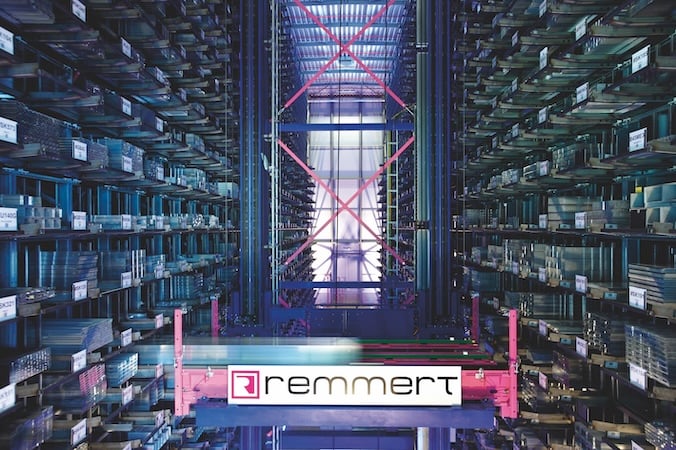
Figure 4. An innovative and well-thought-out storage plan helps protect the extrusion press profile from external environmental influences and to fulfill the qualities demanded by the client. Image used courtesy of Bodo’s Power Systems [PDF]
For any client-specific machining process done to heat sinks, for example, any kind of milling, cutting screw threads, or drilling, the mechanical CNC-fitting of the general tolerance according to DIN ISO 2768m applies, as long as the client has given no further finishing instruction on the label. In this standard tolerance for mechanically worked components referenced here, the symmetrical boundary measurements for length and angle dimensions as well as general tolerances for form and disposition are established.
Depending on the requisite degree of processing and the profile geometry, the tolerance classes can then be indicated by an m for the middle tolerance class, with f for fine, or c for coarse. With regard to different processing tolerances, the mechanical processing tolerances should also allow for coordination with the application and the installation situation of the heat sink, just as the previously described heat-sink tolerances were. Likewise, it is always sensible and recommended to indicate specific parameters, processing and assembly areas appropriately on the shop drawing being used as a basis.
In addition to the technical milling processing possibilities noted here, Fischer Elektronik offers other useful configurations. For screw threads which require increased pull-out torques, special Helicoil threaded inserts are screwed in, which results in a strong, durable standard thread with high shear strength.
The press-in or welding of threaded bolts, threaded bushings, and flat plugs, sandblasting and sanding for homogeneous surfaces, imprint the aluminum heat sink, while surface coatings such as anodization, finish applications, and powder coatings, electrographic and RoHS-conforming coatings with SurTec 650, complete the processing portfolio.
This article originally appeared in Bodo’s Power Systems [PDF] magazine.
Related Content