Facebook
 Google
 GitHub
 Linkedin
HV Transmission: Conductor Sizing, Infrastructure Design, Voltage Selection
The article covers high-voltage transmission, emphasizing conductor sizing, infrastructure design, and voltage selection criteria. It explains how higher voltage reduces current, minimizes losses, and enables smaller, more cost-effective conductors, and outlines standard voltage levels for different transmission needs.
High-voltage transmission systems are critical to efficiently delivering electrical power over long distances. By increasing voltage, the current is reduced, which in turn lowers resistive heating and power losses. This allows for the use of smaller conductors, reducing material costs, weight, and mechanical strain on supporting structures like towers. Lower current also helps prevent issues like conductor sag, ensuring the system operates safely within thermal limits. Smaller, lighter conductors also reduce the overall environmental and land-use impact, allowing for narrower transmission corridors and better public acceptance, especially in densely populated or difficult-to-access areas.
The selection of the appropriate voltage for transmission lines depends on several factors, such as load demand, transmission distance, grid topology, and the need for system reliability. Higher voltage levels are used for longer distances and larger power demands to minimize losses and maintain efficiency. Transmission lines are classified into different voltage levels ranging from sub-transmission (33 kV to 138 kV) to ultra-high voltage (above 800 kV) based on their capacity and application. Standards set by organizations like IEEE, IEC, and ANSI ensure consistency and compatibility across systems globally, guiding the design and operation of reliable, safe, and efficient power transmission networks.
Conductor Sizing and Infrastructure Design
High-voltage transmission significantly influences the design and selection of conductors and support infrastructure. A key factor in this process is ampacity — the max current a conductor can carry without going over its thermal limits. Since power (P) is given by:
\[P=VIcos\theta\]
For constant power delivery, increasing voltage (V) allows a proportional decrease in current (I). This reduction in current is critical because conductor heating, which leads to thermal sag, is governed by Joule’s Law:
\[P_{loss}=I^{2}R\]
Lower current generates less heat, which minimizes sag and allows conductors to operate within safe thermal margins. This enables utilities to use smaller conductors, reducing both material costs and mechanical loading on support towers.
Furthermore, conductor temperature rise (ΔT) can be approximated by:
\[\Delta T=\frac{I^{2}R}{kA}\]
Where:
- R = resistance of the conductor,
- A = surface area of the conductor,
- k = heat dissipation coefficient.
By decreasing current (I), we minimize temperature rise, allowing the conductor to operate at lower temperatures improving longevity and reliability.
From an infrastructure perspective, smaller conductors weigh less, enabling the use of lighter support structures and potentially longer span lengths between towers. Additionally, tower height and spacing are influenced by the electrical clearance requirements, which are impacted by voltage, but the mechanical burden is primarily tied to conductor size and weight. Smaller, lighter conductors reduce the mechanical strain and enable more cost-effective tower designs.
On the ground, this translates to narrower Right-of-Way (ROW) requirements, minimizing land use and environmental impact. In areas where land acquisition is challenging or expensive, this is a significant advantage. Additionally, smaller physical footprints of transmission corridors improve aesthetic integration and public acceptance.

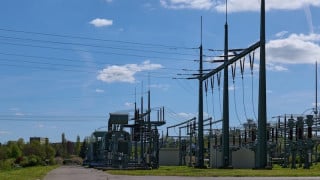
Figure 1. Components of a High Voltage Transmission Line. Image used courtesy of Monolithic Power Systems
Standard Transmission Voltage Levels
In modern power systems, transmission voltage levels are standardized to ensure compatibility, safety, and efficiency across different regions and components of the grid. These voltage levels are classified into specific ranges based on the function, transmission distance, and power capacity of the lines. Selecting the appropriate voltage for a transmission line is a crucial design decision influenced by multiple technical and economic factors.
Voltage Classification Overview
Transmission systems are generally grouped into the following standard voltage classes based on the amount of power they carry and the distance over which it must be transmitted:
|
Voltage Class |
Voltage Range |
Purpose |
|
Sub-Transmission |
33 kV – 138 kV |
Local or regional power distribution |
|
High Voltage (HV) |
230 kV – 400 kV |
Bulk power transmission across regions |
|
Extra High Voltage (EHV) |
500 kV – 765 kV |
Long-distance, high-capacity transmission |
|
Ultra-High Voltage (UHV) |
Above 800 kV (e.g., 1,100 kV) |
Intercontinental or ultra-long transmission |
Sub-Transmission (33 kV – 138 kV)
Sub-transmission lines serve as the bridge between high-voltage transmission systems and local distribution networks. These voltages are suitable for short to medium distances, supplying industrial customers, or stepping down power for urban and rural distribution.
High Voltage (HV) (230 V – 400 kV)
HV transmission is the workhorse of most national grids. These lines transmit large quantities of electricity over moderate to long distances, often between generation plants and regional substations. HV systems strike a balance between efficiency, infrastructure cost, and ease of insulation.
Extra High Voltage (EHV) (500 kV – 765 kV)
EHV systems are used when very large amounts of power must be delivered over hundreds of kilometers, such as between distant generation sources (like hydro or thermal plants) and urban centers. EHV reduces line losses and voltage drops, supporting grid reliability during peak demand.
Ultra-High Voltage (UHV) (Above 800 kV)
UHV systems are increasingly used in large countries where vast distances separate generation and load centers. These systems are capable of transporting 10–12 GW of power over 1,500–2,000 km, reducing the need for multiple parallel lines and minimizing land use and infrastructure costs.
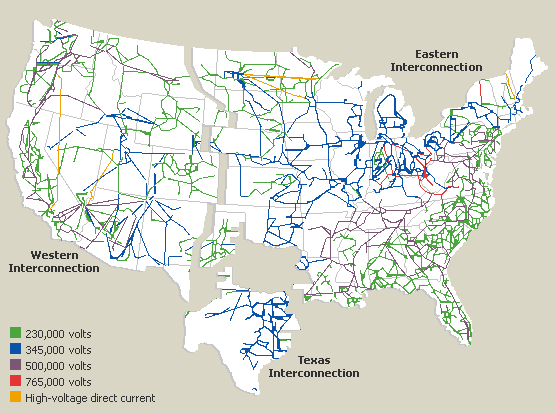
Figure 2. Different Voltage Levels integrated within a US Transmission network. Image used courtesy of GENI
Voltage Selection Criteria
Selecting the appropriate voltage level for a transmission line is a critical design decision influenced by several interdependent factors. These include the expected load, transmission distance, overall grid configuration, and reliability requirements.
1. Load Demand
Higher power demands necessitate the use of higher transmission voltages. This is because transmitting large amounts of electricity at lower voltages would require higher current, which leads to greater losses and larger conductors. For example, delivering 300 MW over a distance of 500 kilometers would typically require transmission at 400 kV or above to ensure efficient and stable power delivery.
2. Transmission Distance
As the distance between the generation source and the load center increases, higher voltage levels become essential to reduce resistive losses (I²R) and minimize voltage drop along the line. In general, longer transmission lines require higher voltages to maintain efficiency and ensure that power arrives at its destination without significant degradation.
3. Grid Topology
The structure of the transmission network also plays a role in voltage selection. In complex, meshed grids with multiple interconnections, higher voltages help manage varying load flows and provide flexibility in power routing. On the other hand, simpler radial networks—common in isolated or rural areas—may operate effectively at lower voltages depending on the size of the connected loads and the distance involved.
4. System Reliability and Fault Currents
High-voltage lines must be designed with system reliability and fault management in mind. As voltage increases, potential fault currents also rise, requiring more robust circuit breakers and protection schemes. Engineers must find a balance between the benefits of higher voltage (like reduced losses and improved efficiency) and the challenges it poses in terms of safety, equipment ratings, and maintenance during fault conditions.
Standards and Voltage Classifications
Various international standards bodies define and regulate transmission voltage levels to ensure interoperability, safety, and efficient grid planning across different regions and systems. These standards help determine nominal voltage values, insulation requirements, and acceptable operational limits, which are critical for designing consistent and reliable power infrastructure globally.
|
Standards Body |
Relevant Standard |
Voltage Classification Example |
|
IEEE |
IEEE Std 1313.2, IEEE C37 series |
Defines HV (≥100 kV), EHV (≥345 kV) |
|
IEC |
IEC 60038, IEC 60071 |
Specifies nominal voltages |
|
ANSI |
ANSI C84.1 |
Classifies voltage ranges for power systems |
|
NERC |
Transmission Planning (TPL) standards |
Specifies voltage planning limits for North America |
IEC 60038, in particular, is widely adopted and sets the preferred nominal voltages used in transmission and distribution systems around the world. It provides standardized voltage levels that equipment manufacturers and utilities follow to ensure system compatibility. Similarly, IEEE and ANSI standards are commonly referenced in North America, while NERC focuses on operational and planning aspects of voltage regulation for the North American grid.
These standards are essential for ensuring that equipment from different manufacturers can work together, for maintaining system stability, and for meeting safety and performance requirements under various operating conditions.
Getting the Most of the Grid
High-voltage transmission enables the efficient transfer of large amounts of electricity over long distances while minimizing energy losses and optimizing infrastructure. By reducing current, high-voltage systems not only enhance the reliability and safety of power delivery but also lower operational and material costs through the use of smaller conductors and lighter support structures. The selection of appropriate voltage levels based on factors like load demand and transmission distance ensures that power systems remain efficient, reliable, and cost-effective.As energy demand continues to rise, these principles are essential for optimizing transmission efficiency, reducing losses, and ensuring the grid can handle large power transfers without compromising stability or reliability.