Facebook
 Google
 GitHub
 Linkedin
How To Choose a Charger for Your Li-ion Batteries—Maximizing Battery Life
Choosing the correct method of charging your batteries is important in ensuring they perform optimally and last longer. Selecting the right charger is as vital a decision as the choice of battery.
This article is published by EEPower as part of an exclusive digital content partnership with Bodo’s Power Systems.

Figure 1. Which Li-ion charger fits best?. Image used courtesy of Bodo’s Power Systems [PDF]
As with most other charger types, Li-ion chargers use the typical three main charging phases (Figure 2):
Step 1: Constant Current Charge
When a Mascot charger is connected to mains and a battery, it starts in ‘constant current’ (CC) mode, and charges at maximum current with a yellow LED indicator until the battery reaches 80% – 95% capacity. If the battery voltage is below 3 V per cell, a low current start-up will be applied. If the normal voltage isn’t reached, charging stops, and the LED light flashes red four times.
Step 2: Constant Voltage (Timer) Charge
While in ‘constant voltage’ (CV) mode, the charge current decreases, and the LED flashes yellow. The charger remains in this mode until the current has decreased to the end of the charge level or the CV timer runs out.
Step 3: Charge Complete
When fully charged, the LED turns green, and the charger can remain connected, starting a new cycle if the battery voltage decreases by 0.1 V per cell. Li-ion chargers, when compared to lead-acid chargers, have a number of benefits, including higher voltage per cell, tighter tolerances, and no trickle or float charge. Li-ion cell manufacturers are very strict on the correct setting because Li-ion cells cannot accept an overcharge.
What Is the Best Charging Current?
The battery’s mAh or Ah capacity determines the appropriate charging current; most Li-ion cells should not exceed a 1 C charge rate, with 0.5 C being ideal for longer battery life. Charging at a lower current, especially below 0.5 C, helps improve performance and longevity. If the application requires faster charging, then the charging current will generally be increased. As a general rule of thumb, batteries shouldn’t be charged when in use, but the best way to do so would be to use a charger that delivers at least 25 % of the total Ah of a battery.
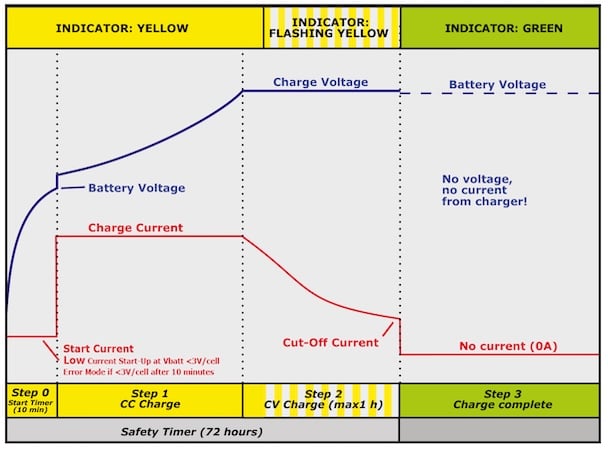
Figure 2. Charging voltage profile of a typical Li-ion charger circuit. Image used courtesy of Bodo’s Power Systems [PDF]
Selecting a Charger
When selecting a charger, there are several factors to consider. These include where it will be used, the battery’s capacity, available charging time, and required power output. If the charger will be used abroad, look for one with a universal input (90 V to 264 V). For outdoor use, use an output with a waterproof (IP67) rating. If ambient temperatures are extreme, opt for a charger with a sensor during charging. It is also important to verify the charger’s certifications and approvals, as these are good indicators of quality and compliance with standards.
Efficiency figures should also be compared to identify the most energy-efficient option. Ideally, a high-quality charger should offer optimised charging modes (pre-charge, CC, CV) and include protective features such as overvoltage, undervoltage, short circuiting, reverse polarity, and temperature protections, as well as meeting safety and EMC regulations.
It’s also important to use chargers from reputable brands with professional R&D and manufacturing capabilities, which can offer safer products and custom designs. Low-cost chargers should be avoided as they may shorten battery life, especially those without end-of-charge control or those with trickle charging that may lack current control. Avoid chargers that cause ripple power fluctuations above 5 %, as these can damage the battery; some brands may not adhere to this standard. Always check the specifications before making a purchase.
Optimizing Charger Performance
To optimise charger performance and protect your batteries, avoid using unregulated chargers and never exceed the specified charging voltage to prevent damage. Store batteries in a cool, well-ventilated area and avoid charging in extreme temperatures. Calculate charge time by dividing the battery’s amp-hour rating by the charger’s amp rating, adding time for top-off charging. Turn off devices or disconnect loads during charging, as parallel loads can interfere. For longevity, charge batteries to 40 – 50% before storage. Note: Some chargers may not fully charge the battery to 100%, so monitor accordingly.
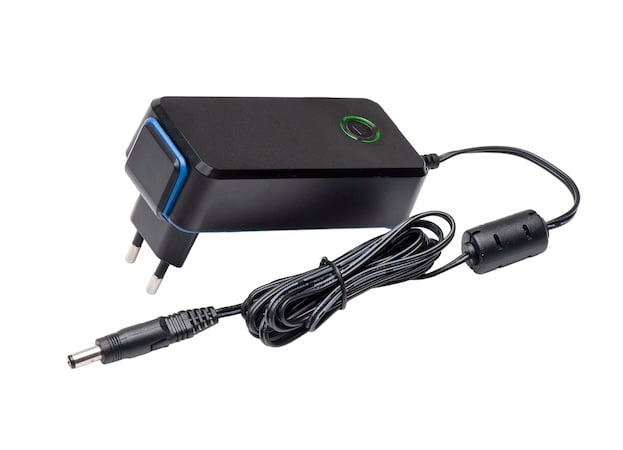
Figure 3. A typical high-quality charger for Li-ion batteries. Image used courtesy of Bodo’s Power Systems [PDF]
Studies have shown that charging to a slightly lower voltage can dramatically increase the number of cycles that you can get out of the battery. Charging to 4.1 V instead of 4.2 V (which is the equivalent of charging to around 90%) has been shown to add 50% or more cycles to a battery over its entire lifespan. To do this, a higher-specification charger is required.
There are so many different types of chargers on the market that it’s vital to spend time considering the options available and making the right choice. The most important thing to check is that the voltage matches your battery and that the quality is sufficient for your needs. Cheaper chargers can be fine if the decision to purchase one is informed, and the charger is used safely. However, if budget permits, investing in higher quality products will ensure a longer life for both your chargers and your batteries – decreasing cost in the long run.
This article originally appeared in Bodo’s Power Systems [PDF] magazine.