Facebook
 Google
 GitHub
 Linkedin
From Pistons to Powertrains: EVs Could Reshape Engineers’ Careers
Transitioning to electrification will have profound effects on U.S. auto industry employment.
The automotive industry is crucial to the U.S. economy, significantly contributing to the nation’s GDP and supporting millions of jobs. However, the electric vehicle has shifted the skills needed and the kinds of jobs available in automaking.
How is an electric vehicle assembled? Video used courtesy of General Motors
While the transition to EVs offers opportunities for employment growth and innovation, it also presents challenges that require retraining, strategic planning, investment, and policy support to navigate successfully.
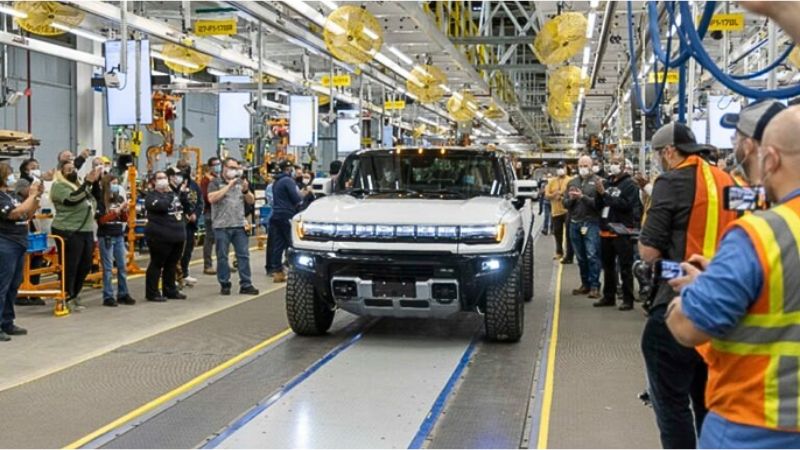
Factory rollout of an electric truck. Image used courtesy of General Motors
Employment Impact of EVs
Nearly 900,000 workers manufacturing internal combustion engine vehicles could be affected as the industry shifts to EVs, which require fewer components like engines and transmissions. Up to 80,000 auto workers and a similar number in the auto-related supply chain jobs have already been laid off globally due to the EV transition. The Congressional Research Service estimates nearly 150,000 U.S. jobs making internal combustion engine components could be at risk, and the U.S. auto industry could lose 75,000 jobs.
However, new jobs will be created in battery manufacturing, software development, and EV-specific components. Vertical integration and onshoring efforts, supported by government incentives, are expected to increase domestic manufacturing jobs. An Economic Policy Institute analysis estimated U.S. auto industry jobs could increase by 150,000 by 2030 if certain conditions are met. In Europe, a Boston Consulting Group analysis projects 895,000 new jobs will be added in the auto industry by 2030. The industry will need a skilled workforce adept in the latest technologies like battery manufacturing, artificial intelligence, and software development; comprehensive training and upskilling programs will be critical.
The pace of EV adoption will also depend on consumer demand and charging infrastructure development. Current concerns about EV range and charging availability are slowing down the transition, with hybrids gaining popularity as an intermediate solution. Political changes could also impact the pace of the EV transition. For instance, potential policy shifts under different administrations could either accelerate or decelerate the move to electrification.
Tesla’s Effect
Tesla's influence on the U.S. labor market and auto industry is profound and complex. While the company has been a major job creator in innovative sectors, it has also faced significant challenges, including recent layoffs and contentious labor relations. The broader industry shift towards electric vehicles, catalyzed by Tesla, continues to reshape the employment landscape, with both opportunities and uncertainties for auto workers.
Tesla's approach to labor relations has been contentious. The company has dealt with allegations of labor law violations during union organizing drives, and its manufacturing plants are often located in states with a history of anti-union organizing. The shift to EVs, driven largely by Tesla, has led to a reduction of traditional union jobs. EV production requires fewer assembly hours and involves fewer moving parts than conventional vehicles, contributing to a decline in United Auto Workers membership.
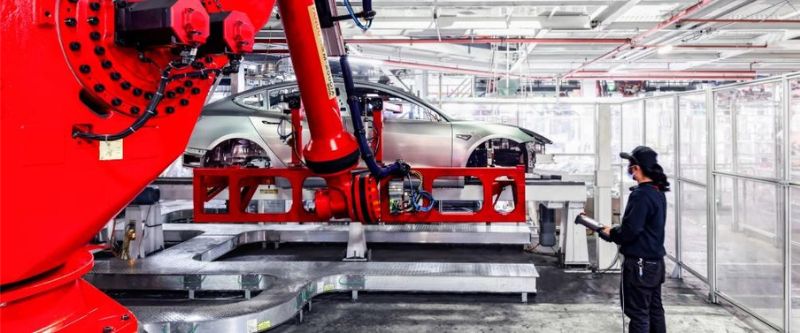
Tesla manufacturing. Image used courtesy of Tesla
Tesla has created thousands of jobs in manufacturing and engineering across its various facilities in California, Nevada, Texas, and New York. These roles include factory workers, software developers, and robotics engineers. Tesla's focus on innovation has created specialized jobs in areas such as battery technology, software development, and autonomous driving systems. This has spurred demand for high-skilled labor in these cutting-edge fields.
The employment situation is not all rosy at Tesla. The competitive landscape, including challenges from Chinese EV manufacturers, has further pressured Tesla's sales and operational strategies, impacting job stability within the company. Tesla has made significant layoffs, cutting more than 10% of its global workforce, translating to approximately 14,000 jobs. These layoffs have affected various departments, including factory workers, software developers, and high-level roles. The layoffs are part of Tesla's strategy to streamline operations and increase efficiency in response to declining sales and increased competition.
The China Factor
The entry of Chinese electric vehicles into the U.S. auto market, even with 100 percent tariffs, will likely significantly affect U.S. auto employment. The high tariffs are designed to protect U.S. auto manufacturing jobs by making Chinese EVs less price-competitive. This could help sustain employment in U.S. EV production facilities and related supply chains. The tariffs may also encourage further investment in the domestic EV industry, potentially leading to job creation in manufacturing, research and development, and infrastructure development. Tariffs’ primary immediate effect will likely be stabilizing the U.S. auto industry workforce, as domestic manufacturers will face less price competition from Chinese EVs.
On the other hand, while the tariffs may protect existing jobs, they may also limit the overall EV market growth in the U.S. by keeping prices high. This could slow down EV adoption and the associated job creation in the long term. China could also impose retaliatory tariffs, which could affect other sectors of the U.S. economy and lead to job losses in industries unrelated to EVs.
Auto Ups and Downs
Over the past 50 years, employment in the U.S. auto industry has seen significant fluctuations, peaking in the late 1970s and experiencing declines due to globalization, increased productivity, and economic recessions.
In the late 1970s, U.S. manufacturing employment, including the auto industry, peaked. For instance, General Motors alone employed around 620,000 people in 1979. However, starting in the early 1980s, the industry faced significant challenges, including increased competition from foreign automakers, leading to a decline in employment. By 1994, U.S. motor vehicle manufacturing employment was 281,600 workers. The North American Free Trade Agreement (NAFTA) in 1994 had mixed effects on the auto industry. While it aimed to boost employment by incentivizing manufacturers to assemble more vehicles in the U.S., the overall trend showed a decline in employment due to increased productivity and automation.
While employment in motor vehicle manufacturing fell sharply during the Great Recession, reaching a low in 2009 at about half of its 1994 level, the auto industry saw some recovery post-recession. By 2018, employment in motor vehicle manufacturing was 233,700, a 17 percent decline from 1994 but an improvement from the recession lows. As of May 2021, employment in the motor vehicle manufacturing industry was approximately 182,600.
Today, the auto industry in the U.S. directly employs over 1.7 million people in various roles, including manufacturing, parts supply, and vehicle servicing. Direct employment in the auto industry represents about 1.1 percent of the total non-farm employment (1.7 million out of 158.7 million). Including the broader impact, the auto industry supports about 6.1 percent of the total non-farm employment (9.7 million out of 158.7 million), roughly 5% of private-sector employment.
U.S. EV Market
As of early 2021, the U.S. had approximately 459,400 battery electric vehicles and 173,500 plug-in hybrid electric vehicles sold, indicating a growing market. By 2023, EV sales reached 1.4 million units, making up 9.2 percent of all new car sales in the U.S. Policies like the Inflation Reduction Act and Bipartisan Infrastructure Law have driven significant investments, totaling over $154 billion into EV manufacturing and infrastructure. EVs will account for 71 percent of U.S. car sales by 2035, potentially increasing to 80-100 percent by 2050.
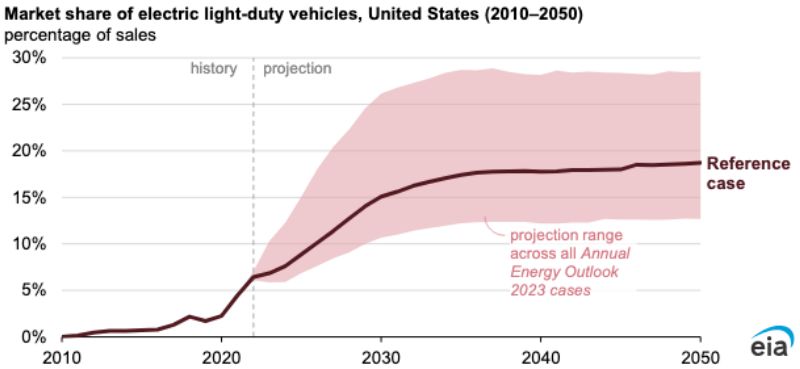
Projected EV sales as percentage of total automotive sales. Image used courtesy of Energy Information Administration
The Long-Term Employment Impact
The long-term impact on employment will depend on how effectively U.S. manufacturers can capitalize on the protection provided by tariffs to innovate and reduce costs. If successful, this could lead to a net increase in jobs; if not, the industry may struggle to compete globally, potentially leading to job losses in the future.