Facebook
 Google
 GitHub
 Linkedin
EVs Shift to Axial, Dual-Rotor and Magnet-Free Drives
Electric vehicle motor architecture is evolving rapidly, with axial-flux, dual-rotor, and magnet-free designs advancing efficiency and integration.
While silicon carbide and gallium nitride are redrawing the power semiconductor map, electric motor architecture is quietly undergoing its own transformation. From axial-flux geometries to magnet-free topologies, OEMs and startups are racing to redesign the machines that move next-generation electric vehicles, with big implications for power density, thermal design, and sustainability.
Mercedes-Benz, DeepDrive, and Mahle have pushed the boundaries of electric motor technology with new developments aimed at power and efficiency.
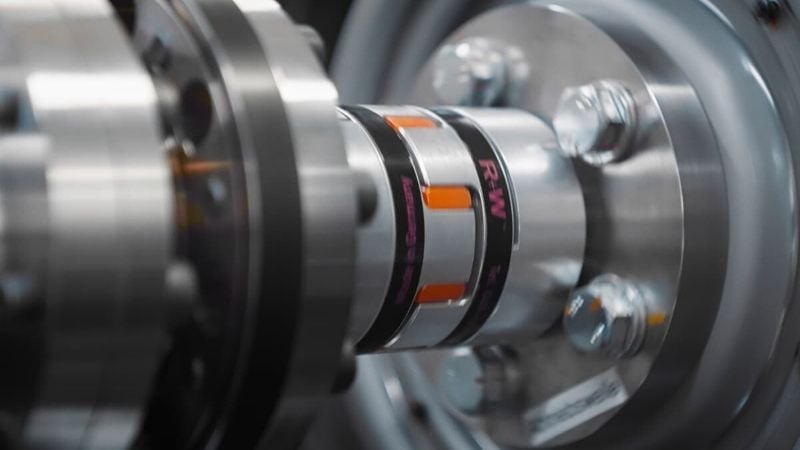
DualDrive offers an affordable and efficient patented dual-rotor technology. Image used courtesy of DeepDrive
Axial-Flux Motors Move to Production
Long a niche choice for aerospace or racing, axial-flux motors have moved into EV production, thanks to their superior torque density and flat packaging.
By aligning the magnetic flux path parallel to the rotor axis rather than radial, axial designs shorten the magnetic path and reduce losses. Mercedes-Benz, for example, is now betting on axial-flux via its acquisition of Yasa, whose motors deliver high torque from compact packages, making them ideal for performance EVs and hybrid supercars.
These motors excel where space is at a premium and thermal efficiency is key, making them attractive for in-wheel and rear-axle drive units. However, they also challenge conventional cooling approaches due to their tight rotor-stator clearances and high power density.
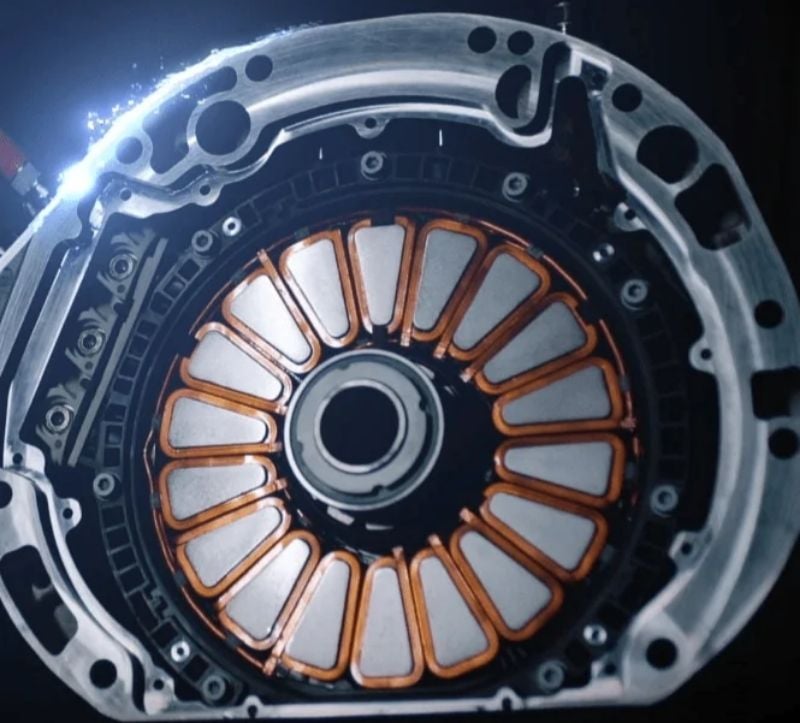
Axial flux technology. Image used courtesy of Yasa
Dual-Rotor Motors and the Return of Symmetry
Munich-based DeepDrive has gone a different route. Its dual-rotor, radial-flux motors use a novel layout where the stator is sandwiched between two counter-rotating rotors, distributing torque more evenly and improving efficiency. The company claims its motors can achieve up to 20% lower losses than conventional single-rotor designs, while eliminating the need for rare earth metals in some variants.
This architecture also lends itself well to integration, such as placing the motor within the wheel or combining it with reduction gearboxes. While still in early stages, DeepDrive’s traction from major European OEMs suggests interest in scalable alternatives to both axial and traditional radial motors.
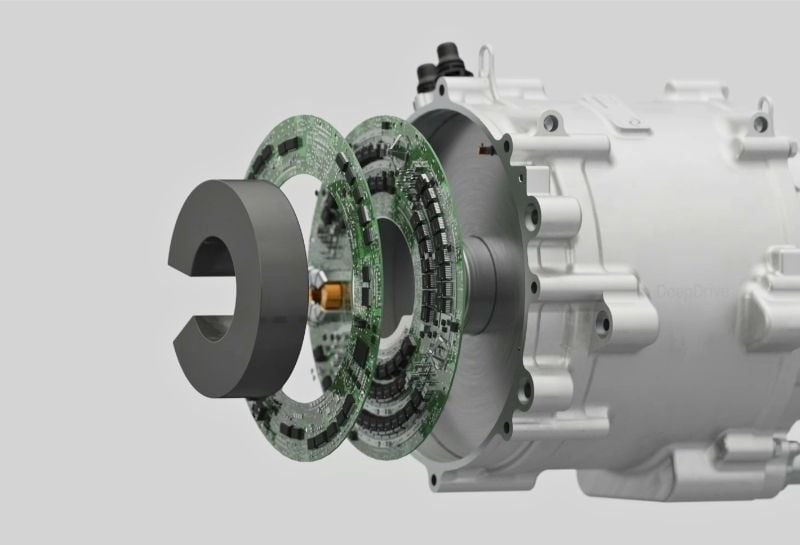
Inside a dual-rotor motor. Image used courtesy of DeepDrive
Reimagining Cooling and Contactless Transmission
Mahle, traditionally known for powertrain components, has leaned into advanced e-motor development with several complementary innovations. Its Superior Continuous Torque motor uses a proprietary oil-cooling system to maintain peak performance under load without derating, providing a key benefit for commercial and performance EVs.
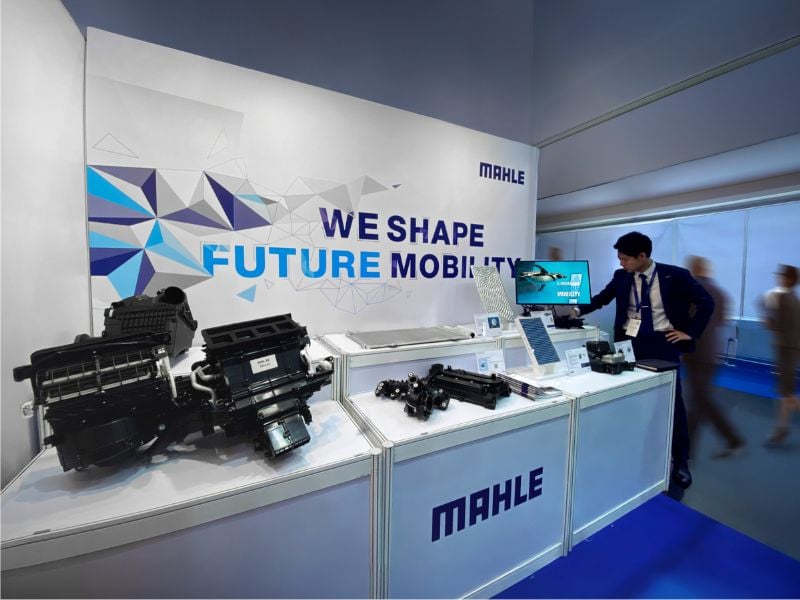
Mahle showcased a variety of its e-mobility solutions at SUBCON. Image used courtesy of Mahle
Equally intriguing is Mahle’s magnet-free, contactless motor architecture. It eliminates rare earths and uses inductive power transmission between the stator and rotor, effectively separating electrical and mechanical domains. This not only cuts material costs and wear, but also opens new design freedoms for motor packaging and thermal isolation.
Perhaps most relevant to system engineers is Mahle’s technology between the battery and the motor. Its newly developed bionic battery cooling plate mimics coral-like branching to direct coolant more efficiently across the pack. The result is a 10% increase in heat-transfer efficiency, a 20% reduction in pressure drop, and tighter temperature uniformity across cells. This is a crucial factor for high-power discharge and fast charging.
Mahle showcased its battery cooling plate at SUBCON Thailand in May. EEPower was onsite to view the latest and speak with company leaders.
"Our bionic cooling plate shows how nature can inspire breakthrough solutions for modern mobility challenges," said Jakob Ruemmler, Managing Director of Mahle Services Thailand.
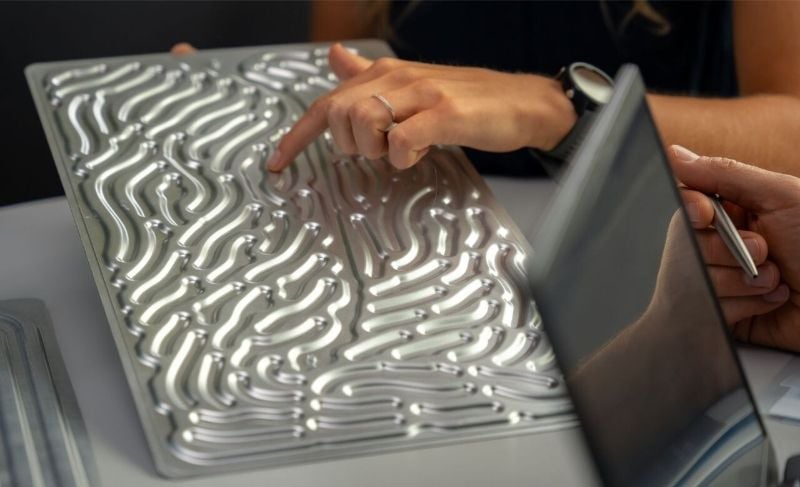
The bionic battery cooling plate, showcased at SUBCON Thailand. Image used courtesy of Mahle
By tackling both ends of the powertrain loop—motor output and battery thermal balance—Mahle is positioning its thermal expertise as a systems enabler for EV performance and durability.
Designing for Integration, Not Just Performance
As automakers shift to domain-based vehicle platforms and zonal architectures, motors are no longer designed in isolation. Whether it’s a magnet-free machine with integrated drive electronics or an oil-cooled e-axle with a shared thermal loop, motors now live within a complex thermal-electrical-mechanical system.
This means collaboration across thermal, mechanical, and controls teams and a rethinking of how motors plug into inverters, battery cooling, and chassis design. For suppliers, the winners will be those who can offer not just motor specs, but platform-ready, manufacturable systems that meet the demands of fast-paced EV rollouts.