Facebook
 Google
 GitHub
 Linkedin
Waste to Stability: Nissan’s Solution to Used Electric Vehicle Batteries
Nissan and Connected Energy are pioneering a large-scale, second-life energy storage system to repurpose used EV batteries and help support the utility grid.
Electric vehicles (EVs) are transforming transportation and promising massive gains toward zero-carbon goals. But this transition away from combustion engines produces complications. When Lithium-ion (Li-ion) batteries used in EVs are not properly disposed of, they can prove hazardous. The batteries discarded in the coming decades will be larger than ever before. In addition, lithium mining can pollute the air and contaminate water sources. One ton of mined lithium produces nearly 15 tons of carbon dioxide.
Maximizing Li-ion performance and minimizing battery waste is critical. To meet this challenge, Nissan is partnering with Connected Energy to ensure the growing supply of waste Li-ions can be productively utilized after powering EVs.
Connected Energy has already developed 300 kW smaller-scale industrial and commercial applications to repurpose EV batteries. Now, the company plans to power a large-scale energy storage system, with up to 100 MW, exclusively with used Li-ions. This multi-megawatt system to support power grid resilience is poised to be fully operational by 2025.
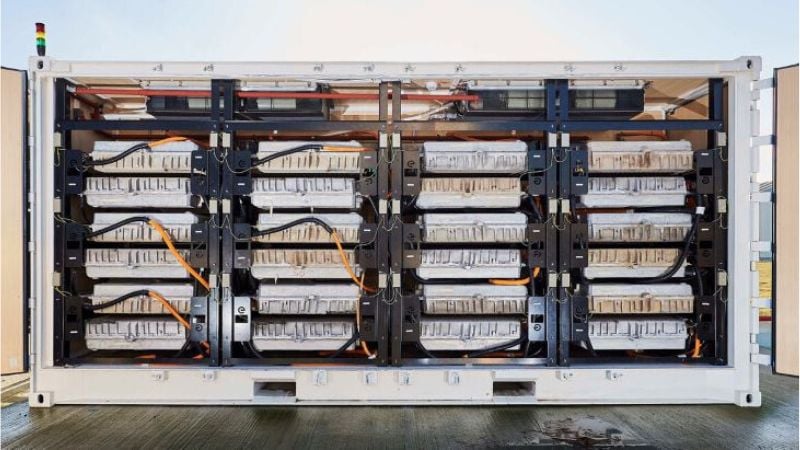
Energy storage system made of used Li-ions. Image used courtesy of Connected Energy
Electric Vehicle Battery Waste’s Growing Challenge
Finding sustainable methods for reusing and recovering used EV battery materials is more pressing than ever.
A main challenge associated with Li-ion waste is its environmental impact. Disposing of batteries improperly can release toxins, including heavy metals and electrolytes, contaminating soil and water.
Additionally, Li-ion batteries are complex and expensive to recycle due to their intricate design and the various materials used. Efficiently extracting valuable metals like lithium, cobalt, and nickel requires advanced technology and energy-intensive processes. As battery chemistry keeps changing, recycling is becoming increasingly complex. Many companies worry about the profitability of recycling, which, if compromised, could inhibit the development of this crucial sector of EV market support.
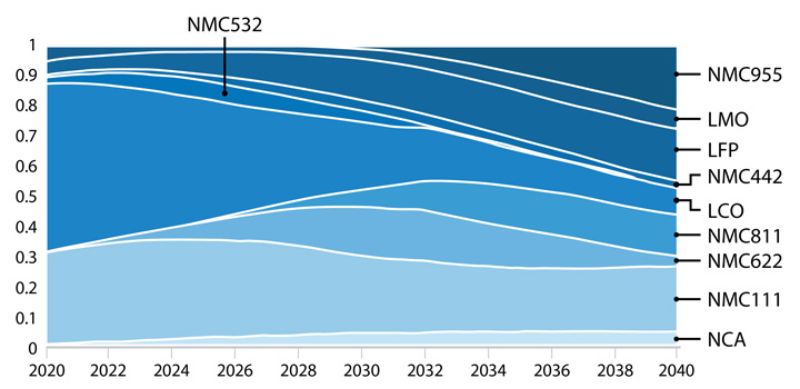
How battery chemistries may change in the future. Image used courtesy of National Renewable Energy Laboratory
Concerns are also growing about the economic and logistical aspects of battery recycling infrastructure, which are not yet fully developed to handle the expected surge in battery waste. Addressing these challenges requires coordinated efforts in developing sustainable recycling technologies, regulatory frameworks, and public awareness initiatives.
Grid Balancing and the Demand for Energy Storage
In an ironic turn, the EV surge will not simply create more battery waste but also tax the power grid in new and challenging ways. EV owners usually charge at home during nighttime hours for their commute the next day, upsetting the grid’s energy balance supply and demand.
Balancing the grid is increasingly complex due to renewable energy’s intermittent nature. For example, solar energy production peaks during the day, often creating a surplus that must be managed to maintain grid stability. This surplus must be stored efficiently to ensure a steady energy supply during non-peak hours. This storage typically uses battery storage systems. However, current storage technologies’ high cost and limited capacity pose significant challenges.
Integrating these storage solutions into the grid infrastructure requires substantial investment and technological upgrades. Weather variability complicates predicting solar energy generation, necessitating sophisticated forecasting tools and flexible grid management strategies. Addressing these issues is crucial for a reliable, renewable energy-powered grid.
Large-Scale, Second-Life Energy Storage Systems
Nissan and Connected Energy’s partnership could usher in large-scale energy systems powered exclusively by used EV batteries. The storage systems will reduce waste while managing the complexity of supply and demand.
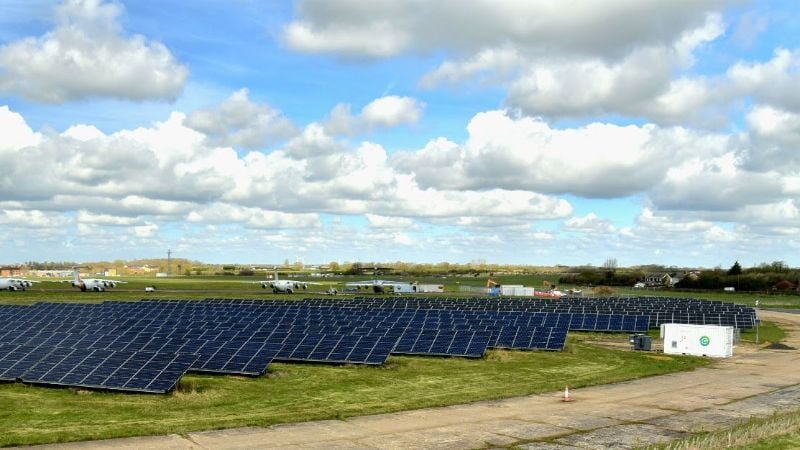
Storage system with solar farm. Image used courtesy of Connected Energy
Used EV battery waste comprises different battery types at varying stages of decline. This storage system will overcome uniformity barriers, making the system more adaptable. Merging various battery performance characteristics into a single, functioning large-scale system will maximize battery waste’s potential.
This model's potential to help manage grid fluctuations and increase grid resilience makes it attractive from an energy standpoint, but the environmental benefits are also undeniable. This storage system can help reduce waste and carbon emissions, power solar systems, and supply energy to other carbon-reducing technology.
Nissan and Connected Energy are at the forefront of true battery recycling circularity. The impending spike in Li-ion cast-offs will create a new power source for the grid and other clean energy projects.