Facebook
 Google
 GitHub
 Linkedin
Solar Combats Data Center Drain: Microsoft Plans 1 Billion kWh
Microsoft will help bring 500 MW of community solar capacity online across 150 projects.
Colorado-based Pivot Energy has partnered with Microsoft to build 500 MW of community solar capacity nationwide over the next five years. The 150 projects will supply over 1 billion kWh annually, powering about 90,000 homes in 20 states.
The agreement marks Microsoft’s first significant distributed solar portfolio. Pursuing a 2030 target to remove more carbon than it emits, the company is matching its electricity use with new solar resources commissioned by partners. The Pivot Energy deal involves purchasing renewable energy credits from the projects over 20 years.
Like other tech giants, Microsoft is turning to renewables to power its energy-intensive artificial intelligence and cloud products. Last year, the company’s energy consumption skyrocketed by nearly 30% to 24 TWh.
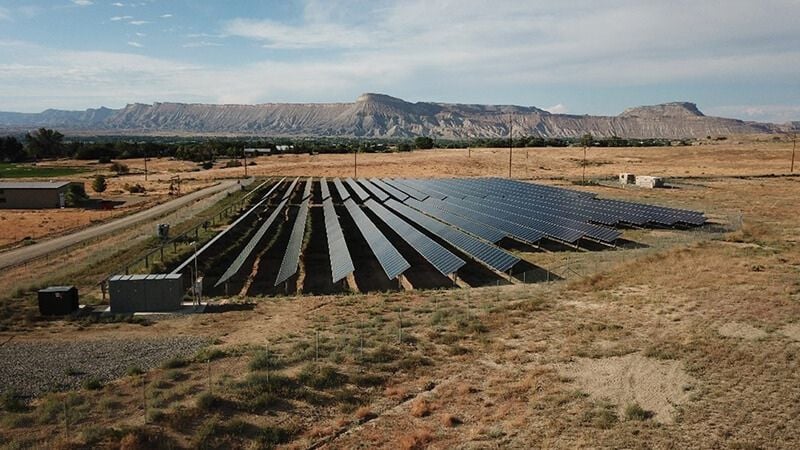
A Pivot Energy solar project in Colorado. Image used courtesy of Enertia Consulting Group
Small-Scale Community Solar Projects
Pivot Energy’s Microsoft-backed community solar projects will span 100 communities in nearly two dozen states, from Pennsylvania and Maryland to Ohio, Illinois, and Colorado. Together, the portfolio will produce 1 TWh annually for 20 years, roughly equivalent to taking over 160,000 gas-powered passenger cars off the road yearly. The first few sites will come online in late 2024, with the rest installed before 2029.
This new solar capacity will support Microsoft’s goal of halving its Scope 3 emissions by 2030. This category accounts for over 96% of its greenhouse gas footprint, covering its supply chain, product lifecycle, and other indirect sources.
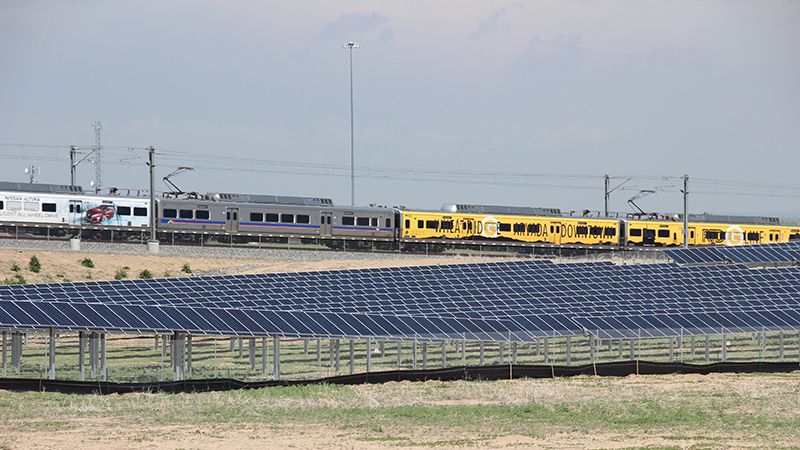
A Pivot Energy community solar project. Image used courtesy of Enertia Consulting Group
Overall, Microsoft’s total emissions jumped by 29% in 2023 from a 2020 baseline, per its latest Environmental Sustainability Report. However, Scope 1 (direct emissions) and Scope 2 (indirect from electricity and heat) fell by 6% over the last three years.
Microsoft is one of several large corporations using community solar projects to offset carbon emissions. Walmart recently partnered with Pivot Energy to develop 72 MW of community solar across a dozen projects nationwide. Tapestry, the parent company owning Coach and Kate Spade, also committed to purchasing 33 MW via renewable energy credits from six Pivot projects in Illinois.
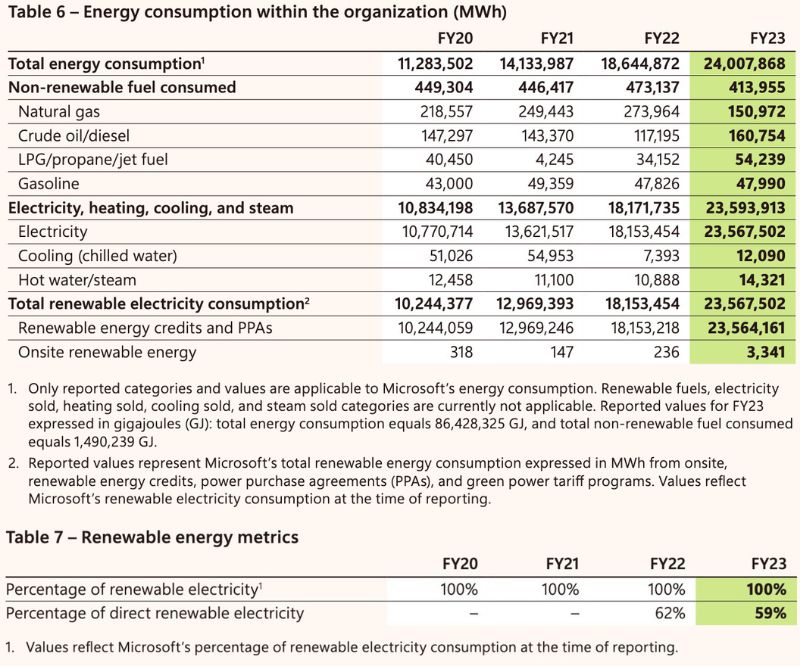
Energy use data reported in Microsoft’s 2024 Environmental Sustainability Report. Image used courtesy of Microsoft (Page 6)
Investing in Clean Energy
Microsoft has acquired over 30 GW of clean energy power purchase agreements for its offices and data centers that manage its AI and cloud suites.
In 2023, Microsoft’s contracted portfolio of renewable assets grew to nearly 20 GW across 21 countries, including new wind, solar, and geothermal capacity. In January 2024, the company signed an eight-year supply deal with Qcells for 12 GW of solar modules, enough to power over 1.8 million homes annually.

This 150 MW solar project in Wyoming features Qcells solar modules. Image used courtesy of Qcells
Microsoft has made several community solar investments over the last few years. It’s a commercial partner for Oregon’s 2.8 MW Skyward Community Solar project, drawing a portion of the site’s 3.6 million kWh annual power generation for its local offices. And last year, it signed a deal with ENGIE and Solstice to bring 4.75 MW online in Illinois.
Community solar procurement is among several critical components in Microsoft’s long-term decarbonization strategy. Energy efficiency is another pillar, as the company aims to reduce energy use at its 300-plus data centers worldwide. A few years ago, it tested low-power server states with solid results, cutting 25% of energy on allocated servers. Expanding the technique to 1 million servers last year allowed Microsoft to slash thousands of MWh monthly.