Facebook
 Google
 GitHub
 Linkedin
Cyber Safe: EV Charger Pairs AI and Encryption
Autocrypt adds its data encryption system to eMobi’s AI-enhanced electric vehicle chargers.
Electric vehicle owners often use public charging points to charge their cars, and charging infrastructure is evolving to meet their needs. However, digitally connected public chargers are vulnerable to cyber threats.
How does Autocrypt’s Plug & Charge work with electric vehicles? Video used courtesy of Autocrypt
Autocrypt, a Korean automotive cybersecurity company, has partnered with eMobi, a U.S. e-mobility company, to develop a secure communication framework for AI-enabled EV charging stations and help prevent cybersecurity risks in a complex and digitally connected ecosystem.
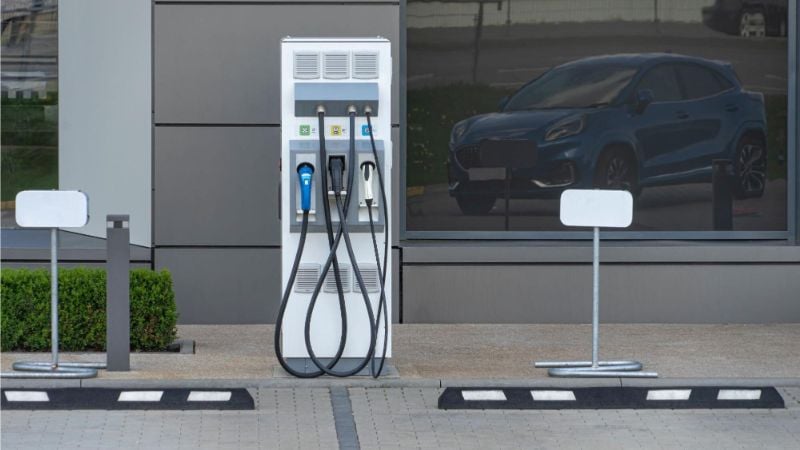
Public EV charger. Image used courtesy of Adobe Stock
Plug & Charge Infrastructure Technology
Plug & Charge EV infrastructure provides an automated communication channel between the EV and the charging infrastructure, enabling billing without needing external identification. The systems are usually made secure by cryptographic tools protecting the communication channels.
EMobi I has over 120,000 connected charging ports that issue digital certificates to authenticated parties to secure the network. Its systems use artificial intelligence for more robust data capabilities.
EMobi has become the largest AI-enabled roaming hub in North America. The partnership with Autocrypt has created the first Plug & Charge ecosystem headquartered in the U.S. It complies with U.S. data laws, which is crucial for creating a more robust and secure public charging network.
EMobi and Autocrypt’s systems allow EV drivers to charge their vehicles at any station. The encryption technology automatically identifies the EV and securely processes the charging payment.
AI-Integrated Software a Haven for Cyber Hackers
Integrating artificial intelligence and software creates new entry points for potential hackers to steal data from anyone using a public charging station.

Autocrypt’s system secures potential entry points for hackers. Image used courtesy of Autocrypt
In Plug & Charge infrastructure, the EV communicates with both the charging and payment platforms built by the mobility operator (MO). The infrastructure is owned by the charge point operator (CPO) and communicates directly with the grid to supply the power. Personal and payment data is exchanged across several providers, making cybersecurity essential.
Many charging stations use older, open-charging protocols with no end-to-end encryption. If these charging stations don’t have secure protocols, theft can occur at numerous vulnerable entry points. Cyber thieves could obtain sensitive information such as credit card information, vehicle driving data, and personally identifiable information. They also could enter the network and inject malware, giving them access to a wider network—including CPOs and MOs—putting many people’s data at risk. Hence, cybersecurity is vital to a digitally connected EV charging ecosystem.
Autocrypt System Tackles Security Concerns in Plug & Charge Infrastructure
Autocrypt’s Plug & Charge protocol used within eMobi’s EV charging network removes the cybersecurity risks of non-encrypted protocols. The protocol automatically proves the driver’s identity by exchanging the vehicle’s digital certificate with the charger’s certificate. The certificates are all end-to-end encrypted and verified by a public key infrastructure system, so drivers don’t have to manually input their payment information when charging.
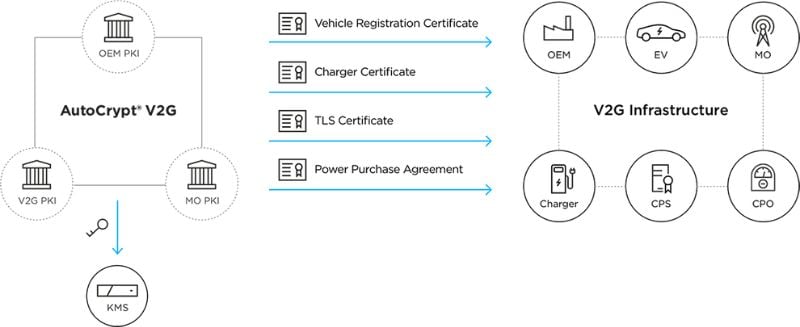
Certificate exchange. Image used courtesy of Autocrypt
The protocol complies with the ISO-15118 standards required for vehicle-to-grid communication interfaces. It supports Open Charge Point Protocol to verify contracts between the charging station management system (CSMS) and MO. The CSMS also allows CPOs to manage and maintain multiple public charging stations by monitoring each location's operation and billing status in real time.
Evolving to Meet Growing Charging Demands
More and more people are starting to use public EV charging stations in their daily lives. This not only requires more easy-to-use charging infrastructure. Smart and digitally connected systems will be key to meeting demand, and Plug & Charge systems are making it much easier and seamless for people to pay for their public charging. More locally headquartered networks offer higher data security levels.