Facebook
 Google
 GitHub
 Linkedin
BP’s Tech Twins Earth’s Energy With NASA’s Lunar Vision
Can BP and NASA's space project develop better energy on Earth?
NASA will use oil and gas giant BP’s digital twin models and simulation tools to help astronauts view planetary subsurfaces millions of miles from Earth. BP currently uses its technology to visualize equipment thousands of feet underwater. The technology will advance space missions and energy production operations on Earth.
When is refining a baseball bat swing similar to maximizing energy resources? Check out this video to see how BP builds its digital twin. Video used courtesy of BP
NASA plans to launch a crewed mission around the moon, Artemis II, in September 2025. Meanwhile, its Perseverance and Curiosity rovers continue to collect data on Mars’ material makeup and environment. NASA intends to bring the first samples back to Earth in the 2030s.
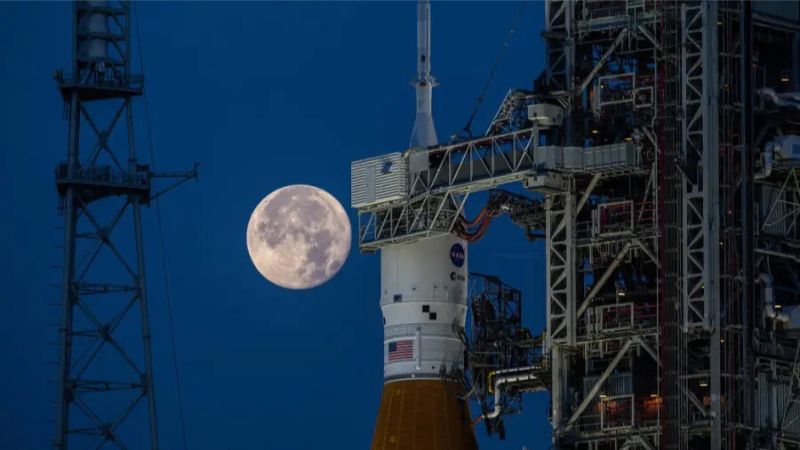
The moon glows behind NASA’s Artemis I rocket and Orion spacecraft. Image used courtesy of NASA
BP’s Dynamic Digital Twin Software
The project will build upon BP’s dynamic digital twin software, used to develop Argos, BP’s fifth offshore platform in the Gulf of Mexico. Argos is featured on BP’s new deep-water (4,500 feet) floating facility, Mad Dog 2, about 200 miles south of New Orleans. Creating a digital model of the platform allowed BP’s engineers to plan startup operations virtually.
Argos combines various high-tech hardware and software mediums, including augmented and virtual reality, digital twins and simulation models, artificial intelligence, and advanced remote communications. In addition to inspection footage and sensor readings, BP’s algorithmically 3D models can visualize activities below the platform, allowing staff to pinpoint issues, optimize production, and test safety procedures and efficiency improvements.
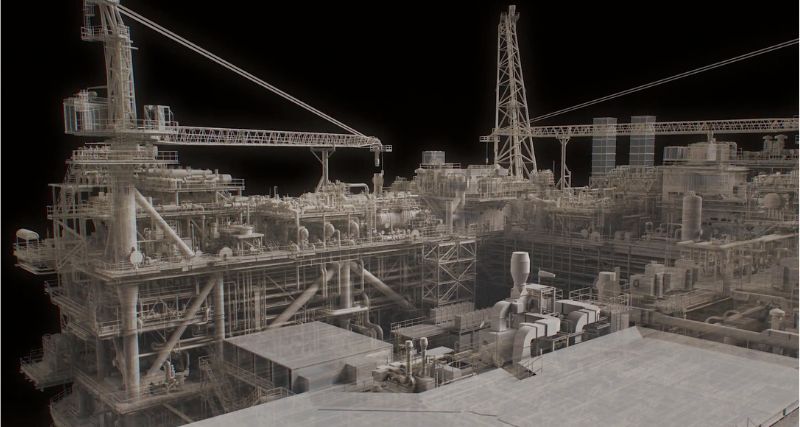
A digital twin of BP’s Argos platform. Image used courtesy of BP
BP’s AI expansion is supported by its Center for High-Performance Computing in Texas, home to one of the world’s most powerful supercomputers with over 20 quadrillion runs per second. The company uses these resources for seismic imaging, subsurface mapping, and reservoir engineering programs.
Another aspect of BP’s work that could support NASA’s Mars missions is the company’s 4D seismic imaging surveys, which help identify promising production sites. It also has 3D technology to recreate reservoir rock models, an attractive capability that could be reproduced to study Mars’s rock formations for signs of past habitability.
Technology from one of BP Ventures’ portfolio companies could also be valuable to NASA. In 2019, BP invested in Texas-based Belmont Technology, which provides cloud-based geoscience tools to transform subsurface data into simulations. BP inputs geological and reservoir data and other project information, and the platform returns with a graph of subsurface assets.
Expanding BP’s Simulation and Mapping Tools
BP’s digital twin and underwater monitoring technology will support NASA’s lunar and planetary missions. This comes as the agency develops its first lunar space station, Gateway, to orbit the moon. NASA will launch the first two modules on a SpaceX Falcon Heavy rocket next year.
The first phase of the BP-NASA partnership will develop standards to expand the capabilities of its simulation and visualization tools. Later stages could incorporate remote operating practices like process control and monitoring, safety and communications, and predictive analytics.
Beyond that, the two could work on other projects involving hydrogen, solar and small fission systems, regenerative fuel cells, high-capacity batteries, and power management and distribution.