Facebook
 Google
 GitHub
 Linkedin
Electric Avenue: How Digital Twins Will Charge Up EV Infrastructure
Digital twins can simulate physical environments and quickly analyze numerous variables. How can they help expand the electric vehicle charging infrastructure?
The global electric vehicle (EV) market has grown substantially. In 2023, nearly 20% of all cars sold were EVs, bringing the total number on the road to about 40 million. However, public charging infrastructure has not kept up with demand, leaving drivers reluctant to take longer drives or stray too far from a known charging point.
In expanding charging infrastructure, digital twins offer a unique opportunity in two ways. They can help integrate renewables into charging points and find new and suitable EV charger locations.
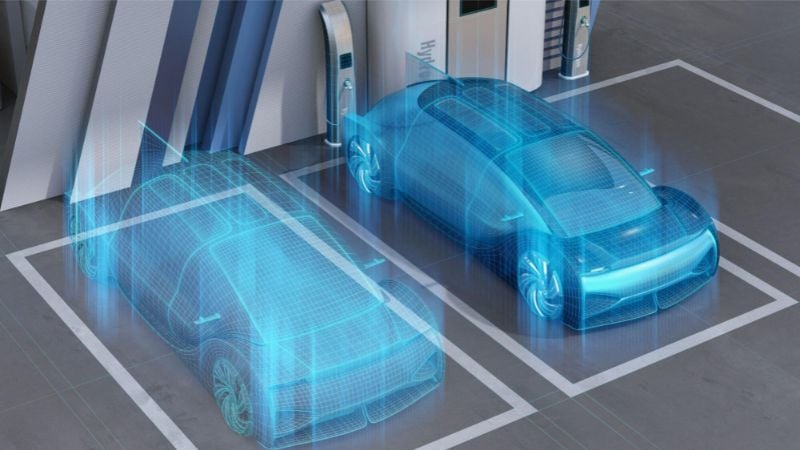
Digital twin. Image used courtesy of Adobe Stock
What Are Digital Twins?
A digital twin creates a virtually simulated replica by capturing a system’s data and transferring it to the digital twin to construct an accurate virtual environment. Digital models have high precision and realistic physics. They can be used on a single machine or an entire power plant complex. Some companies are already simulating entire manufacturing plants using digital twins.
In a digital twin, smart IoT sensors monitor various physical infrastructure parameters. Real-time monitoring keeps the digital twin up to date with the infrastructure. Sensors collect data collected to build and alter the model in real time. These large data sets make up the model’s backbone. Since so much data is generated during a digital twin creation, machine learning, deep learning, and artificial intelligence are often used to process and build the virtual environment more quickly.
The data inputs indicate how the physical twin responds to real-world changes. The inputs are used to build a virtual environment, simulating the physical world directly. Creating the virtual environment is done by 3D modeling software. Computer-aided design (CAD)—such as AutoCAD and Revit—are common options. Other software programs are also used, including building information modeling, finite element modeling, and multi-purpose 3D modeling software such as SketchUp or Blender. The application and the information needed for the virtual environment often dictate the program choice for making the digital twin.
Digital twins provide an interactive virtual environment to accurately reflect the physical object they are mimicking. They are used to analyze physical systems and predict optimal solutions to apply before they are implemented. The digital twin can also be used for ongoing predictive maintenance and for predicting any issues that may arise. Updating the digital twins over time allows users to monitor physical infrastructure in real time.
Why EV Charging Needs Digital Twins
Developing EV charging infrastructure faces numerous challenges, such as managing insufficient charging infrastructure layout and identifying optimal locations for charging points. Additionally, adding more chargers increases grid demand. Although it’s possible to develop chargers with renewable energy harvesting capabilities, renewable generation’s intermittent nature can strain the grid.
Digital twins offer a way to expand EV charging infrastructure further. Developers can use digital twins to combine load management techniques with energy storage solutions and find the right balance between EV charging and renewable energy usage. The digital twin environment can visualize these scenarios.
In many cases, existing charging infrastructure locations do not match the local demand, meaning they are wasted and could have been better implemented elsewhere. Digital twins can estimate the charging demand during the planning stage, examining factors such as the site’s attractiveness, interaction between charging stations, and drivers' preferences to determine the best location for new infrastructure.
Digital Twins for Integrating Renewables into Charging Sites
Integrating renewables presents challenges at the distribution level, but measures can be implemented within the charging processes to match the available power. For EV infrastructure, an efficient charge management system is crucial. These systems must achieve high self-sufficiency with low payback periods to developers and low operational costs. Digital twins can help because the virtual environment can provide insights into the predicted energy demands, which can aid in optimizing charging schedules across various scenarios.
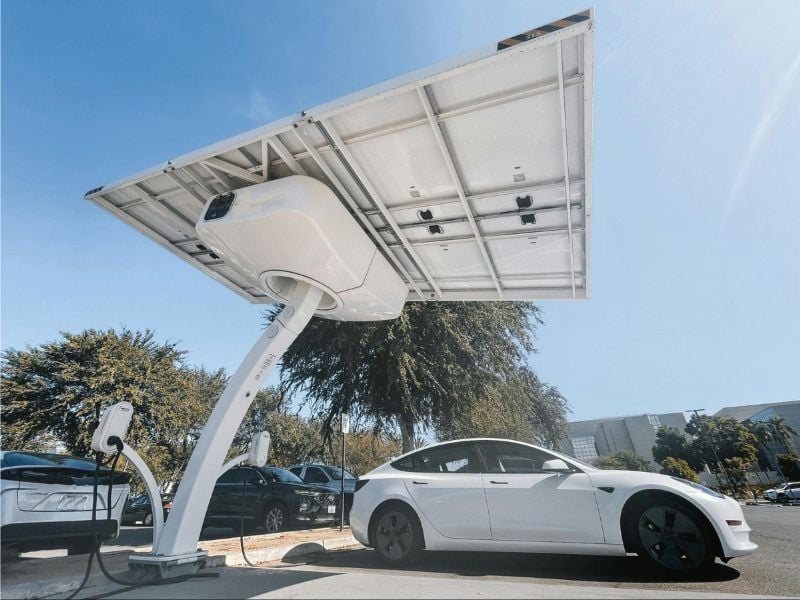
Using solar energy to charge EVs. Image used courtesy of Pexels
In using solar energy, for example, EV charging can help to compensate for energy production variability by finding an equilibrium between generation and consumption to help charging stations become self-sufficient. Creating a digital twin of specific EV charging stations allows for more efficient charging station management as the charging station can be built, analyzed, and evaluated. The digital twin can analyze energy consumption data to minimize costs and ensure efficient energy usage, providing deeper insights into usage patterns. This information available through the digital twin can be used to optimize the EV charging allocation and size required solar cells.
In these scenarios, digital twins examine how the charging system integrates battery systems and solar energy harvesters. They determine how to control the charging process and evaluate the impact of individual components such as charge controllers and grid inverters. Digital twins simulate the daily EV dynamics between the charging station and the charging management protocols and estimate the return on any investments from renewable integration. The digital twin can also calculate the self-consumption and self-sufficiency ratios to identify the battery sizes needed.
Finally, the digital twin environment can determine the ideal charging period or daily charging allocation for each EV based on the integrated renewable harvesters and energy storage solutions. Once these factors have been simulated and optimized in the virtual environment, they can be applied to the physical infrastructure.
Using Digital Twins To Find Potential EV Charging Locations
Digital twins can also be used to study the most suitable locations for new EV charging infrastructure. They can consider how EV charging demands active and reactive power and how charging systems affect grid transformers. Digital twins can evaluate how EV charging impacts the grid under different loads and any potential power losses occurring on the low-voltage network. They can also identify the most suitable charger type to install in each location based on the cost, the charger’s impact on the grid during peak and off-peak hours, hourly EV demand, and the region’s estimated traffic.
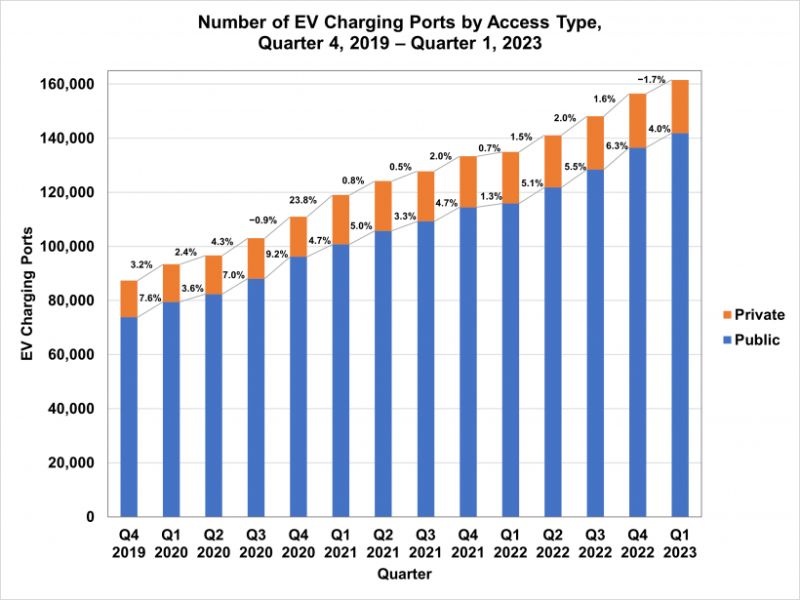
Growth in charging infrastructure. Image used courtesy of the Department of Energy
Piecing all this information together in a digital twin can help developers choose the ideal EV charging stations and charger types (level 1 to level 3 chargers) to install in a region. Faster chargers draw more power from the grid. In contrast, lower power chargers are slower but can be powered by either the grid or renewables.
The digital twin also uses societal and geographical factors alongside technical factors. When identifying the ideal place to install new charging stations, the digital twin considers the population density, transportation stations, parks, gas stations, roads, green areas, shopping areas, the land’s value, and the terrain. The digital twin processes these society-geographical factors to find the optimal installation locations.
Digital Twins Are the Future
No other modeling or simulation approach can match digital twins’ ability to use advanced sensors to view the various machine and system parameters and convert them into interactive virtual environments. They simulate the entire environment as if it were the physical infrastructure undergoing the analysis, including unbuilt infrastructure. Optimizing infrastructure in a virtual environment offers higher speed and accuracy and can help prevent costly and wasteful infrastructural mistakes.