
 Facebook
 Google
 GitHub
 Linkedin
Apple ‘Thinks Different’ About Solar Charge-Matching
Apple is powering up its energy transition, adding new renewable capacity to offset charging consumption for its devices.
Apple aims to install or procure enough renewable electricity to match every watt used to charge its products by 2030. From adding rooftop solar panels at its corporate offices to partnering with suppliers to decarbonize manufacturing facilities, the tech giant is stepping closer to that goal.
Apple will invest in several solar projects across the U.S., Europe, India, and beyond. The company will also back a new solar project portfolio in Michigan to bring 132 MW online later this year.
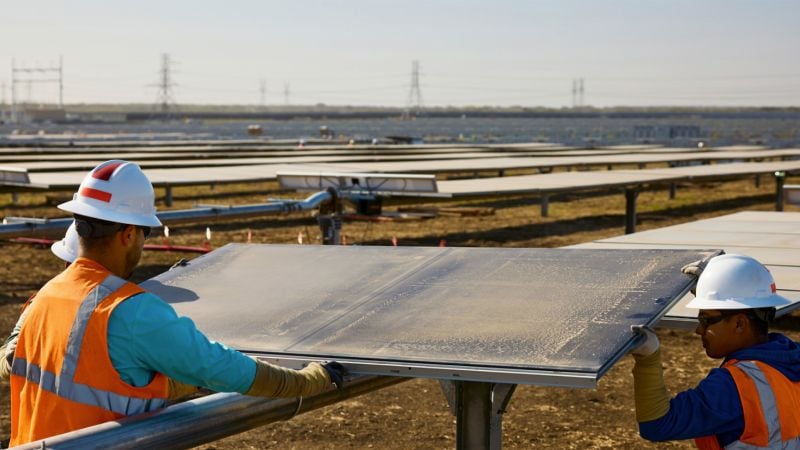
Over 500 workers built the Apple-funded Radian Solar project in Texas. It started commercial operation in mid-2023. Image used courtesy of Apple (Page 5)
Apple recently invested in the 320 MW Radian Solar project in west-central Texas. The plant, which began operating in 2023, generates 415 MW of peak solar power.
Snapshot of Apple’s Latest Solar Projects
The electricity consumers use to charge Apple devices accounts for about one-quarter of the company’s gross carbon footprint. As part of its pledge to offset that consumption, Apple is investing in large-scale solar projects to decarbonize local electric grids.
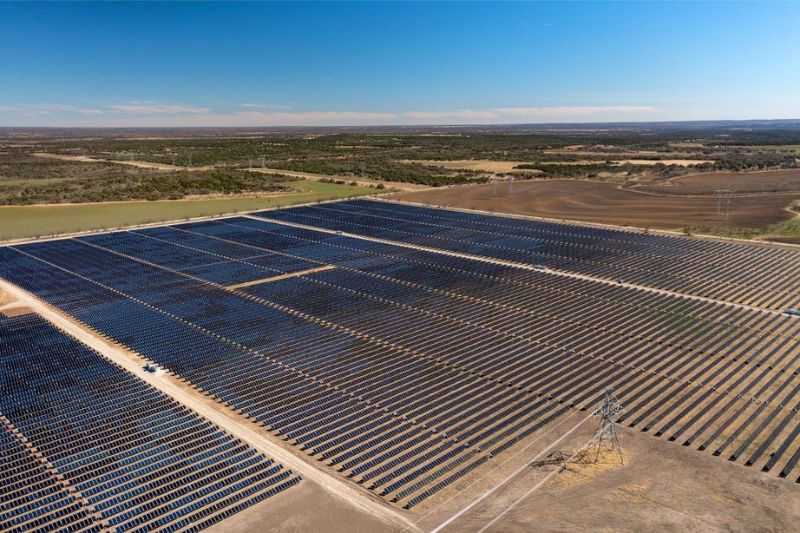
Intersect Power’s Radian Solar project comprises more than 900,000 First Solar panels. Image used courtesy of Intersect Power
Among the latest is Intersect Power’s Radian Solar project, serving electricity to more than 114,000 Texas homes. The 2,300-acre site features 903,228 Series 6 modules from First Solar. Each unit includes a layer of thin-film cadmium telluride semiconductors, boasting a carbon footprint 2.5 times lower than crystalline silicon photovoltaic (PV) panels.
Apple is also investing in Spain’s 105 MW Castaño Solar project, which will use bifacial solar panels on a single-axis tracker system to maximize production. The project has 134 MW of peak capacity. Bifacial solar panels are more durable and efficient than conventional monofacial PV systems. This design generates more energy within the same physical footprint by absorbing sunlight on two surfaces.
Apple contracted with solar developer ib vogt to procure electricity from the plant, which is expected to come online this December. It will save 57,000 metric tons of CO2 emissions annually.
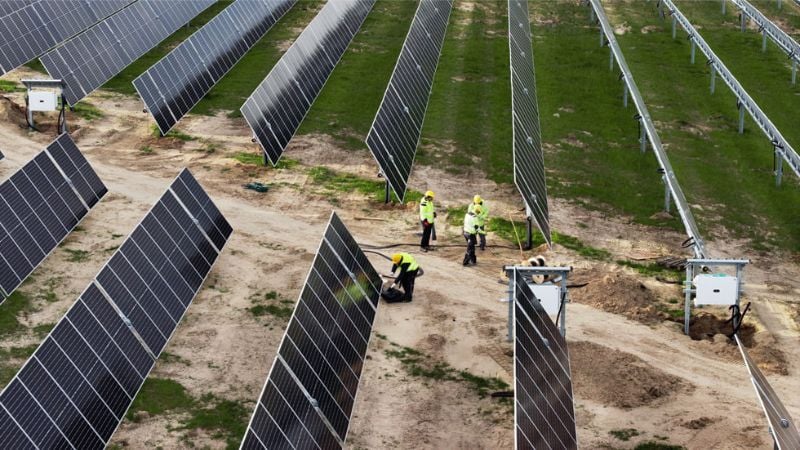
Ib vogt’s solar project in Spain. Image used courtesy of Apple
Apple also joined with renewable developer CleanMax to support rooftop solar projects across six industrial sites in India. The 14.4 MW portfolio will power Apple offices, two retail stores, and other operations, mitigating more than 200,000 tons of CO2 emissions throughout the projects’ lifespans.
Meanwhile, Apple is expanding renewables across its Chinese supply chain, home to more than 1 GW of wind and solar sites in 14 provinces. Those projects will deliver over 2.4 TWh annually, roughly equal to the residential power consumption of more than 2.5 million people.
Apple’s Cleantech Expansion
Since 2020, Apple has more than tripled renewable capacity across its global operations and supply chain, now totaling 18 GW.
Manufacturing activities account for 65% of Apple’s carbon footprint, with electricity consumption as the largest contributor. Over the last few years, Apple has worked with suppliers to switch to clean energy sources and reduce greenhouse gas emissions. More than 320 suppliers—95% of Apple’s direct manufacturing spend—have contributed to the effort, bringing 16.5 GW online. About 25 million MWh of clean energy was generated across Apple’s supply chain in 2023, eliminating more than 18.5 million metric tons of CO2 emissions.
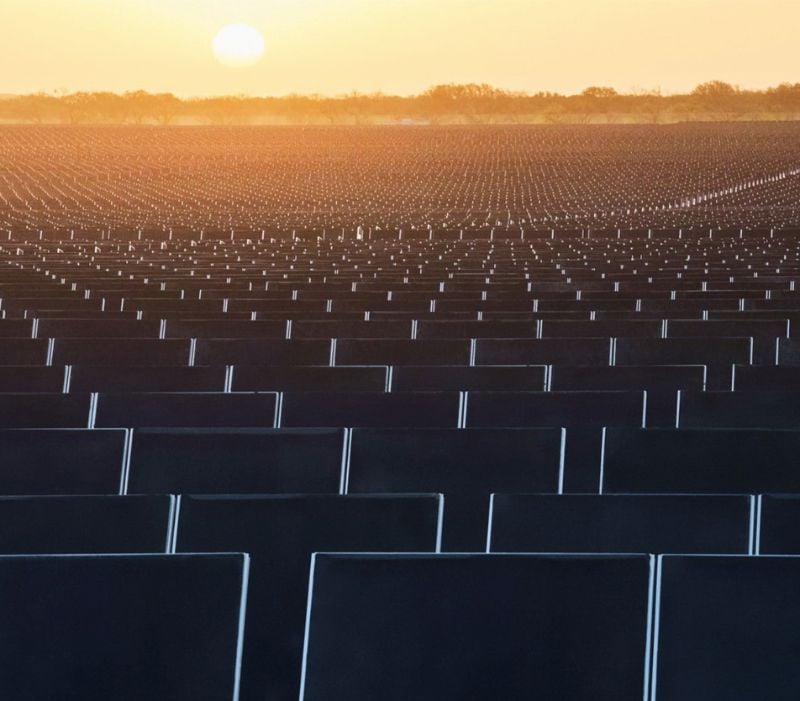
The Radian Solar project spans 2,300 acres in Brown County, Texas. Image used courtesy of Apple (Page 30)
Apple’s corporate operations now run on 100% renewable energy, a goal it achieved in 2018. This 1.6 GW transition spans its retail stores, research and development facilities, data centers, and global offices. At its Apple Park campus in California, a renewable microgrid generates power on-site through a 14 MW rooftop solar system and 4 MW of biogas fuel cells. The microgrid connects to a battery energy storage system, providing load shifting, frequency regulation, and demand management services. Additional energy is pulled directly from the nearby California Flats project.
It’s worth noting that long-term renewable energy purchase agreements account for 88% of all Apple-created projects, while only 8% are owned by Apple directly. Most (78%) are solar PV installations, while wind claims a 22% share.
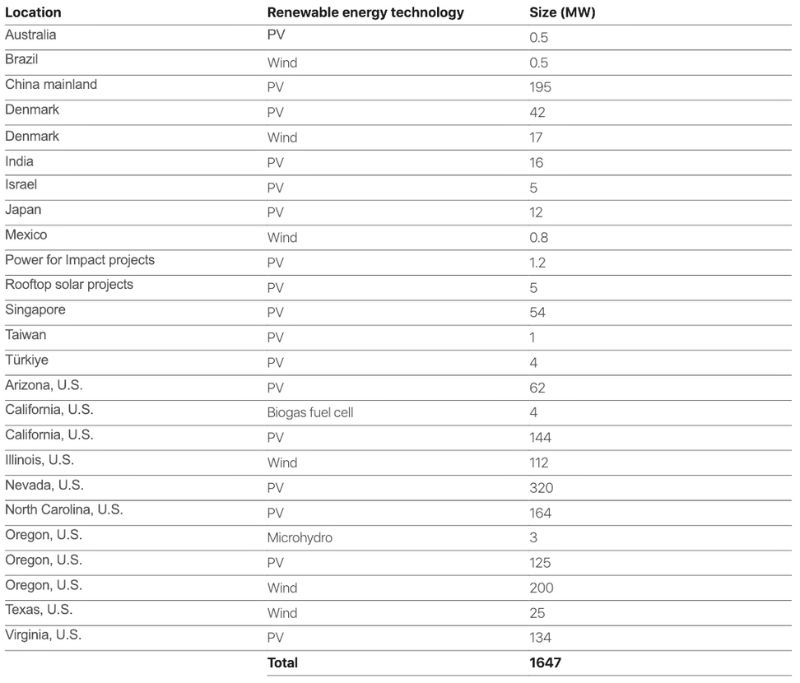
Renewable energy technologies across Apple’s worldwide facilities as of February 2024. Image used courtesy of Apple
Apple is integrating new sensors and controls, energy management software, and other retrofits to reduce electricity consumption across its facilities. The company also helps suppliers finance upgrades, such as replacing old heating, cooling, and lighting systems, recovering waste heat, and repairing compressed air leaks.
Efficient Engineering and Design
Product efficiency is another critical component of Apple’s clean energy goals. Prioritizing low-carbon design and engineering, Apple is developing or procuring less carbon-intensive products and materials and improving power usage efficiency for its iPhones.
Apple engineers are designing iPhone hardware to be more durable, reducing repair needs by adding water-resistant materials and a ceramic shield to protect the display. The back glass repair on all iPhone 15 models boasts 70% fewer greenhouse gas emissions per repair than older devices.
iPhones now have a Clean Energy Charging feature, allowing users to forecast the local grid’s carbon emissions and limit charging to periods of clean energy production.
Apple is also stepping up its sourcing of recycled or renewable content, representing nearly a quarter of the materials shipped in its products last year. In some regions, end-of-life iPhones are sent to Apple’s Daisy disassembly robot, which evaluates valuable materials for reuse.








Solar panels are greatest scam ever perpetrated on the American public and the rest of the world. Shame on EE Power for supporting the communist agenda of the climate change alarmists. Your credibility as a true source of reliable information is at risk.