Facebook
 Google
 GitHub
 Linkedin
ABB Intros Battery Energy Storage System-as-a-Service
ABB’s flexible, no-CapEx model targets industrial electrification and energy resilience.
ABB has launched a Battery Energy Storage System-as-a-Service (BESS-as-a-Service), a zero-capital-expenditure solution aimed at helping industrial and commercial users adopt cleaner energy systems.
ABB explains BESS-as-a-Service. Video used courtesy of ABB
As global electricity demand rises and industries pursue decarbonization, ABB's service model can shift costs from capital to operational expenditure, thereby accelerating deployment for businesses facing financial and logistical barriers to clean energy adoption.
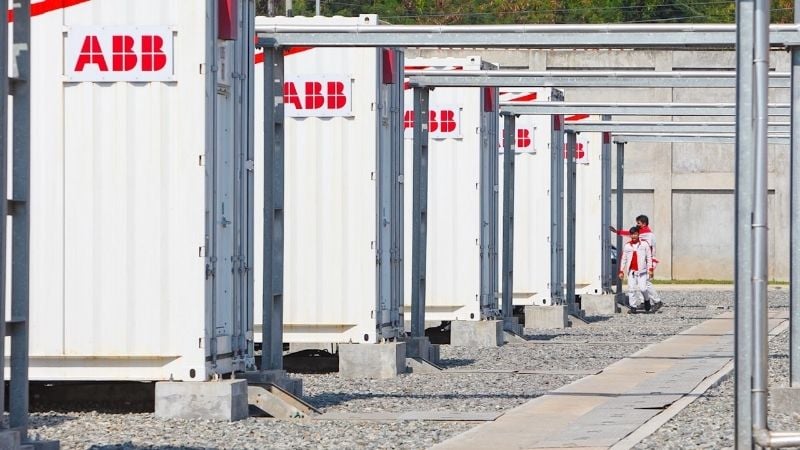
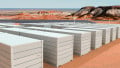
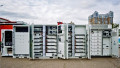
Battery energy storage systems. Image used courtesy of ABB
BESS-as-a-Service
The BESS-as-a-Service is a service-based model that enables companies to access battery storage without upfront investments, while also offering immediate financial benefits through energy cost savings and grid participation revenues.
The architecture is technology-agnostic, making it compatible with multiple battery chemistries and configurations so that users can adopt emerging technologies without being locked into a single vendor or platform. Designed to accommodate industrial applications, such as data centers and transport hubs, the service also includes energy trading capabilities, allowing users to generate revenue by selling excess stored energy.
Economically, the model is unique in that it allows companies to avoid upfront capital expenditure. ABB offers an integrated solution that encompasses hardware, software, and full lifecycle support included in the as-a-service package. Instead, users pay a quarterly service fee.
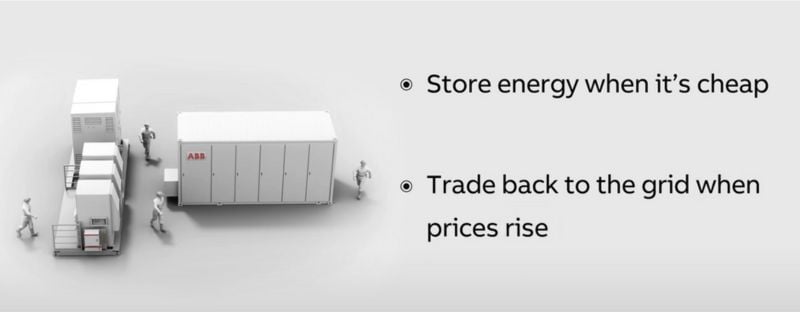
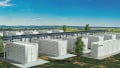
Rendering of a BESS-as-a-Service. Image used courtesy of ABB
To confirm the economic viability and performance reliability of each installation, ABB conducts feasibility assessments before deployment. According to ABB, these evaluations guarantee that the system will deliver net financial gains for its customers from day one.
Battery Energy Storage for the Energy Transition
Battery energy storage systems are important infrastructure components that help balance energy supply and demand in increasingly electrified and decentralized power grids. Generally, these systems consist of rechargeable batteries, power electronics, control systems, and software that work together to store energy when it is abundant and release it when it is scarce or expensive.
The standard operational modes of BESS include peak shaving, load leveling, frequency regulation, and energy arbitrage.
- Peak shaving reduces demand charges by discharging stored energy during high-tariff periods.
- Load leveling smooths consumption patterns to reduce grid strain.
- Frequency regulation helps maintain grid stability by quickly absorbing or injecting power.
- Energy arbitrage allows users to buy electricity when it is cheap and sell or use it when prices are higher.
For industries with intermittent renewable generation, such as solar or wind, BESS enables a more stable and predictable energy supply, as it buffers variability and enhances self-consumption. And, in scenarios where grid outages pose operational risks, BESS can provide uninterruptible power to maintain continuity.
ABB’s Implications
By removing financial and operational barriers, ABB’s BESS-as-a-Service has the potential to significantly broaden access to energy storage technology across sectors. The service model offers an attractive pathway for enterprises that want to decarbonize operations without incurring large capital expenditures. According to ABB, BESS-as-a-Service is currently available following site-specific feasibility assessments.