Facebook
 Google
 GitHub
 Linkedin
From EVs to Portable Power: Storage System Uses Spent Land Rover Batteries
Jaguar has partnered with a U.K. company to create portable battery storage systems made from used Land Rover EV batteries.
Electric vehicle (EV) naysayers love to point at used batteries as one of the critical unsolved problems with electrification adoption. Except it isn’t. Recycling valuable materials from lithium-ion batteries makes sense, and recyclers are carefully refining the technologies.
Even before that, however, used batteries that have reached an 80 percent state of charge and are no longer capable of providing adequate range in an EV can be used for other purposes before they are sent to recycling centers.
In the U.K., Allye Energy, an energy storage startup, is working with Jaguar Land Rover (JLR) to take used lithium-ion batteries from Range Rover and Range Rover Sport PHEV (plug-in hybrid electric vehicles) models and use them to produce battery energy storage systems (BESS).
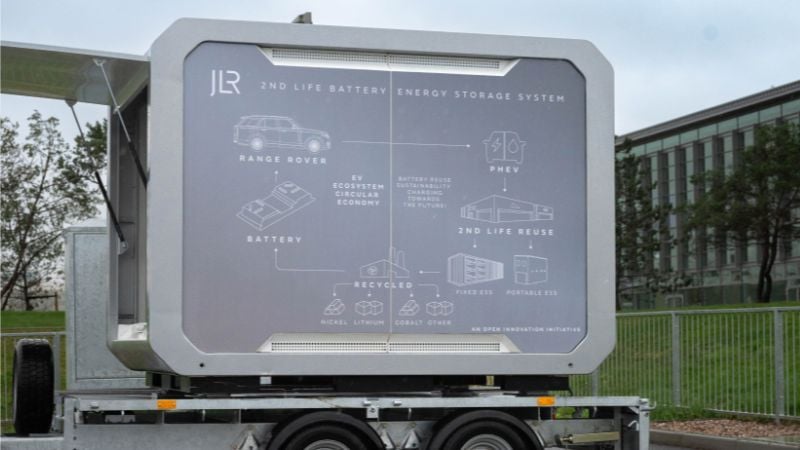
Energy storage system using used EV batteries. Image used courtesy of JLR
Land Rover Power
The BESS developed by Allye is trailer-mounted, meaning it can be moved from location to location to provide power to a construction job site or during an emergency. The BESS weighs 3.5 tons and has a capacity of 270 kWh, enough to power the average U.K. home for a month.
The Allye BESS can also charge up to nine Range Rover PHEVs at once, making it possible to charge EVs away from the power grid for Land Rover events or vehicle tests in remote areas. Typically, this task requires diesel-powered generators, which use up to 16 liters of fuel per hour and produce about 43 kg of carbon dioxide (CO2) emissions.
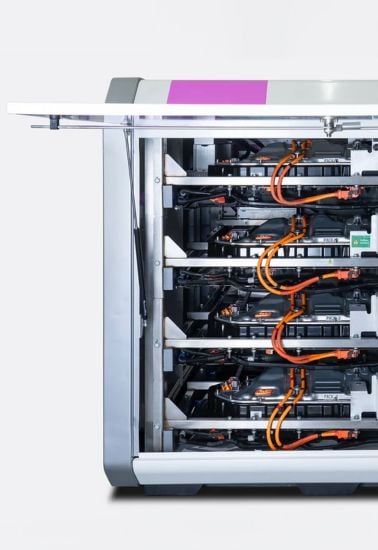
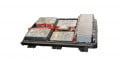
Used EV batteries inside Allye’s BESS. Image used courtesy of Allye
Charging the BESS system is straightforward, as it plugs into any CCS-equipped EV charger, which allows attachment to the power grid or charging in the field using distributed renewable sources.
The Range Rover PHEV models have enough battery capacity to provide up to 48 miles of electric range before using their gasoline internal combustion engines. An all-electric version of the Range Rover is due by the end of 2024. JLR has said that it aims to achieve carbon net zero across its products, supply chains, and operations by 2039.
The BESS’s Many Uses
Aside from providing electricity in remote locations or during emergencies, a BESS can leverage intermittent renewable energy sources like wind and solar. A JLR retailer could use a stationary version of the Allye BESS as an energy buffer, supporting fast charging at a dealership even at night, when the wind isn’t blowing, or when energy costs are higher. The system’s controlling software uses artificial intelligence to predict and help optimize the charging and discharging parameters. The modular Allye unit can also be daisy-chained to increase capacity and power to meet many differing needs.
Recycled EV batteries used in battery storage reduce embedded CO2 by as much as 60 percent. This answers EV critics who claim that spent lithium-ion batteries will stack up in landfills and become a major environmental catastrophe. Once the battery packs used in a BESS reach the end of their life, they can be recycled using the processes under development for recycling EV batteries.