Facebook
 Google
 GitHub
 Linkedin
Sense Debuts Edge-Powered Fault Detection to Bolster Distribution Grid Reliability
In this exclusive interview, Sense CEO Mike Phillips, provided additional technical insights on new software that detects arcing and downed lines.
Grid monitoring has traditionally focused on upstream transmission and substations. Unfortunately, that means that the "last mile" of the distribution grid, where the vast majority of failures occur, has long remained a blind spot for utilities. Sense, a specialist in grid edge intelligence, is moving to change that with the announcement of its new Edge-Powered Fault Detection Solution.
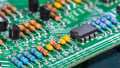
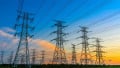
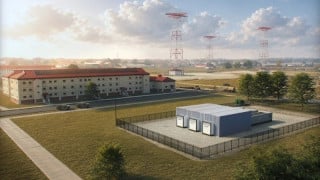
Sense aims to improve grid monitoring and insights in the last mile of the network. Image used courtesy of Adobe Stock
By embedding software directly into next-generation smart meters, Sense aims to provide utilities with real-time visibility into the service and secondary lines feeding homes. This localized intelligence targets the root of most outages and safety hazards before they escalate into larger systemic failures.
Addressing the Distribution Grid Blind Spot
Data from the U.S. Energy Information Administration indicates that more than 90 percent of U.S. outages originate on the distribution grid. Despite this, most legacy fault detection technologies are concentrated further up the network. Sense’s solution utilizes Waveform AI, an on-meter signal disaggregation and insight technology, to detect faults at the edge in real time.
The software is designed to identify several critical conditions that have historically been difficult to monitor without specialized field equipment:
- Arcing: Identifying electrical discharges that can lead to fires or equipment failure.
- Downed Lines: Detecting broken conductors immediately to improve public safety.
- Equipment Degradation: Monitoring the health of grid assets to predict failures before they occur.
Intelligence at the Edge: Waveform AI
The core of the solution lies in moving the processing power to the meter itself. By analyzing electrical signals at the edge, the system provides operators with actionable insights the moment an anomaly is detected. This shift from centralized monitoring to edge intelligence allows for faster and more accurate visibility into grid conditions.
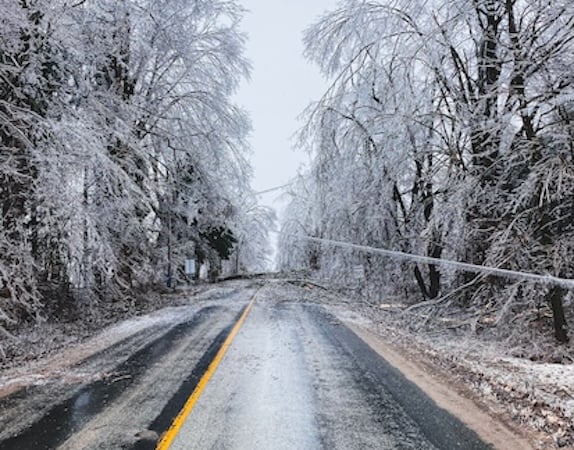
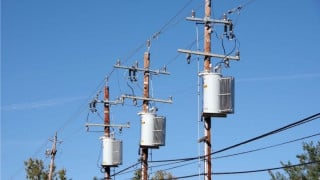
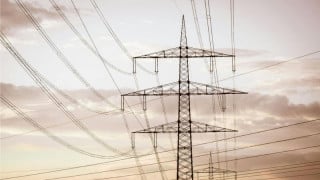
Early detection of grid anomalies, like this sagging power line, improves the safety and efficiency of the grid. Image used courtesy of Adobe Stock
For utility operators, the primary advantage of the Sense solution is the ability to localize faults faster. By identifying the exact area of failure, utilities can:
- Accelerate restoration: Shorten the duration of outages by pinpointing the source.
- Reduce truck rolls: Avoid unnecessary field deployments through better diagnostics.
- Prioritize asset replacement: Use real-world condition data to decide which equipment needs immediate attention.
Beyond operational efficiency, the solution addresses significant safety concerns. Early detection of arcing and downed lines is a critical component of wildfire prevention. Furthermore, real-time detection protects utility crews; arcing events can be fatal for lineworkers, and knowing a fault's status before arriving on-site significantly mitigates risk.
The Move to AMI 2.0
The Fault Detection Solution is built specifically for AMI 2.0 (Advanced Metering Infrastructure). Because it runs as software inside modern smart meters, utilities can maximize their existing investment in meter deployments without the complexity of installing pole-top sensors or radio-based localization tools.
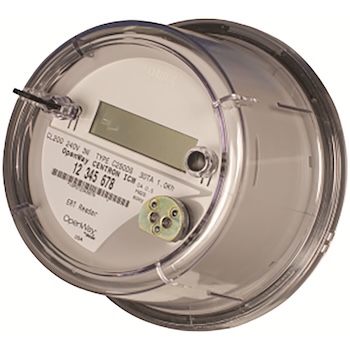
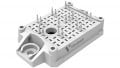
Modern smart meters, like this Solar Meter, provide the advanced monitoring and communication capabilities required for distributed grid intelligence. Image used courtesy of Itron
This announcement follows the late 2025 launch of the Sense Load Visibility Solution, further expanding the suite of edge-intelligence tools available to utilities. Early utility pilots have already demonstrated the software’s ability to identify incipient faults caused by emerging vegetation issues and previously unseen infrastructure failures.
Insights from CEO Mike Phillips
EEPower wanted to dig a little deeper into this new technology. Thankfully, Sense CEO Mike Phillips was willing to answer our questions.
EEPower: How will this new product announcement complement the existing electric infrastructure and data collected?
Phillips: Sense software runs in utility meters (so, end nodes). With the processing and data available in the latest utility meters, we are able to see events and the operation of the overall grid without having to instrument the entire grid. Of course, if there is other data available (sensor data in the grid, satellite or drone data, weather data, etc.) that can be combined with data from the meters to form a more complete picture of the conditions in the grid.
EEPower: To distinguish between normal switching transients (like a motor starting) and hazardous high-impedance arcing or incipient equipment failure, what is the minimum sampling frequency required for the Waveform AI to capture the necessary high-frequency components?
Phillips: We can detect most events with sampling rates of 14,000 samples per second or above. It is important that we have access to continuous sample streams for both current and voltage waveforms. Some meters are starting to include sampling of voltage waveforms all the way up to 1 million samples per second. This is gives us greater visibility to certain types of faults and power quality issues, especially at the very edge of the network.
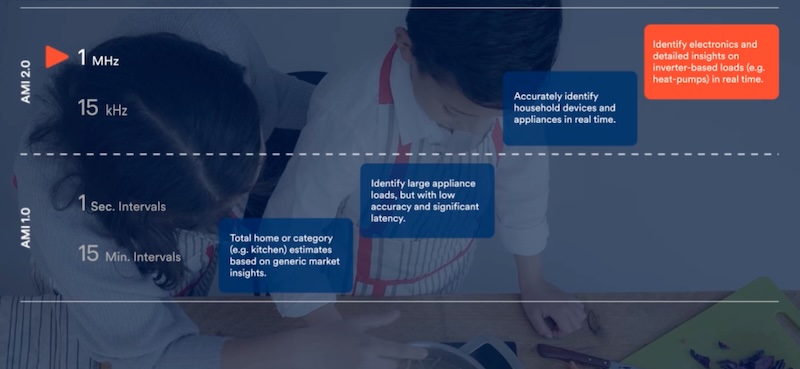
As waveform sampling rates continue to increase with AMI 2.0, utilities gain greater insights into faults and power quality. Image used courtesy of Sense
EEPower: How much computing power is required to process these high-fidelity waveforms locally on the meter’s SoC?
Phillips: The latest meters have enough processing power for this sort of functionality - we recommend at least 1000 DMIPS of processing for next-generation meters, but this covers many use cases (and the waveform processing can be shared among use cases).
EEPower: Does this solution allow remote over-the-air upgrades as algorithms improve and new fault signatures are identified?
Phillips: Yes - this is a function of the meter platforms but something we rely on as the models improve and the use cases evolve.
EEPower: How does the Sense Fault Detection Solution interface with existing Advanced Distribution Management Systems (ADMS) or SCADA? Furthermore, is there a pathway for this edge intelligence to eventually participate in protection coordination, such as providing 'permissive' signals to reclosers or smart cutouts to prevent a wildfire-prone line from re-energizing after a detected arc?
Phillips: We are working with utilities to integrate our insights and functionality into their operational systems, including ADMS. Many ADMS implementations already include event and telemetry streams, including from AMI networks. As AMI 2.0 meters running Sense proliferate, Sense intelligence from the edge of the grid can be combined with other data sources (GIS network connectivity, OMS, etc.) for broader insights and operation of the grid. This is done through software interfaces (APIs) and is a mix of standards-based interfaces and custom integrations. In the future, there is absolutely a pathway to utilize edge intelligence in meters for responses like smart cutouts, but that is likely farther out.
Featured image is a composite of images from Sense and Adobe Stock.