Facebook
 Google
 GitHub
 Linkedin
Bel Fuse Launches High-Density DC-DC Converters for Rail Applications
The second-generation XRCM series of DC-DC converters blends an ultra-wide input range with stringent railway safety compliance in a compact footprint, streamlining system design for modern rail transport.
Bel Fuse has announced its XRCM 200 and 300 Series, a new family of second-generation DC-DC converters engineered to meet the demanding reliability and power requirements of modern railway and transportation systems.
Designed for high efficiency and high power density, the new converters allow engineers to simplify power architectures while strictly adhering to the latest safety and performance standards required in the transit industry.
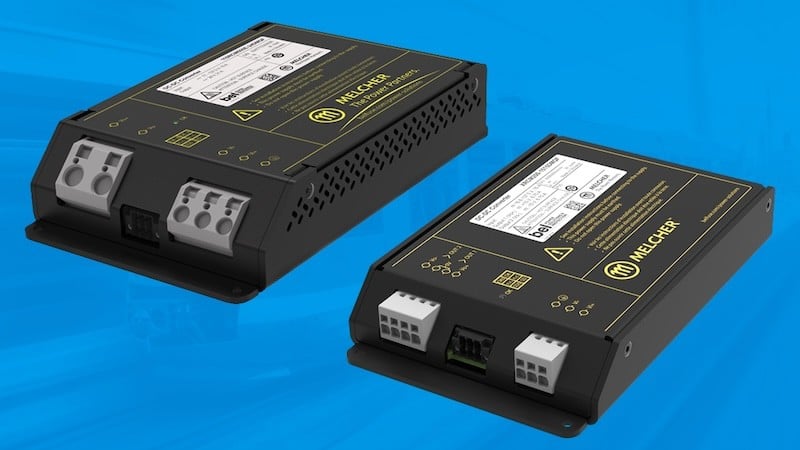
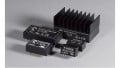
Bel Fuse’s tXRCM 300 (left) and XRCM 200 (right) DC-DC converters
Broad Compatibility and Input Architecture
A primary engineering benefit of the XRCM Series is its ultra-wide input range. The converters support continuous input voltages ranging from 16.8 VDC to 137.5 VDC. This broad input threshold makes the hardware compatible with virtually all standard railway battery systems.
As a result, original equipment manufacturers (OEMs) can standardize their power supply designs and rely on fewer platforms across diverse vehicle architectures. By minimizing the number of unique power components required across a fleet, engineers can significantly reduce both integration effort and inventory complexity.
Furthermore, the converters feature a screw-terminal input and output configuration, simplifying physical installation and ensuring highly secure electrical connections in high-vibration environments.
Product Variations and Output Specs
The series is currently available in two distinct configurations—the XRCM 200 and XRCM 300—tailored to specific deployment requirements:
- XRCM 200: A dual-output converter capable of delivering 200 W at ±15 V. This model provides a compact, cost-effective solution optimized for overall low power consumption.
- XRCM 300: A single-output variant that supplies 300 W at 24 V. It is specifically designed with an extended thermal operating range, capable of sustaining continuous operation at ambient temperatures of up to 85°C.
Both models are engineered with low inrush current, ensuring stable startup behavior without over-stressing upstream electrical components or battery rails. More information is available in the data sheets for the XRCM 200 and XRCM 300.
Protection Features and Railway Certifications
For mission-critical rail infrastructure, reliable hardware-level protection against electrical and environmental faults is non-negotiable. The XRCM converters are equipped with comprehensive internal safeguards against overtemperature, overvoltage, overcurrent, and short-circuit events.
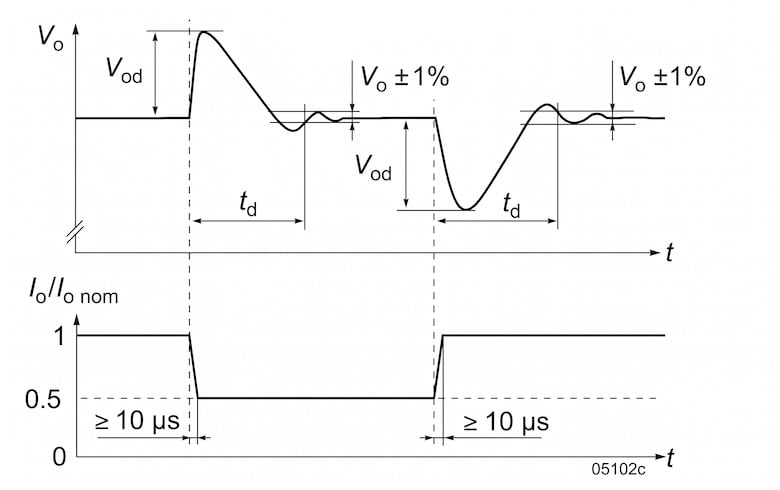
Typical dynamic load regulation of output voltage (XRCM 200)
To streamline design cycles for rail applications, the hardware has been built to meet the latest industry safety guidelines. The converters carry compliance for EN 50155 and EN 50121-3-2 standards, as well as AREMA specifications. This certifies their operational viability in harsh transit environments where vibration, thermal shock, and electromagnetic interference are persistent challenges.
Built for Resilient Transportation Systems
Bel Fuse says that providing reliable power solutions to system architects and rail operators remains a primary operational focus for Bel. The new generation of the XRCM Series was developed specifically to ease system deployment by packaging wide-voltage support and essential hardware protections within a restricted physical footprint, allowing engineers to construct highly resilient transportation systems.
By offering versatile power conversion capabilities, the XRCM200 and XRCM300 appear to directly target the continuous evolution of modern railway electronics, delivering enhanced reliability and simpler integration for complex, multi-vehicle rail architectures.
All images used courtesy of Bel Fuse.