Facebook
 Google
 GitHub
 Linkedin
Virtual Vulnerability: How a Hacker Infiltrated a VPP
What would happen if a hacker penetrated a virtual power plant? A London man found out.
As home energy management systems, solar panels, and battery storage solutions become increasingly prevalent, homeowners are gaining unprecedented control over their electricity generation, storage, and usage. This trend has led to virtual power plants (VPP), which aggregate and manage distributed energy resources to balance grid demand and supply. However, cybersecurity concerns have come to the forefront as these systems become more interconnected and reliant on cloud-based technologies.
In the U.K., a security researcher used a vulnerability in a home energy system to gain unauthorized access to a virtual power plant controlling approximately 200 megawatts of capacity. This hacking incident underscores the need to examine security measures, such as encryption, for the growing number of VPPs.
Virtual power plant concept. Image used courtesy of Adobe Stock
Cryptographic Conundrum of Virtual Power Plants
VPPs represent a cutting-edge approach to energy management, aggregating distributed energy resources like solar panels, batteries, and smart appliances into a coordinated network. This allows for more efficient grid balancing and energy distribution. However, the security of these systems is often a concern.
At the heart of many security protocols lies Rivest-Shamir-Adleman (RSA) encryption, a cryptographic algorithm that relies on the difficulty of factoring large numbers (product of two prime numbers). The strength of RSA keys is directly related to their bit length, with longer keys more secure and computationally intensive. The industry has been steadily transitioning away from shorter key lengths, such as 512-bit RSA, which are now considered insecure.
However, this transition presents challenges, as many legacy systems and code libraries still support these vulnerable key lengths. Cryptography’s complexity and rapid pace of technological advancement make it difficult for non-specialists to keep up with best practices. This knowledge gap can lead to outdated or insecure cryptographic methods, potentially compromising entire systems.
Furthermore, since VPPs are interconnected, a single vulnerability can have far-reaching consequences, affecting thousands of households and potentially destabilizing the power grid.
Cracking the Grid via Virtual Power Plant
Ryan Castellucci, a London-area hacker, discovered the API (application programming interface) used by the U.K.-based energy management provider GivEnergy was secured with a 512-bit RSA cryptographic key. Castellucci used cloud computing resources to factor the key. It cost just $70 and took less than 24 hours.
The hack allowed Castellucci to gain admin-level access to GivEnergy's cloud-connected products, which included around 60,000 installed systems. Each home energy system, including solar panels and battery storage, can charge or discharge 3-4 kW of electricity. This amounts to a total programmable capacity of approximately 200 MW, enough to power roughly 40,000 homes. Castellucci could schedule the VPP’s charging and discharging at will.
The system hack could also allow access to GivEnergy users’ personal information, such as addresses and phone numbers.
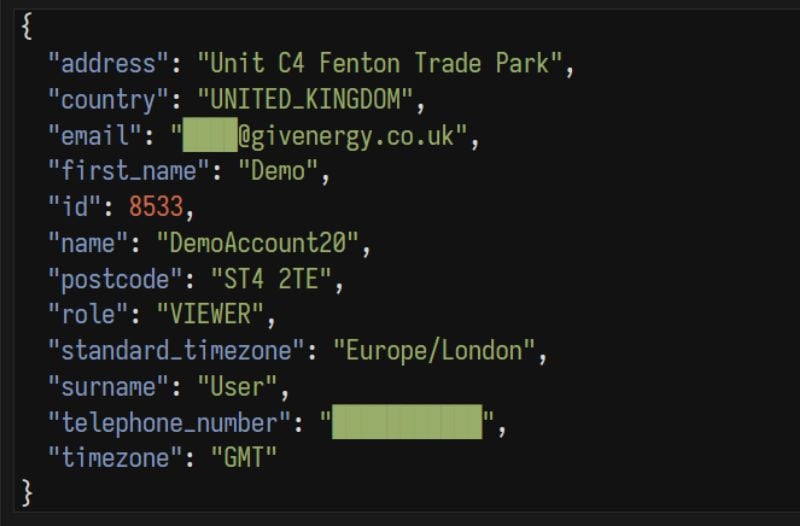
Changing the API token. Image used courtesy of Ryan Castellucci
GivEnergy engineers and the makers of code libraries that allowed such weak cryptographic keys were responsible for the vulnerability. Fortunately, Castelluci notified GivEnergy of the vulnerability, and the company responded almost immediately by switching from a 512-bit RSA key to a 4096-bit key.
Lessons Learned in Virtual Power Plant Security
The GivEnergy security vulnerability is a cautionary tale for the energy industry's transition towards decentralized, cloud-connected smart home systems.
As VPPs become more prevalent, the potential for large-scale disruption from similar vulnerabilities poses a significant risk to grid stability and consumer trust. Moving forward, a stronger emphasis on proactive security reviews, regular software updates, and collaboration between energy providers and the security research community will be crucial to safeguarding the evolving smart energy landscape.