Facebook
 Google
 GitHub
 Linkedin
Unnatural Gas? Terraform’s Novel Approach Uses Electricity and Air
Start-up Terraform Industries has demonstrated the production of hydrocarbons without releasing carbon dioxide into the air.
Hydrocarbons are critical in powering modern economies, serving as the foundation for energy, transportation, and chemical, fertilizer, and pharmaceutical production. They are also key to manufacturing fuels, plastics, and synthetic products. However, traditional hydrocarbon extraction poses environmental and sustainability challenges, such as greenhouse gas emissions and the depletion of natural resources. These concerns drive the need for innovation in production methods and extraction techniques.
Terraform Industries, a California-based startup, has demonstrated the production of hydrocarbons without releasing carbon dioxide into the air. What challenges are facing hydrocarbon extraction, and how is Terraform changing this narrative?
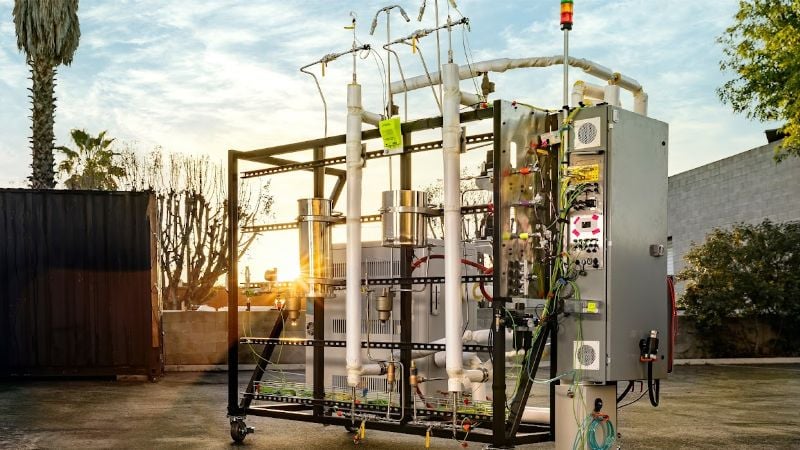
The Terraformer. Image used courtesy of Terraform
Hydrocarbon Challenges
Hydrocarbons are organic chemical compounds consisting solely of hydrogen and carbon atoms. These naturally occurring substances form the foundation of crude oil, natural gas, coal, and other energy sources. Originating from ancient plant and animal remains, hydrocarbons are formed over millennia by heat and pressure and are primarily located deep underground in porous rock formations such as sandstone, limestone, and shale.
Hydrocarbon extraction typically involves drilling into underground oil and natural gas reserves found in sedimentary rock formations such as shale, sandstone, and limestone. Advanced drilling techniques, including hydraulic fracturing (fracking) and horizontal drilling, are often employed to maximize resource extraction. These processes involve injecting fluids at high pressure to fracture rock and release hydrocarbons.

Hydraulic fracturing. Image used courtesy of U.S. Geological Survey
However, these extraction processes have well-documented hazardous effects on the environment. For example, crude oil extraction from reservoirs creates large underground voids, causing the collapse of overlying geological structures. Oil spills pose severe environmental threats, particularly to aquatic ecosystems, and are challenging to clean up. Additionally, hydrocarbon extraction releases carbon dioxide (CO2) from the earth into the atmosphere, contributing to greenhouse gas accumulation and global warming.
Overall, human activities such as drilling, burning wood, and fossil fuels disrupt the carbon cycle by releasing stored carbon, intensifying the impacts of climate change. According to a UN study, resource extraction accounts for 80% of biodiversity loss.
Changing the Face of Natural Gas
Terraform Industries has produced synthetic natural gas using electricity and air.
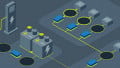
The company’s novel approach relied on the Terraformer system, roughly the size of two shipping containers and optimized for a one-megawatt solar array. The Terraformer comprises three subsystems: an electrolyzer to convert solar power into hydrogen, a proprietary direct air capture system to capture CO2, and a chemical reactor to combine these inputs to produce pipeline-grade synthetic natural gas.
Although electrolysis and Sabatier chemical reactors are established processes, Terraform Industries has made significant advances in adapting these processes to work efficiently with a variable energy source: solar power. The result is a remarkable cost reduction: converting electricity into hydrogen costs less than $2.50 per kilogram of H2, while the direct air capture system filters CO2 for less than $250 per ton.

Terraformer and its process. Image used courtesy of Terraform Industries
The company aims to lower these prices further, achieving cost parity with conventional liquefied natural gas. The success of this initiative will ultimately rely on the scalability of the technology and ramping up factories to support mass production.
Path to a Cleaner Future
Terraform has contracts to supply small quantities of natural gas to two undisclosed utility companies and is considering creating a prototype or selling standalone electrolyzers separately. They may also produce liquid fuels other than methane. Additionally, Terraform is accepting reservations for the first production of Terraformers, aiming to scale manufacturing to enable a major transformation of global energy systems.