Facebook
 Google
 GitHub
 Linkedin
Road Trip Ready: 4 Creative Solutions for Rural EV Charging
Public electric vehicle chargers are scarce in rural areas. Will creative technology provide solutions?
Electric vehicle ownership is growing, but many drivers are reluctant to venture too far from home. Range anxiety—worry that the battery will run out before finding a charger—keeps most people close to home. EV chargers can be hard to find on long road trips and in rural areas.
Until charging infrastructure is fully developed, the problem may be addressed by finding creative ways to make charging more accessible, especially in remote locations. While many solutions are designed for urban use, they can easily be adapted to country living.
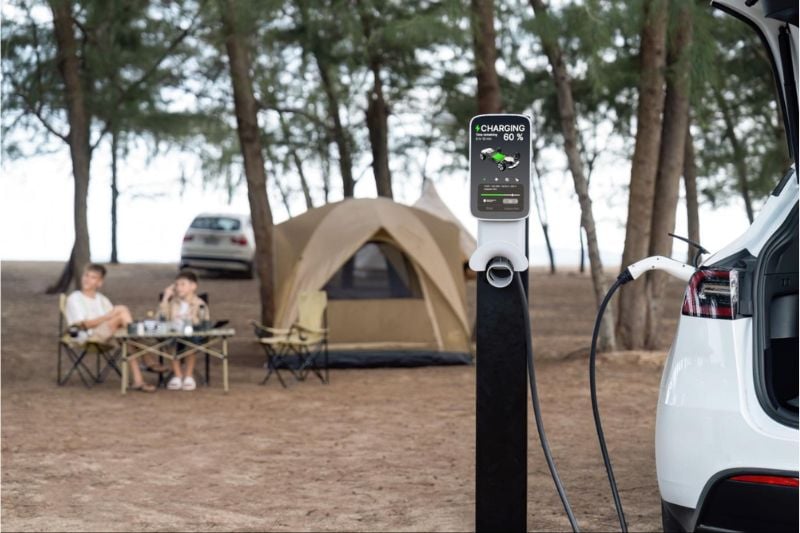
Will expanding charging infrastructure encourage rural EV travel? Image used courtesy of Adobe Stock
Rural Charging Woes
Charging infrastructure is slowly expanding, but not enough to ease anxieties. A Pew Research study found that the closer people live to a charger, the more likely they are to view EVs positively. Conversely, only 17% of rural residents can access a public EV charging station within two miles. One-third of U.S. counties—all in rural areas—have no EV chargers.
The charger scarcity doesn’t just affect residents. Tourists, long-haul truckers, and EV drivers traveling cross-country may not want to risk being stranded miles away from a charging station.
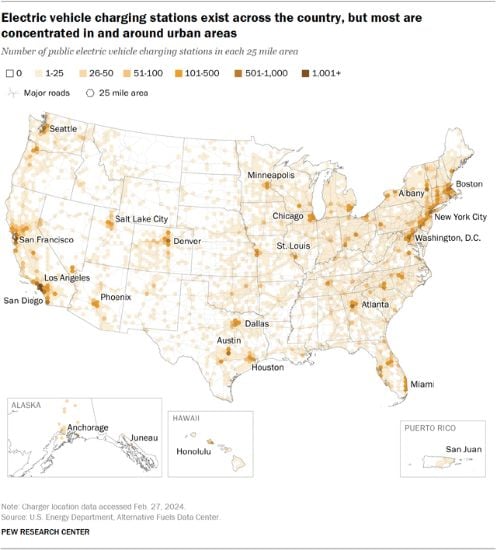
Public EV charger availability. Image used courtesy of Pew Research
Several companies have developed charging solutions that could fill the gaps.
Solution 1: Charging Off the Grid
A solar-based charging station may be the solution in areas lacking electric power, such as parks, recreation areas, or highway rest areas. Several companies offer easy-to-install solar EV chargers, many with battery storage backup. Some chargers can be permanently installed, while others can be transported to places needing short-term charger use.
For example, Beam Global Arc chargers fit into a standard parking space. Each unit can have up to six charging plugs using any brand charger. Since it doesn’t need to be bolted down, it can be installed and removed quickly. Each solar panel provides 4.4 kW. Battery storage options can be added for 20, 30, or 40 kWh. Beam states that its solar chargers can withstand winds up to 160 mph.
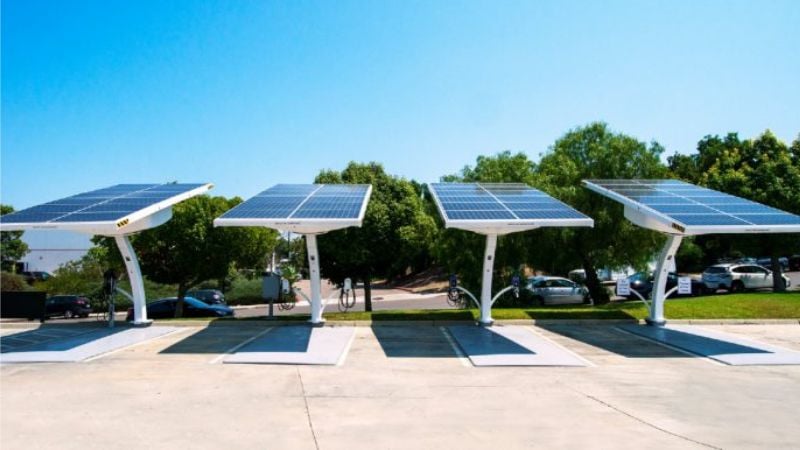
Solar chargers. Image used courtesy of Beam
Standalone solar EV chargers are popular with cities hoping to meet their net-zero emissions goals. Their use in more remote areas has been slower, but that could change. San Diego recently purchased chargers for its public parks, and the U.K. made a $1 million deal with Beam to place solar chargers in military installations.
Solution 2: Charging for Electric Adventurers
For EV owners who love adventure, Polaris is pioneering an off-road EV charging network in Michigan’s Upper Peninsula.
Polaris will build an EV charging network along a 120-mile-long off-road public trail in Michigan’s Upper Peninsula. The chargers will service trail-approved EVs such as off-road vehicles and snowmobiles. The network’s four chargers will be near tourist stops or scenic overlooks so EV drivers can take a break while charging.
Polaris will develop the solar charging system with Yotta Energy, a Texas-based renewable energy storage company. Each unit has 120 kWh of energy storage onboard and offers Level 2 charging with multiple ports. The flexible system can operate on or off the grid.
Polaris will use funds from a $700,000 grant from the Michigan Office of Future Mobility and Electrification (OFME). The chargers will be available this year. Polaris will also offer rentals of its off-road EV, the Ranger XP Kinetic.
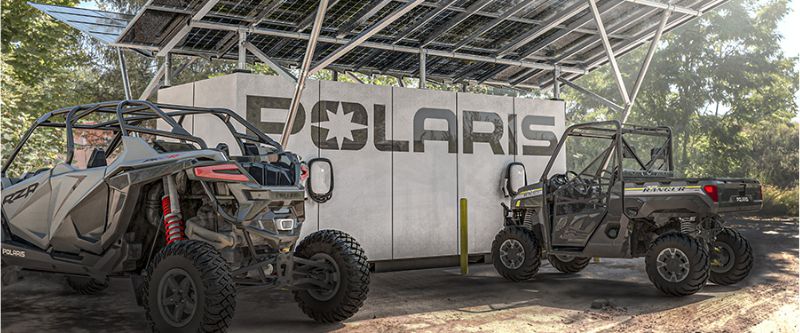
Solar off-road charging station. Image used courtesy of Polaris
Solution 3: EV Chargers on Wheels
When drivers can’t make it to an EV charger, a mobile charger may be possible. Massachusetts-based Sparkcharge company markets charging-as-a-service to businesses for fleet charging, special events, or similar needs. The portable battery-based Level 3 charger system provides 3.35 kWh of usable electricity. Up to four batteries can be combined.
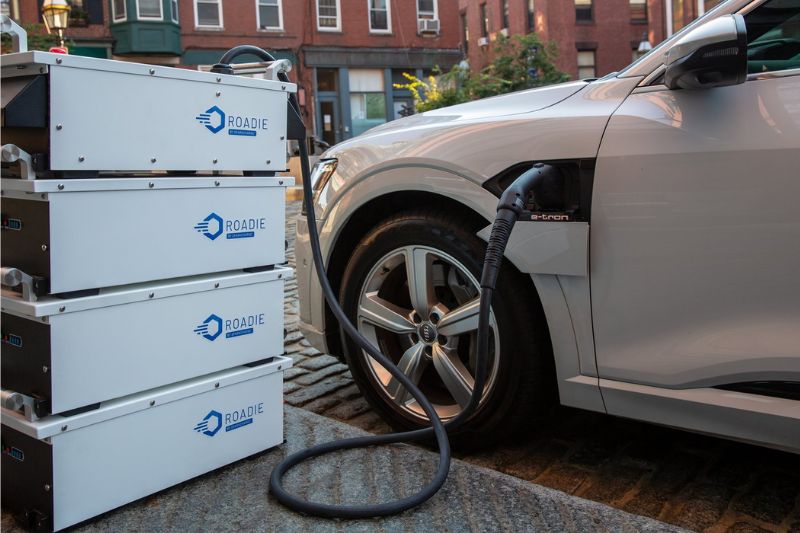
Roadie portable chargers. Image used courtesy of Sparkcharge
Solution 4: Scaled Down Urban Charging Solutions
Urban residents often live in apartments and condos without garages or dedicated parking spaces. To address the issue, several startups are integrating chargers into street-side structures. However, these small, lightweight chargers could easily be installed in small towns.
Gravity is innovating “charging trees” along thousands of curbside parking spaces in New York. The company’s Distributed Energy Access Points (DEAP) chargers will offer universal charging. Gravity says its DEAP trees provide 200 miles in 13 minutes at 200 kW or 5 minutes at 500 kW. The 1000 V chargers need no additional space or utility upgrades.
Mounted on poles, the “trees” have hinged arms that pivot down to connect to the vehicle. The arm automatically raises when charging completes, and the EV connector hides within the pole. The charging cable can accommodate every EV’s port location.
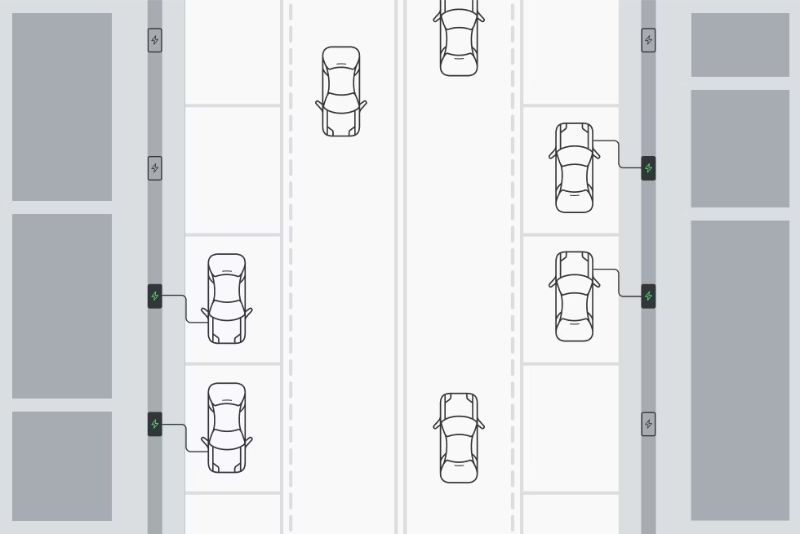
Curbside charging locations. Image used courtesy of Gravity
Voltpost’s modular chargers can be retrofitted to any existing lamppost along the street in one hour. One to four chargers can be included. Drivers can access and pay with a phone app and plug into the Level 2 chargers with a retractable cord. The chargers use a J-1776, so Tesla users will need an adapter until the North American Charging Standard becomes widespread.

Voltpost charger. Image used courtesy of Voltpost
Creative Charging Impact
EV charging technology is becoming smaller, portable, renewable, and flexible. If rural and remote areas adopt creative charging solutions, will EV use increase? If the Pew study is correct, building charging infrastructure may be necessary for wider EV adoption.