Facebook
 Google
 GitHub
 Linkedin
From EVs to BESS: Second-Life Batteries Power Modern Demand
In this exclusive Q&A, Moment Energy’s Gabriel Soares explains how used EV batteries used in battery energy storage systems can help meet energy demands.
Demand for battery energy storage systems (BESS) is surging for a simple reason: industries need uninterrupted, reliable power. BESS have become an essential component of power systems for AI data centers, manufacturing facilities, critical services buildings, renewable energy, and much more.
Using repurposed batteries in BESS units can meet demand while also providing a route for used electric vehicle batteries that still have much remaining life. These batteries can perform as well as new batteries while also meeting safety standards, according to Gabriel Soares, CTO and Co-Founder of Moment Energy.
EEPower had the opportunity to learn more from Soares.
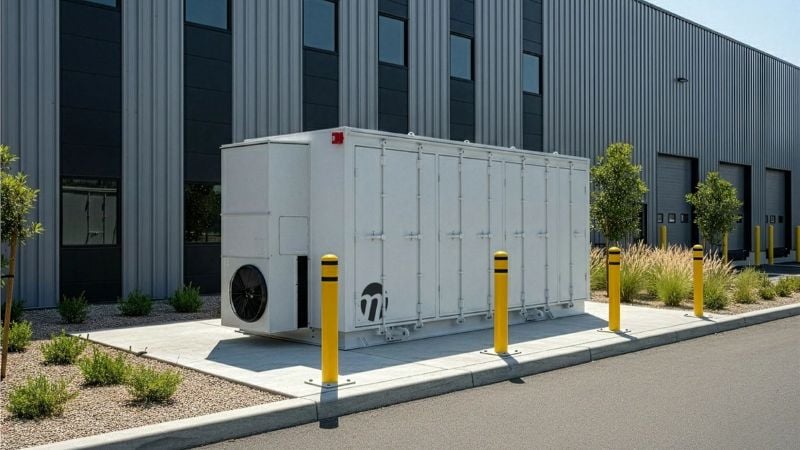
BESS using repurposed batteries. Image used courtesy of Moment Energy
Challenges in Evaluating Second-Life Batteries
EEPower: What’s the most important challenge in evaluating second-life EV batteries for repurposing, and what’s the best way to address that challenge?
Soares: Retired EV batteries arrive with different histories in their first life, so two packs that look identical can have very different remaining life and hidden faults. Sorting them accurately is the real bottleneck. The most important challenge is to sort them safely and efficiently.
The fix is fast diagnostic testing and a large dataset of previous battery states to quickly grade and evaluate batteries reliably at scale.
Addressing Safety Concerns
EEPower: What are the safety concerns with repurposed batteries? Are they any different from using new batteries? How should safety be dealt with?
Soares: One benefit of using repurposed batteries is that they’ve made it past any infant mortality issues that can show up with newly produced cells. They’ve worked reliably for many years in the field and can continue to run in stationary applications.
Safety is still critical, as it is for new batteries. So safety must be built in through careful screening, conservative operating limits, good thermal management, and independent certification to recognized UL standards. When done right, a certified second-life system meets the same safety standards as a new one.
The Battery Management System
EEPower: When repurposing the batteries for a BESS, what are the chief concerns in engineering the BESS architecture? Specifically, how is the battery management system handled?
Soares: The design has to tolerate variation between packs, so modular architectures typically work best. The battery management system is the make-or-break piece. The safe approach is a purpose-built system that keeps cells balanced and safe while allowing performance optimization on top, with safety controls kept separate so they cannot be overridden. It’s critical that the battery management system can handle variation and is certified to strict UL standards including functional safety.
Learn more about battery management systems in BESS. Image used courtesy of Moment Energy
Grid-Scale Performance
EEPower: Do BESS systems with repurposed batteries perform effectively when used for grid-scale concerns, such as peak shaving, load balancing, and frequency regulation? Are they on par with those made with new batteries?
Soares: Yes, well-built second-life systems handle peak shaving, load balancing, and frequency regulation effectively. Density is typically lower than new batteries, but the far lower cost and faster deployment more than make up for it. For stationary storage, where weight and size do not matter the way they do in a car, they are genuinely competitive.
BESS for AI Data Centers
EEPower: Can second-life systems mitigate the grid impact of AI data centers? How can they work with AI data center energy demands?
Soares: This is where second-life storage shines right now. AI data centers need power faster than the grid can be upgraded, and repurposed battery systems deploy in months rather than years, at lower cost. They can shave peaks, provide backup, and buffer the heavy, spiky loads AI creates, all as the first big wave of retired EV batteries becomes available to supply them.
The Full Repurposed Battery Picture
EEPower: Can you talk about how Moment Energy’s products exemplify the trends we've been discussing in the previous questions?
Soares: Moment Energy is built around these exact trends. On safety, it holds a world-first functional-safety certification for a repurposed battery management system, plus certification across the full UL stack, which is its answer to the "safety gap" that kept other players stuck at lab scale. Its pack-swapping design targets a roughly 30-year lifespan.
Our Megafactory 1 opened in June 2026 and is billed as the world's largest of its kind. It’s aimed squarely at the critical demand for energy storage, including AI-driven power demand, with a fully North American supply chain fed by retiring EV batteries.