Facebook
 Google
 GitHub
 Linkedin
How Demand, Grid Investment, and AI are Shaping the U.S. Energy Landscape
Learn how the US energy sector in 2026 is defined by trends such as an acceleration of grid investment due to AI/electrification demands, and AI’s use in core utility operations.
Entering 2026, the United States power sector is facing a convergence of trends that are reshaping how electricity systems are planned, built, and operated. While the energy transition remains firmly underway, the conversations taking place across utilities, developers, industrial customers, and technology partners have become more pragmatic, more urgent, and more grounded in operational reality.
What we are seeing is not a change in direction, but more of a recalibration, driven by accelerating demand, grid infrastructure constraints, and the need for solutions that can be delivered quickly and at scale.
Based on conversations across the market, three themes stand out as defining forces for 2026: a renewed emphasis on conventional electricity generation, an unprecedented surge in grid infrastructure investment, and the early transition of artificial intelligence (AI) from pilot projects to core utility operations.
Generation Strategies are shifting Toward Reliability and Scale
This year we expect to see growing momentum behind more traditional, conventional electricity generation sources, particularly conventional methods such as liquefied natural gas (LNG). This shift reflects a pragmatic response to near-term system requirements rather than a departure from long-term decarbonization goals. Utilities are facing sustained load growth, tighter reliability requirements, and heightened expectations around system resilience from regulators, customers, and system operators. In this environment, development of dispatchable generation—resources that can be ramped up or down to meet real-time demand—will become a more critical part of the planning toolkit.
At the same time, nuclear energy is re-entering the picture as a serious component to long-term generation strategies. This includes both the extension of existing large-scale nuclear assets and a growing focus on small modular reactors (SMRs). While timelines for new nuclear capacity remain long, utilities and policymakers are increasingly viewing nuclear as a necessary complement to variable renewable resources, particularly in regions experiencing rapid demand growth.
Renewable generation will continue to expand as well, though at a more measured pace than earlier projections suggested. Installed renewable capacity is still expected to roughly double by 2035, but near-term deployment is still being met with permitting challenges, interconnection delays, and grid constraints.
Taken together, these dynamics point to a generation mix that will continue to decarbonize over time, but with greater emphasis on balance, reliability, affordability, and deliverability. Underlying these shifts in the energy landscape is possibly the most significant driver of change in the power sector today: demand growth.
A New Era of Electricity Demand Growth
Electricity demand in the U.S. is now growing at rates not seen in decades. Many forecasts point to year-over-year growth of 3-4%, representing a meaningful shift from the modest and largely predictable demand growth utilities planned around for much of the past two decades. Installed generation capacity is expected to increase two to three times between 2020 and 2050, underlining the scale of the transformation that is underway.
Unsurprisingly, data centers have emerged as one of the most visible contributors to this growth with demand projected to almost double by 2030 (from 82GW to 150GW). This growth is being driven largely by cloud computing, AI, and digital services. And in certain regions, the pace and concentration of this load growth is putting an unprecedented strain on existing infrastructure as well as challenging traditional planning processes.
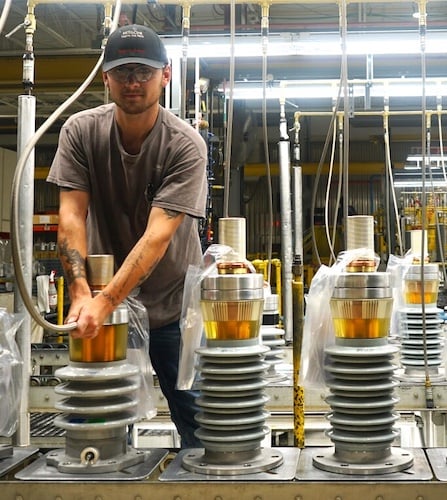
Figure 1. Worker at Hitachi Energy's transformer component factory in Alamo, TN assembling bushings that connect equipment, like transformers, to the grid.
However, solely focusing on data centers risks missing the broader picture. What we are seeing is a more comprehensive electrification ‘super cycle.’ Grid modernization initiatives, the integration of new generation sources, the electrification of industrial processes, and the reshoring of manufacturing are all contributing to rising demand. New loads are often larger, more complex, and more time-sensitive than previously seen, requiring utilities to expand and reinforce networks at an accelerated pace.
As demand grows and the grid becomes even more complex, infrastructure is no longer a background consideration—it is becoming a central constraint. The pace of electrification is now testing whether existing planning and permitting processes, and supply chains can keep up.
The Electrification Super Cycle
The demand for grid infrastructure is rising across the board—from high-voltage equipment to distribution assets. Long lead times for transformers and other critical components have become a visible indicator of the strain placed on manufacturing capacity. In response, utilities are rethinking their procurement strategies, planning further ahead, and increasingly treating supply chain resilience as a strategic priority.
The scale of investment required to support this expansion is significant. Across industry, manufacturers are committing large amounts of capital to expand domestic production capacity, recognizing that grid infrastructure is no longer just an enabler but a limiting factor for growth. Earlier this year, Hitachi Energy announced a $1 billion investment in the U.S., focused on expanding manufacturing capacity for transformers and high-voltage equipment.
A commitment that has since been reinforced through a memorandum of understanding with the U.S. Department of Commerce. Other suppliers have also announced capacity expansions, reflecting a broader industry response to sustained demand.
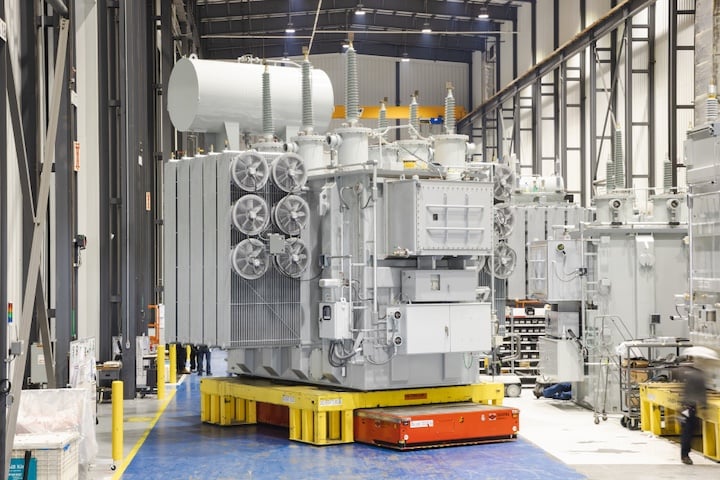
Figure 2. Hitachi Energy's transformer factory in South Boston, VA preparing to ship a 100 MW power transformer.
These investments signal a recognition that the electrification super cycle is not a short-term surge, it’s here to stay. While manufacturing expansions take time, 2026 is a year where we can expect to see tangible outcomes as new capacity comes online, providing incremental relief to supply constraints and wider equipment availability. Even so, the pace of demand growth means that continued investment—and coordination across industry and government—will remain essential.
A Shift from Experimental AI Use to Operational
Alongside physical infrastructure, digital capabilities are becoming increasingly central to how utilities plan, operate, and maintain the grid. To date, AI has largely been applied through pilot projects or narrowly defined use cases. Examples include improving the efficiency of interconnection studies, where advanced analytics are increasingly being used to address growing backlogs and data complexity.
A recent collaboration between Hitachi Energy, NVIDIA, and Southwest Power Pool (SPP) is helping to define how AI can be applied to reduce bottlenecks in connecting new generation sources to the grid. Similar approaches are also being explored by utilities in applying AI-based analytics to their field service operations, using data such as asset health, outage history, and environmental conditions to better prioritize work. This enables more effective deployment of constrained field resources, from proactive maintenance and vegetation management to faster service restoration following outages.
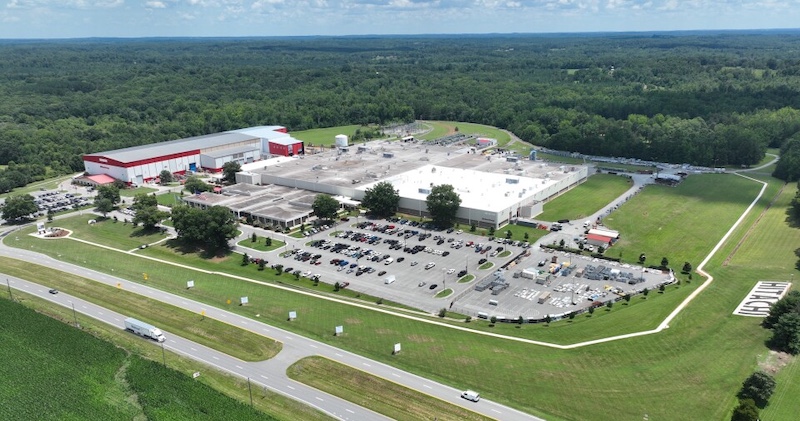
Figure 3. Hitachi Energy is investing $37 million USD towards the expansion of its power transformer manufacturing facility in South Boston, VA.
We are already beginning to see a shift toward more widespread operational use of AI across the power sector. Utilities are showing increased interest in moving beyond isolated pilots and toward building the foundational capabilities needed to support AI at scale. This includes modernizing data environments, improving system interoperability, and embedding digital intelligence into core operational workflows.
The concept of an “AI-ready” grid is gaining traction—not as a single product or solution, but as more of a strategic direction. In a sector facing workforce constraints, growing system complexity, affordability concerns and rising reliability expectations, AI offers a new way to augment human expertise and prioritize resources more effectively. Notably, this transition is being approached with both caution and realism. AI is not viewed as a replacement for engineering expertise, but as a tool to support better, faster decision-making.
Looking Ahead
The U.S. power sector finds itself at a pivotal moment. Generation strategies are being reassessed through the lens of reliability and scale. Grid infrastructure investment is accelerating to meet demand growth, and digital intelligence is beginning to move from the margins into the core of utility operations.
What ties these trends together? A focus on execution. The coming year will favor organizations that plan holistically, invest early, and build flexibility into both physical and digital systems. Meeting the demands of the next decade will require deeper collaboration between utilities, suppliers, regulators, and technology partners.
The future of the grid will not be defined by any single technology. Instead, it will be shaped by how effectively the industry integrates generation, infrastructure, and intelligence to deliver reliable, affordable power for a rapidly changing world.
All images used courtesy of Hitachi Energy.