Facebook
 Google
 GitHub
 Linkedin
Enclosure Stops Damaged EVs from Spreading Fire
Southwest Research Institute is testing a novel fire containment enclosure designed to safely store damaged electric vehicles.
As electric vehicles mature, need repair, or reach end-of-life, countless damaged vehicles will be stored in tow lots and repair garages. These vehicles could be vulnerable to thermal runaway, leading to fires that can spread among vehicles.
The Southwest Research Institute (SwRI) is testing a physical enclosure for damaged EVs that can contain fires and prevent a dangerous vehicle-to-vehicle domino effect in facilities where damaged vehicles are stored. The enclosure could be a solid step in a safe direction.
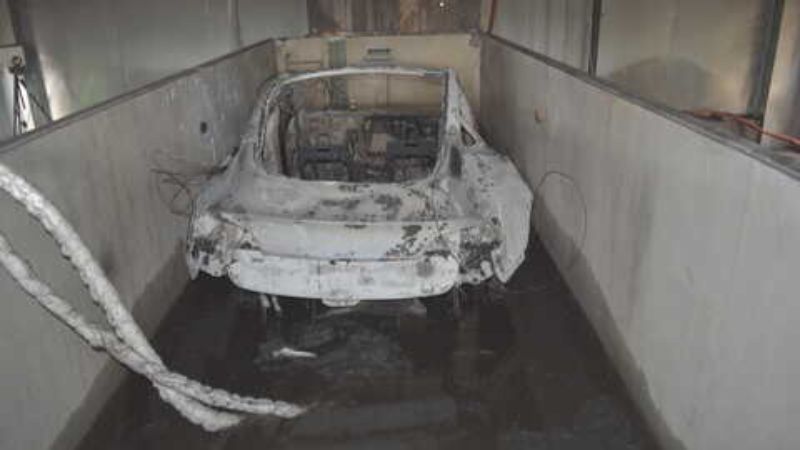
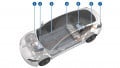
The tested vehicle after the fire was extinguished. Image used courtesy of SwRI
Thermal Runaway in Damaged EVs
Lithium-ion battery chemistry presents unique safety risks, and not just for EVs on the road. Once an EV is in an accident, it immediately becomes a hazard and must be stored safely while waiting to be repaired, stripped, or destroyed.
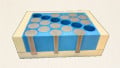
Thermal runaway in lithium-ion batteries (Li-ion) is a major safety concern. Yet, particular caution must be taken when storing damaged EVs close together. Thermal runaway occurs when a battery cell experiences an uncontrolled temperature increase, releasing flammable gases and potential ignition. The heat generated can propagate to adjacent cells, causing a cascading failure known as thermal runaway propagation.
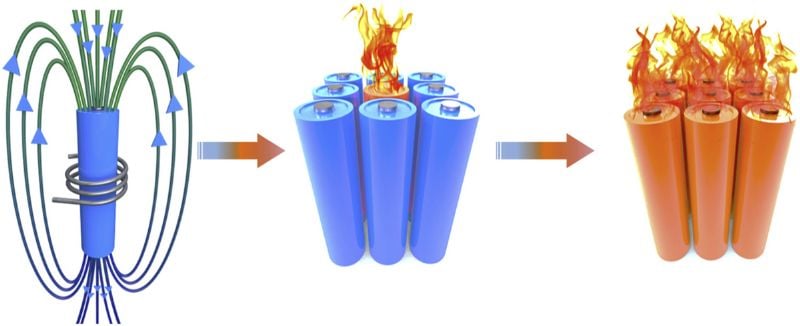
Thermal runaway propagation. Image used courtesy of Kriston et al.
Studies have shown that the hot gases vented during thermal runaway carry flammable elements, which, if ignited, can exacerbate the spread of thermal runaway to other cells within a battery pack.
The accumulation of these gases poses explosion hazards, and typical Li-ions found in EVs may produce sufficient gas during thermal runaway to damage structures and endanger first responders or occupants.
Given these risks, storing damaged EVs near one another increases the likelihood of thermal runaway events propagating between vehicles, potentially leading to large-scale fires. The National Highway Traffic Safety Administration recommends a minimum of 50 feet between vehicles and structural components to prevent thermal runaway from spreading among damaged vehicles.
This distance is impractical when looking toward a future when millions of EVs will be in accidents. The enclosure SwRI is testing shows promising results for preventing thermal runaway spread in environments where damaged EVs are stored.
The Enclosure’s Testing Performance
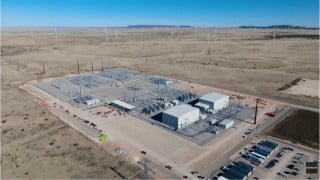
SwRI’s fire department engineers have over 75 years of research experience, which they used to test the new EV enclosure. Because no standardized testing protocol exists for EV fire safety, SwRI designed its own.
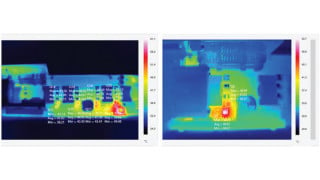
The first step was replicating thermal runaway in one battery, as engineers monitored the vehicle while the fire spread. The vehicle was contained in a protective enclosure, and researchers used thermocouples to monitor temperatures inside and outside the enclosure and on various surfaces.

The SwRI enclosure before and during testing. Image used courtesy of SwRI
The disparity between temperatures inside and outside the enclosure was substantial, showing that it can successfully contain the fire and the extreme heat it generates. During the fire, the interior wall reached temperatures up to 2,000°F, while the external wall temperature only reached 350°F when the fire was most extreme before researchers extinguished it.
Future Concerns Regarding Battery Chemistry Variety
As the EV market expands, the need for regulation regarding thermal runaway becomes apparent, especially considering the many possible future permutations of battery chemistry.
Many industry players will want to maximize energy density through cobalt properties, but manganese-based batteries are safer. Within the industry, rigorous safety metrics will need to be universally applied. SwRI’s custom testing protocols are a meaningful step toward preserving safety and developing the innovation needed to support the ever-evolving EV market.