Facebook
 Google
 GitHub
 Linkedin
When the Grid Becomes Software
How utilities can avoid the telecom industry’s historical virtualization mistakes to successfully build a software-orchestrated, resilient energy platform of the future.
The U.S. grid today operates at roughly 500 GW of continuous demand. Over the next decade, AI data centers, electrification, and advanced manufacturing expansion could add another 75 GW+ of incremental continuous load growth. That is roughly a 15% increase in less than ten years.
At the same time, legacy generation infrastructure representing nearly 20% of today’s continuous supply base is expected to retire. Together, this creates a structural challenge approaching 35% (175 GW) of net new continuous power capacity that must be replaced or added.
To put that scale into perspective, this is equivalent to adding roughly 2 New York Cities’ worth of continuous demand into the existing grid every year.

Over the next decade, it is estimated that the US needs to add 2 New York Cities’ worth of electrical demand to the existing grid every year. Image used courtesy of Adobe Stock
This evolution of the utility industry is translating into opportunities far beyond power generation. It will change how power is created, stored, and distributed. It will also reshape other aspects of power.
Energy is increasingly transmitted through bi-directional grids, enabling flows in both directions. It is also exchanged and monetized through mechanisms such as net metering and peer-to-peer energy trading. Finally, it is consumed via intelligent, AI-driven energy optimization at the edge.
Structural Hurdles in Modernization
The challenges facing the industry in navigating this transition are significant:
- Regulatory oversight led by agencies such as the Federal Energy Regulatory Commission (FERC) remains heavily process-driven. This often slows modernization efforts and delays deployment timelines. However, there’s some recent acceleration to FERC’s that are starting to gain momentum.
- Traditional power generation buildouts, including natural gas, coal, and nuclear facilities, require multi-year deployment timelines.
- Renewable energy adoption continues to expand rapidly, while also introducing additional intermittency and grid-balancing complexity.
- The rise of Distributed Energy Resources (DERs), Electrification (EVs, home electrification), and the buildout of large, advanced manufacturing plants. These all place demands on existing grid architectures that they were never originally built or designed to handle.
In the short term, the focus should be on addressing the growing gap between generation capacity and demand while improving overall grid reliability and resiliency. Longer term, the industry will need to bring online a diverse mix of power generation sources. This will include traditional power, renewables, and Virtual Power Plants (VPP). All of these things will help modernize the grid infrastructure to support bidirectional transmission, reduce transmission losses, and enable AI-driven autonomous grid resiliency and optimization.
Utilities are responding to this market disruption by doubling their spend on grid transformation from ~10% to ~20% of their revenues. They are also doubling their IT spend from ~2.5% to 5%. Most of their transformation is in shifting from an asset-centric operational model into a software-coordinated infrastructure operating model.
Learning From Telecom's SDN/NFV Pitfalls
Today, the utility industry is in a position similar to where telecom operators were a decade ago. The telecommunications industry was shifting from rigid, hardware-based networks to flexible, software-driven ones based on software-defined networking (SDN) and network functions virtualization (NFV).

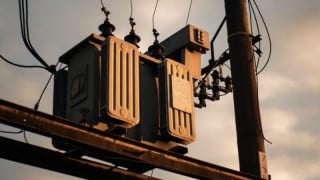
Utilities have an opportunity to learn from the modernization of the telecommunications industry. Image used courtesy of Adobe Stock
Similarly, utilities are moving from static asset-centric infrastructure toward software-defined, orchestrated, real-time operational grids. While SDN/NFV continues to be a critical part of network evolution, most operators have underestimated the operational complexity and monetization challenges associated with the transition.
Many of the problems telecom operators solved have direct parallels in the utility industry, including:
- Congestion management
- Network rerouting
- Dynamic path optimization
- Fault isolation
- Latency management
- Capacity forecasting
- Service assurance
Let’s examine in more detail a few of the key problems encountered during the SDN/NFV transformation. Each had significant financial and timeline impacts. They also have clear parallels in the utility industry.
Virtualizing Technology Without Redesigning the Operating Model
Telcos virtualized the infrastructure technology layer without redesigning the operational model driving it. This exploded operational complexity in the telco world, shifting operators from managing a single element to overseeing a sprawling ecosystem of components. This included VMs, hypervisors, orchestration, compute stacks, APIs, service chains, and virtual dependencies.
Utilities are at a similar point in time with several initiatives, such as DER orchestration, distributed AI systems, edge grid intelligence, and hybrid OT/IT systems. These cannot be approached in isolated silos but need to be looked at holistically for a full redesign of the grid architecture.
Failing this, they will end up at the same place as the telcos, with a much higher operational overhead. The result will be ballooning operational complexity and unplanned costs.
Allowing Legacy Processes to Bottleneck Agility
Legacy processes are the bottleneck. The provisioning time for a network element went from days or weeks to real time with Cloud-Native Network Functions (CNFs) and Virtualized Network Functions (VNFs). But operators continued with manual approval chains, siloed operational teams, change boards, and ticket-heavy workflows. This created a big gap between the planned versus realized operational benefits, primarily deployment speed and service delivery responsiveness.
For example, a VNF could be spun up in seconds, but the organizational workflows required days of approval before that could happen.
Inheriting Scalability and Performance Limitations
Ironically, these are the reasons for the transformation itself. Telcos were hit hard with resource-level latency issues, scaling failures, unstable operations, and poor element-level performance. These arose from a "lift-and-shift" architecture approach not designed for cloud-native scaling, distributed orchestration, and elasticity.
For example, the early Evolved Packet Cores (EPCs) used far more compute than planned while still performing worse than the dedicated hardware elements they replaced. The parallel in the utility industry to avoid would be wrapping old OT systems with cloud layers instead of redesigning them for distributed real-time operations.
Premature Automation Without Standardization
Attempting to automate large-scale network operations and service orchestration frameworks before achieving operational standardization left telcos struggling with inconsistent processes. Different teams used different workflows, naming conventions, data structures, and escalation models. As a result, operators ended up spending huge amounts on custom orchestration layers, middleware, and workflow translations.
In the utility world, some of the biggest challenges include fragmented field operations, inconsistent OT models, siloed asset data, and non-standard telemetry. While these look like obvious candidates for automation, the ROI from automating such fragmented systems can be unexpectedly low, and in some cases even counterproductive.
Fueling Tool Sprawl
Instead of simplifying operations, virtualization often created dozens of new platforms. Operators added tools for orchestration, observability, cloud platforms, virtualization managers, automation stacks, CI/CD, and telemetry systems. This resulted in overwhelmed NOCs and cross-domain troubleshooting nightmares.
In today's utility world, there are similar parallels with separate DER platforms, AMI systems, OT analytics platforms, AI tools, and cloud observability stacks. The goal should be to avoid more tooling. Instead, it should be a unified operational layer across OT, IT, and field operations that enables coordinated operational intelligence across the entire grid ecosystem.
Realizing Long-Term Business Value
Bottom line, telcos spent hundreds of billions in planned (and unplanned) network transformations. The assumption was: "If we build this next-generation programmable infrastructure, entirely new revenue streams will emerge." However, the business models for those revenue streams were not yet viable. Many consumers stuck with their existing spend, though they perceived marginal improvements in day-to-day connectivity experiences.
The bigger problem was that telcos believed they would own the next-gen services. Instead, hyperscalers and OTT providers captured most of the value generated via these network upgrades.
Applying Those Lessons to Utilities
Utilities may be ahead on the business need for grid modernization, which is structurally required and critical, but they need to avoid similar mistakes that telco operators made during large-scale network transformations. The most important lesson is that infrastructure modernization is not stand-alone.

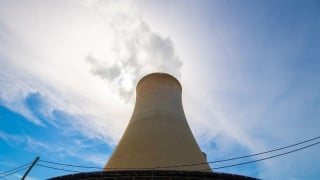
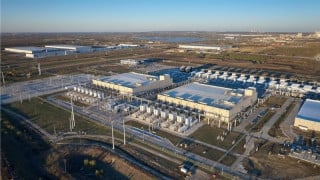
Successful grid modernization will require more than investment in more generating capacity. Image used courtesy of Adobe Stock
Operating models need to evolve alongside the grid infrastructure itself. Scaling and performance aspects must be built in at the component level from the start. Fragmented processes should be standardized before attempting enterprise-scale automation and before tackling tool sprawl.
The utilities that execute this transformation successfully will likely evolve toward highly orchestrated, software-driven energy ecosystems. These will be capable of dynamically balancing generation, storage, transmission, edge intelligence, and distributed energy participation in real time. In this model, the grid increasingly behaves less like a static infrastructure network and more like an intelligent operational platform.
For telcos, connectivity itself was getting commoditized. For utilities, commodity electricity delivery alone may not justify long-term modernization ROI. Instead, the focus should be on capabilities such as DER coordination, Virtual Power Plants (VPP) enablement, and edge intelligence.
The Real Opportunity
The real opportunity lies in pairing infrastructure modernization with operational transformation and new energy-related services development. Tying transformation phases to the business value they create is where the true business case lies for utility providers.
We should not slow down modernization, but we must ensure that technology transformation stays aligned with operational realities and long-term business value. Telcos learned this the hard way. As connectivity became more commoditized, many operators discovered that upgrading infrastructure alone did not automatically create new revenue streams or long-term returns.
Utilities could face a similar situation. Simply delivering electricity more efficiently may not be enough to justify the scale of investment required over the next decade. The larger opportunity lies in building new capabilities around DER coordination, Virtual Power Plants, edge intelligence, and real-time grid orchestration.
Feature image used courtesy of Adobe Stock