Facebook
 Google
 GitHub
 Linkedin
Transformer Technology Innovations Help Utilities Enhance Grid Resiliency And Sustainability
Facing increased demand, the electrical grid is modernizing with innovative transformer technologies that improve agility, safety, and efficiency.
The world’s electrical grids are under immense pressure. The electrification of the global economy is causing demand for grids to grow. Extreme weather, labor shortages, and supply chain issues disrupt maintenance and equipment replacement. Meanwhile, customer demand for reliable service keeps rising. When people flip a switch, they expect the lights to go on—reliably and affordably.
Fortunately, the industry responds to these challenges with innovation. Bringing new technologies and solutions to the market allows utilities, energy producers, and traders to create operational agility that improves grid resiliency, reduces manual labor, and saves costs. The ubiquitous electrical transformer is a key area of innovation and development. From ester-filled transformers to mobile transformers, these new technologies are helping the industry meet increased demand while improving sustainability and safety.
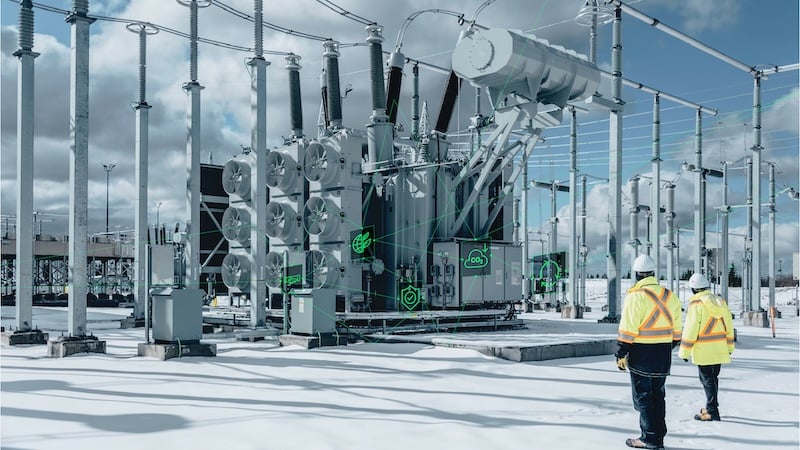
Advances in transformer technology are key to grid modernization. Image used courtesy of Hitachi Energy
Key Challenges to Grid Modernization Efforts
Transformers are key to grid modernization efforts, but several macro trends are hampering these critical projects. For one, electricity demand is surging. From the rise of electric vehicles (EVs) to steady economic growth to the explosion of connected devices, the world needs more power. According to a report from National Grid and Hitachi Energy, the electrification of just 10 percent of the current fleet of medium and heavy-duty vehicles (MHDVs) – trucks, buses, and vans – will cause peak electric demand to nearly double. It would be impossible to meet this need without significant infrastructure upgrades.
At the same time, the increased intensity and frequency of extreme weather is placing enormous stress on the supply side. According to the National Oceanic and Atmospheric Administration (NOAA), there were 27 extreme weather events in the U.S. that topped $1 billion in damages in 2024 – the second-highest recorded number in history. These events included 17 severe storms, five tropical cyclones, two winter storms, one flooding event, one drought, and one wildfire – underlining the fact that no part of the world is immune to extreme weather and its disruptive effects on the electrical grid.
Forward-thinking utilities are meeting these challenges by undertaking massive grid modernization projects to increase capacity and improve grid resiliency. However, a shortage of skilled labor and supply chain issues are making it hard to move these projects forward to completion. It’s not unusual for it to take up to two years to replace a transformer in the field from procurement to deployment. And, once equipment does arrive, it’s getting harder than ever to hire and retain qualified engineers and technicians to install and maintain this infrastructure.
Combined with sustained pressure to meet high customer expectations, these challenges will continue to hamper grid modernization efforts. Improving resiliency while meeting customer expectations, sustainability goals, and safety regulations will come down to the industry’s ability to deploy innovative, fit-for-purpose solutions that address these roadblocks. Fortunately, the industry has stepped up research and development (R&D) efforts over the past several years, coming up with innovative transformer solutions that are tailored to meet the needs of utilities, energy producers, and traders that are undergoing grid modernization efforts.
Build Resilience Through Digital Transformation
Diagnostics are essential to the health and performance of any system – whether it’s an automobile, the human body, or the electrical grid. Imagine trying to maintain heart health without measuring blood pressure. Or improving the engine performance of a sports car without measuring RPMs. So how can you monitor transformer health, manage field service workforce, and extend asset lifecycles without visibility into key performance indicators – such as winding hot-spot temperatures, moisture levels, gas-in-oil content, and bushing conditions? Unfortunately, the aging grid infrastructure built decades ago, is still largely analog, making it hard to monitor these measurements in a way that provides value.
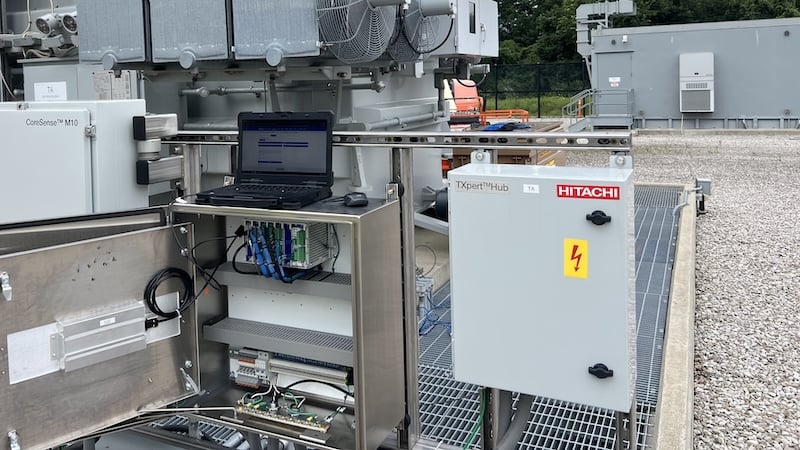
Improved transformer diagnostics and data can improve grid performance. Image used courtesy of Hitachi Energy
Transformer digitalization allows operators to better understand the real-time status of their critical assets and make informed decisions about maintenance, loading, and risk management. Instead of relying exclusively on time-based maintenance schedules or conservative operating margins, grid operators can adopt a more predictive approach to transformer health – allowing them to identify potential issues before they lead to failures while improving overall system reliability. Considering that the failure of a single transformer can have disruptive downstream effects across grid performance and customer service, this proactive asset management strategy can go a long way toward improving overall system reliability.
Most importantly, many digital transformers support data integration and cloud-based analytics that allow operators to centralize asset health data across fleets and regions. This enhances situational awareness and supports long-term planning – from replacement strategies to investment prioritization.
Alternate Fluids Improve Sustainability And Safety
Transformer manufacturers are also starting to adopt alternative fluids that provide environmental and safety improvements over traditional substances. Mineral oil, known for its excellent electrical properties, has traditionally been used as an insulation and cooling medium in transformers. In contrast, natural ester oil, an increasingly popular alternative, has a flash point nearly twice that of mineral oil and is up to 100 percent biodegradable within 28 days, reducing the risk of environmental pollution should insulating fluid leakages occur. Ester also has self-extinguishing properties, making it an option for operators of ultra-high-voltage alternating current (AC) grids.
These next-gen transformers are more than limited edge cases. Ester/filled transformers are already in use across North and South America, South Africa, and parts of Asia (including China). In fact, a 765 kV natural ester-filled transformer was just successfully tested earlier this year and is capable of supplying enough power to serve a city of 250,000 residents.
Mobile Transformers Improve Grid Resilience
Utilities are increasingly exploring mobile transformer solutions to address the gap between energy supply and energy demand. Mobile transformers can be deployed on demand wherever they are needed and plugged into existing grid infrastructure within a matter of weeks. Once a more permanent solution can be acquired, the mobile transformer can be packed up and transported to other areas of need. In a market where it can take 18 to 24 months to procure and deploy a traditional transformer, this grid agility allows utilities to respond rapidly to outages, accelerate the clean energy transition, and improve the overall resiliency of the nation’s electrical grids.
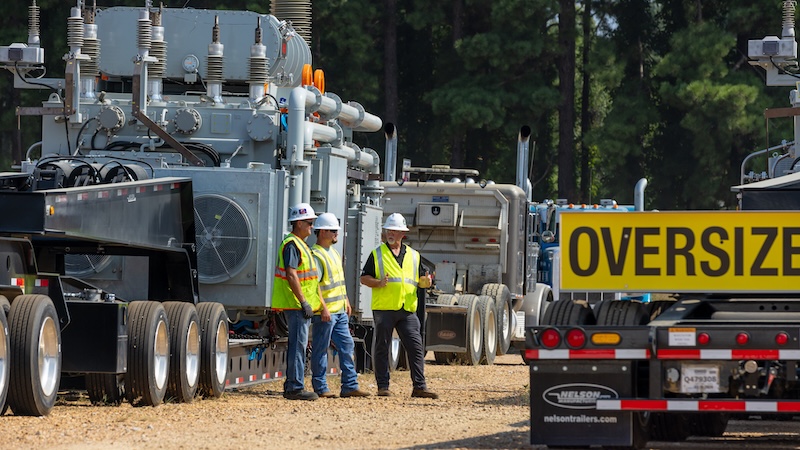
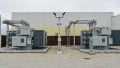
Mobile transformers enable rapid response solutions for temporary power and mproved power quality solutions. Image used courtesy of Hitachi Energy
It’s important to note that these transformers must be designed for specific mobile use cases that enable the level of agility utilities need in a moment of crisis. This requires that mobile transformers are built to be highly versatile, with a light yet hardened structural design, multi-voltage capabilities, and a new transformer-as-a-service model that allows manufacturers (not utilities) to handle complex logistics requirements.
Transformers Designed For Nuclear Plants
Nuclear power is an essential component in the conversation regarding the development of sustainable and resilient grids. Transformers play a critical role in the nuclear plant lifecycle – from grid interface and auxiliary services to backup systems and emergency shutdown. Manufacturers build transformers that meet international nuclear standards and specific customer requirements. Hitachi Energy, which has more than 50 years of experience in the nuclear business, recently introduced TXellence, its portfolio of transformers specially engineered for the evolving needs of nuclear power generation.
Small Modular Reactors (SMRs) can be deployed almost anywhere there is a need, providing up to 300 MW of power to distributed equipment and facilities. These SMRs can be set up and put into operation much more quickly than a traditional plant, making them ideal for remote, low-power use cases.
Overall, nuclear power has the potential to improve grid resiliency and sustainability by enabling the production of low-carbon electrical energy. They require less human intervention than fossil-fuel-fired plants or renewable sources, lowering staffing costs significantly while improving safety. Specially designed transformers provide the transparency and control needed to enable nuclear power, further diversifying the grid’s sustainable energy mix.
Innovations Empower Grid Modernization Efforts
The world’s electrical infrastructure is facing enormous challenges. Global supply chain constraints and rising electricity demand put intense pressure on utility infrastructure. These innovations in transformer technologies are helping the industry meet resiliency, sustainability, and safety goals:
- Digital transformation provides visibility and control of the infrastructure.
- Mobile transformers help fill gaps in supply and demand
- Transformers that use biodegradable natural ester improve safety and sustainability in specific situations, such as in highly sensitive ecosystems. A
- Specially-designed transformers are powering a resurgence in nuclear power – especially agile SMRs that can be deployed much more quickly and dynamically where needed.
The industry needs to continue this investment in R&D, helping utilities, energy producers, and traders modernize grid infrastructure and meet the demands of the modern world.