Facebook
 Google
 GitHub
 Linkedin
Powering the Energy Transition: Why Transformer Insulation and Sealing Matter
Learn the engineering challenges of ensuring transformer resilience and managing the shift to new ester and silicone oils with advanced, PFAS-free sealing and insulation.
As global electrification accelerates, transformers have become increasingly strained. They sit at the center of an increasingly complex energy system, connecting both fossil fuel and renewable power sources to the growing plethora of data centers, AI compute loads, EV charging infrastructure, industrial automation and even the smart appliances found in modern homes.
The energy transition is forcing original equipment manufacturers (OEMs) to rethink everything from materials to insulation and sealing to environmental impact so that transformers can endure, adapt and support a global shift toward cleaner, smarter energy.
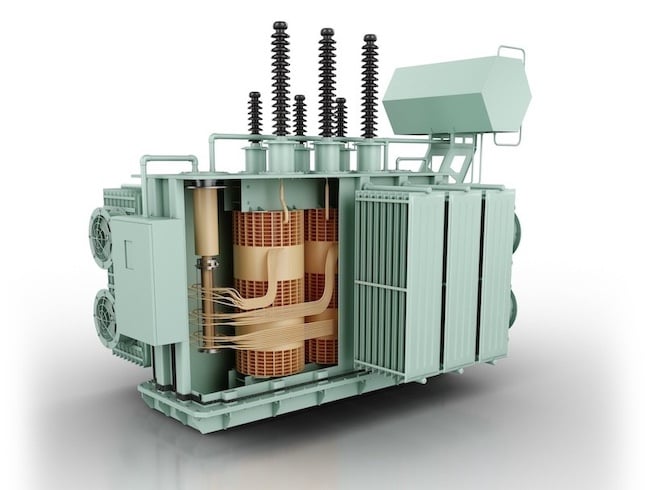
Cooling of transformer windings is critical to performance. Larger transformers for data centers / AI / EV charging have more heat build-up and higher risk of overheating.
The Growing Challenge: A Grid Under Pressure
Demand for transformers is surging with lead times for new units reaching two and a half years. This is driven by the skyrocketing need for grid expansion and supply chain challenges that make it difficult to keep up. Transformers operate 24/7, often in harsh environmental conditions. A single failure can cause severe outages. With this level of criticality, sealing and insulating components are essential to ensure reliability, safety and grid resilience.
Beyond the O-Ring: Sealing and Insulation Spotlight
What used to be a narrow engineering topic is now a strategic one. Most think in terms of gaskets or seals, but transformers require a far wider portfolio of components including insulators, bushings, cable accessories, compressor gaskets, protective housings, spacers, shields and composite structures. Transformers are required to:
- Prevent arcing and short-circuiting, even as electrical loads increase and switchgear conditions evolve.
- Withstand extreme heat and environmental exposure, including dust, sand, moisture and pollution.
- Maintain high-dielectric performance despite increasingly compact equipment designs.
- Support both new-build and life extension of existing transformers, many of which are aging and difficult to replace quickly.
Consequently, OEMs need to think beyond seals and instead consider the full polymer ecosystem. For example, material compatibility testing is essential to understanding the long-term performance of transformer design. Seal gaskets, while often overlooked, have the potential to become a root cause of failure in transformers.
One survey found that 13 percent of power transformer failures were due to leakage, and according to a Renewable and Sustainable Energy Review, damaged seals and oil leakage account for 32 percent of outages. This underscores the urgent need for advanced material selection and robust testing to help ensure sealing and insulation components do far more than keep fluids in and contaminants out - they help protect the entire grid from electrical failure.
The Environmental Shift: New Oils and PFAS-Free Solutions
A significant drive behind the renewed interest in transformer materials is the push for more sustainable solutions. Major OEMs are actively seeking solutions with lower environmental impact across their transformer product lines. This includes scrutinizing both the insulating fluids and the sealing materials used. Transformer insulating oils are liquid dielectrics that also provide heat dissipation and equipment protection. They are a critical element in transformer reliability and lifespan and must be sealed correctly to prevent leaks and system failures.
For decades, mineral oil has been the standard for insulating fluid. Today the industry is exploring alternatives with better fire safety and environmental profiles. Two prominent alternatives are ester-based oils and silicone oils. This shift, combined with the push to eliminate PFAS (per- and polyfluoroalkyl substances which in some forms can be harmful to the environment and health), creates a complex engineering landscape where material selection for seals and gaskets is more critical than ever.
Ester-Based Oils: Environmentally Focused Alternatives
Ester fluids, both natural and synthetic, are gaining attention as solutions with less environmental impact. Their biodegradability and improved fire safety make them attractive for utilities seeking more sustainable options.
Key characteristics:
- Less environmental impact than mineral oils
- Higher fire resistance
- Emerging as a preferred choice in sustainability driven markets
Limitations and Seal Material Considerations
Esters present unique challenges. They are semi-polar, meaning they absorb water, which increases electrical conductivity and can compromise insulation performance. Many esters also begin to decompose at around +150 °C/+302 °F.
For sealing, these fluids are particularly difficult. Ethylene acrylic elastomers (AEMs), while promising for mineral oils, perform poorly in ester fluids, often dissolving or degrading due to chemical similarity. Hydrogenated nitrile butadiene rubber (HNBR) is one of the few viable PFAS-free options, but it has competing low-temperature and high-temperature limitations. This makes ester applications especially challenging for PFAS-free sealing strategies.
Silicone Oils: Performance at Temperature Extremes
Silicone insulating oils offer excellent stability across a broad temperature range and deliver superior fire safety. This makes them suitable for demanding or high-risk environments.
Key characteristics:
- Very wide operating temperature range
- Enhanced safety up to approximately +300 °C/+572 °F, as they do not burn
- Better dielectric behavior because they do not absorb water like esters
Limitations and Seal Material Considerations
Compatibility with elastomers can be difficult. Many silicone-based sealing materials swell in silicone fluids. While some lower-cost ethylene propylene diene monomers (EPDMs) may perform acceptably in silicone oils, they may fail if exposed to mineral or ester oils. This lack of cross-compatibility complicates maintenance and material specification.

Trelleborg has performed compatibility testing for top insulating oil brands. The chart shows the oils and a corresponding Trelleborg compound that works well with it.
Matching Materials to Application Needs
As the industry moves toward reduced fire safety risks, greater sustainability and longer service life, the choice of insulating oil plays a central role in determining the right sealing materials. There is no universal elastomer capable of meeting all thermal, electrical and fluid compatibility requirements - especially in PFAS-free formulations. Temperature extremes, dielectric requirements and chemical interactions vary by application.
- HNBR excels in some areas but struggles simultaneously with very low and very high temperatures.
- Standard AEM offers wide temperature capability but fails in most esters.
- Fluorinated polymers like fluoroelastomer (FKM), tetrafluoroethylene propylene (FEPM), fluoro vinyl methyl siloxane (FVMQ), which historically solved these issues, are being phased out by some customers committed to PFAS-free solutions.
This creates an engineering environment full of trade-offs making partnerships with experienced suppliers like Trelleborg Sealing Solutions critical. Technical experts can create customized solutions for the specific oil, temperature range and electrical requirements of each transformer design.
Future Thinking
The energy transition is reshaping every part of the grid. Transformers must become more efficient, more durable, more sustainable and more adaptable to unprecedented loads and environmental expectations. This is not only a technical challenge but also a materials, engineering and innovation challenge.
Achieving PFAS-free solutions without compromising performance highlights the need for application-specific thinking rather than one-size-fits-all approaches. Through ongoing material testing and collaboration with experts like at Trelleborg, new elastomer systems and composite technologies can support both high-performance sealing and more sustainable transformer designs. OEMs that partner with components suppliers to embrace advanced polymer solutions, rethink traditional sealing strategies and actively pursue innovation will be the ones that define the next era of electrification.
All images used courtesy of Trelleborg Sealing Solutions.