Facebook
 Google
 GitHub
 Linkedin
Integrating Maintenance Data for Better Electrical Asset Reliability
This article shows how integrating maintenance data with modern bolt-on solutions improves electrical asset reliability and overcomes current industry shortcomings.
Electrical assets, from switchgear and transformers to motor control centers, are among the most capital-intensive and safety-critical equipment in industrial facilities. Yet maintenance data for these assets is often scattered across disconnected systems, creating blind spots that directly undermine reliability.
Most plants rely on a patchwork of CMMS platforms (SAP PM, IBM Maximo, JDE), standalone spreadsheets, and paper-based logs. A thermographic survey result might live in a PDF on a shared drive. The corresponding work order sits in Maximo.
The failure history for that same breaker? Buried in a retired spreadsheet from a previous maintenance supervisor. This fragmentation leads to incomplete work order histories, missed preventive maintenance windows, and a maintenance culture that defaults to reactive rather than proactive planning.
The financial consequences are severe. Deloitte's research on predictive maintenance estimates that unplanned downtime costs industrial manufacturers $50 billion annually, with poor maintenance strategies a primary driver. The cost of unplanned downtime in industrial facilities is not just an accounting problem; it is an engineering and operational one rooted in the inability to see the full picture of asset health. Industry surveys consistently show that a majority of maintenance organizations still operate with siloed data across multiple platforms, with no single source of truth for reliability decision-making.
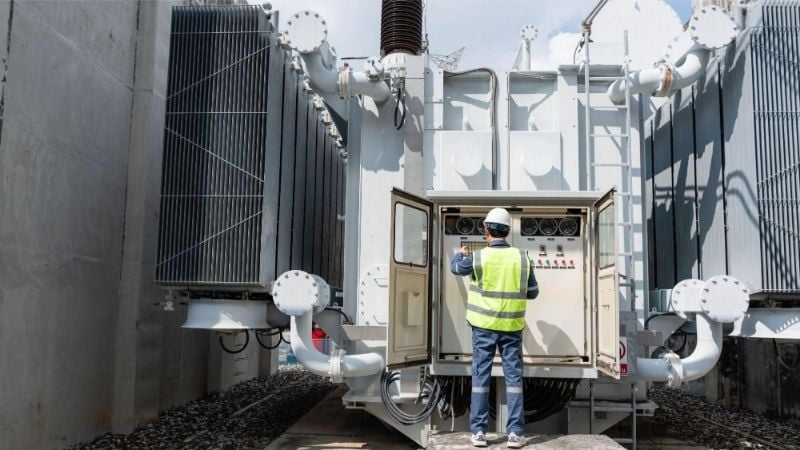
Asset maintenance. Image used courtesy of Adobe Stock
Why Traditional CMMS Deployments Fall Short on Electrical Asset Data
CMMS platforms like SAP PM, IBM Maximo, and JDE are powerful tools. They handle work order scheduling and plant maintenance scheduling effectively at a transactional level. But they were designed as generalized asset management systems, not as reliability analytics platforms.
The gap between managing work orders and synthesizing cross-system data into actionable reliability insights is significant, and it is where most organizations struggle.
Several specific weaknesses compound the problem:
-
Data entry inconsistencies across shifts and sites. Without enforced naming conventions and standardized failure codes, the same type of electrical fault might be logged a dozen different ways across a multi-site organization. Trend analysis becomes unreliable, or simply impossible.
-
Calendar-based scheduling dominates. Maintenance planning often relies on fixed time intervals rather than condition-based triggers derived from integrated data. A transformer receives its oil analysis every 12 months, regardless of whether load profiles, thermal data, or dissolved gas trends warrant an accelerated schedule.
-
KPI reporting is manual and delayed. Reliability engineers pull data from the CMMS, clean it in Excel, and produce reports that are weeks old by the time they reach decision-makers. The team is always looking backward.
Electrical assets suffer disproportionately from these gaps. Failures such as insulation degradation, contact wear, and thermal faults develop over time. They are best detected through trending data from thermographic surveys, power quality monitors, partial discharge testing, and oil analysis.
But this condition monitoring data rarely flows back into the CMMS in a structured way. It sits in separate databases, vendor-specific software, or filing cabinets. Understanding common CMMS implementation challenges helps explain why. These platforms were built for transactional maintenance management, not for the kind of multi-source data fusion that modern electrical reliability engineering demands.
The result is that critical trending information, the kind that could prevent a catastrophic switchgear failure or an arc flash incident tied to deteriorating connections and compromised grounding and bonding standards under the NEC, never reaches the people who need it in time to act.
What Effective Maintenance Data Integration Looks Like
The ideal state is not a wholesale replacement of existing CMMS platforms. It is a unified data layer that sits atop them. This layer aggregates work order data, condition monitoring results, and asset hierarchy information into a single source of truth, one that maintenance planners and reliability engineers can actually use for real-time decision-making.
This is the concept behind a CMMS bolt-on integration approach. Rather than ripping out SAP, Maximo, or JDE (a prospect that rightly terrifies most plant managers and IT departments), integration tools pull data from these systems, normalize it, and present it through dashboards purpose-built for reliability analysis. The existing CMMS remains the system of record for work orders. The bolt-on becomes the analytical engine.
The practical benefits are substantial:
-
Automated scheduling aligned with real asset condition data. Preventive maintenance tasks trigger based on actual equipment health indicators, not just calendar dates. For electrical assets, this means thermographic anomalies or dissolved gas trends can automatically generate work orders.
-
Standardized KPI tracking aligned with SMRP best practices. Metrics such as MTBF, MTTR, PM compliance, and schedule compliance are calculated consistently across sites using the same definitions and data sources. The SMRP best-practice metrics framework provides an industry-standard foundation, but its value depends entirely on the quality and consistency of the underlying data.
-
Cross-site benchmarking. Organizations with multiple facilities can compare electrical asset performance across plants, identifying which sites have reliability gaps and which have practices worth replicating.
-
Faster root cause analysis. When an electrical failure does occur, having all historical maintenance data, condition monitoring trends, and work order records in one place dramatically reduces the time to identify contributing factors.
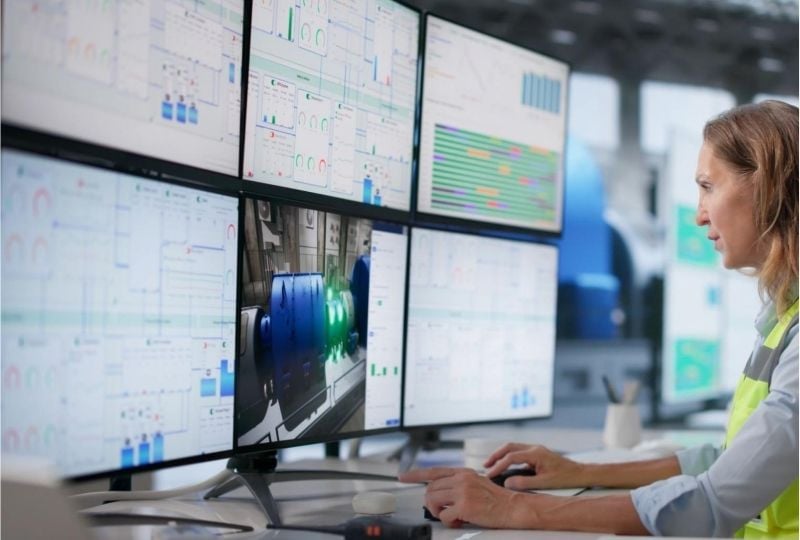
Asset monitoring. Image used courtesy of Adobe Stock
These KPI frameworks become far more powerful when the underlying data is clean, consistent, and automatically aggregated. Platforms that enable automated SMRP KPI reporting eliminate the manual spreadsheet work that delays insights and introduces errors, giving reliability teams metrics they can trust and act on without a two-week lag.
Condition-based and predictive maintenance triggers for electrical assets also become practical at scale when integration is in place. Thermographic data, partial discharge results, and power quality trends can feed directly into the work order generation process, closing the loop between monitoring and action.
Practical Steps for Integrating Electrical Asset Maintenance Data
Getting from fragmented data to an integrated reliability platform does not require a multi-year, multi-million-dollar digital transformation. It requires a disciplined, phased approach. Here is a practical framework:
Audit Your Current Data Landscape
Identify every system that holds electrical asset data, including your CMMS, SCADA system, condition monitoring platforms, vendor-specific diagnostic software, and yes, the spreadsheets.
Map the data flows between these systems to identify gaps. Where does thermographic data go after a survey? Does anyone cross-reference power quality events with maintenance records? If the answer is "not systematically," you have found your starting point.
Standardize Your Asset Hierarchy and Naming Conventions
Inconsistent equipment tagging across sites is one of the biggest barriers to integration. A 15 kV vacuum breaker labeled "VCB-101" at one plant and "BKR-MV-001" at another makes cross-site analysis nearly impossible.
Align with ISO 14224 or your organization's internal standards, and enforce the conventions through your CMMS configuration. This step is tedious and unglamorous. It is also non-negotiable.
Evaluate CMMS Bolt-on Integration Tools
Look for solutions that can connect to your existing SAP, Maximo, or JDE instance without requiring a full platform migration. Prioritize tools that support automated work order scheduling, KPI dashboards, and the ability to ingest condition monitoring data from multiple sources.
When evaluating physical infrastructure during this process, understanding the types of electrical conduits in your facility helps ensure asset hierarchy models accurately reflect installed equipment.
Establish a Governance Process for Data Quality
Integration is only as good as the data feeding it. Define who owns data entry standards, how exceptions are handled, and how data quality is audited on an ongoing basis. Assign accountability at the site level. A reliability engineer or maintenance planner at each facility should own data integrity for their asset base.

Electrical maintenance. Image used courtesy of Adobe Stock
Start With a Pilot on a Critical Electrical Asset Class
Medium-voltage switchgear, large power transformers, or rotating equipment with variable frequency drives are all strong candidates. These assets are high-consequence, data-rich, and typically have enough historical maintenance records to demonstrate value quickly. Prove the integration concept for one asset class, measure improvements in KPI accuracy and maintenance response time, and then expand.
The goal throughout is not to replace existing systems but to create a connective layer that makes plant maintenance scheduling, reliability analysis, and maintenance planning more effective across the enterprise.
Conclusion
Electrical asset reliability is fundamentally a data problem. When maintenance data is fragmented across disconnected enterprise systems, even the best-trained teams are forced into reactive mode, responding to failures rather than preventing them. The physics of electrical degradation, whether insulation breakdown, contact resistance increases, or thermal cycling fatigue, reward organizations that can detect trends early. That detection depends on integrated, consistent, accessible data.
Modern CMMS bolt-on solutions make this integration achievable without costly platform replacements. They enable standardized KPI reporting, condition-based maintenance triggers, and cross-site benchmarking, all built on top of the CMMS infrastructure organizations have already invested in.
As industrial facilities increasingly adopt predictive maintenance strategies and digitize their operations, the ability to integrate and act on maintenance data will separate high-reliability organizations from the rest. The technology exists. The frameworks exist. The question is whether your organization will close the gap between the data it collects and the decisions it makes.