Facebook
 Google
 GitHub
 Linkedin
Solving the Storage Problems of Water-Based Batteries
Engineers are joining forces to overcome problems in aqueous battery technology.
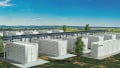
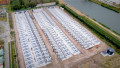
Grid-scale energy storage is necessary for the renewables transition, balancing supply and demand by storing excess energy generated during peak production and delivering it when generation is low. The global market for grid-scale battery storage is expected to reach $21 billion by 2029.
Traditional technologies, such as lead-acid batteries, have long been used in this domain but face significant limitations, including low energy density, rapid degradation, and environmental hazards. While lithium-ion batteries offer improvements, they remain costly and have sustainability concerns tied to resource extraction and disposal.
Water-based batteries could be a potential alternative, but the technology is still undeveloped. A consortium of 31 top battery scientists, engineers, and physicists is launching a research project to overcome aqueous batteries’ constraints. The Aqueous Battery Consortium, backed by the Department of Energy (DOE), Stanford University, and other institutions, has secured up to $62.5 million in funding over the next five years.
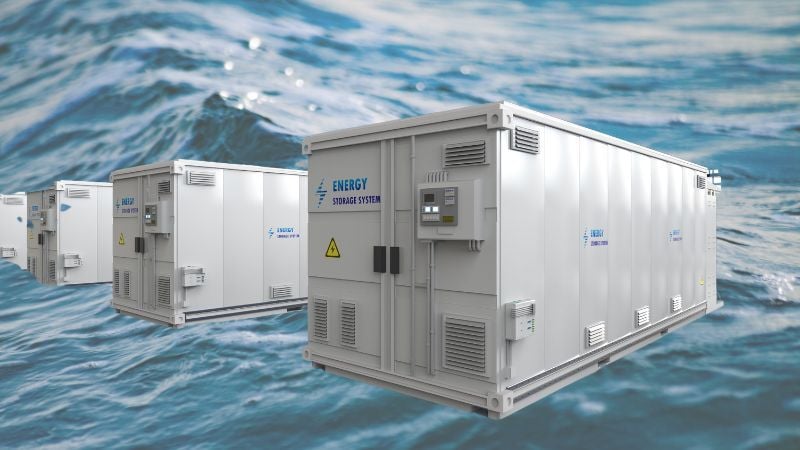
Can a water-based electrolyte lead to safer, more productive energy storage? Adapted from images used courtesy of Canva and Adobe Stock
Lead-Acid Batteries for Grid Storage
Lead-acid batteries are one of the earliest forms of rechargeable, aqueous batteries. This battery chemistry uses lead dioxide (PbO₂) and sponge lead (Pb) as the positive and negative plates submerged in sulfuric acid. They generate electrical energy during discharge by breaking H₂O's chemical bonds from the acid’s H⁺ ions and PbO₂’s O²⁻ ions. During charging, they store energy as a potential difference between PbO₂ and pure lead. The battery grid, made from lead alloy with additives like calcium, tin, and antimony, boosts electrical and mechanical properties.
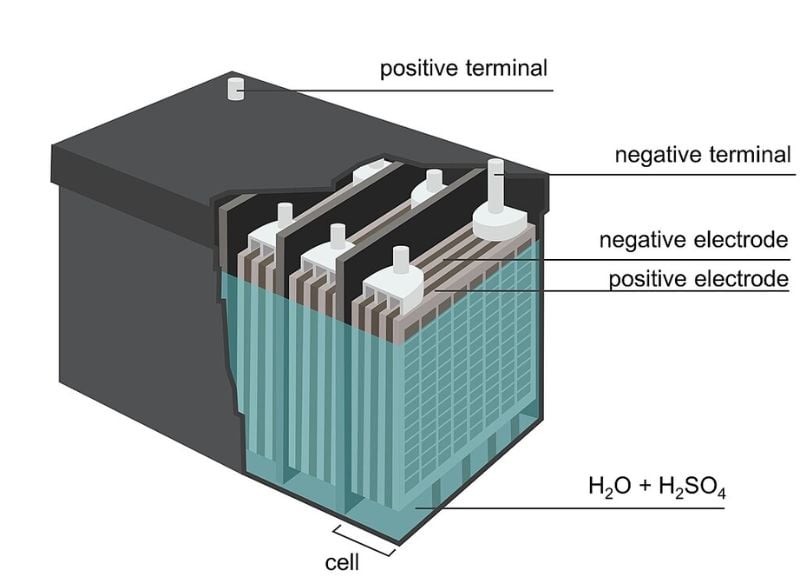
Lead-acid battery. Image used courtesy of Wikimedia Commons
Unfortunately, these batteries face challenges like low energy density, rapid degradation, and environmental hazards due to lead toxicity. Another challenge is the charge transfer at the solid-liquid interface in aqueous batteries, which arises from the mismatch between the solid electrode and liquid electrolyte, leading to inefficient electron and ion exchange. This inefficiency results in energy losses, slower reaction kinetics, and reduced overall battery efficiency.
Water-Powered Battery Innovation
The DOE has designated the Aqueous Battery Consortium as an energy hub to explore water-based batteries as a more sustainable and cost-effective solution. The purpose is to address traditional lithium-ion and lead-acid batteries’ limitations for grid-scale energy storage.
Using water as the primary electrolyte component could significantly lower costs and environmental hazards compared to current technologies. This battery's architectural design centers on optimizing the electrolyte-electrode interface to enhance performance, specifically mitigating material corrosion, low energy density, and undesirable side reactions that lead to early cell failure.
Another design element is improving the battery's durability. The team aims for near 100% efficiency in charge transfer between solids and water, a current bottleneck in aqueous battery technology. The team also addressed the potential for large-scale deployment by focusing on corrosion-resistant materials and device architectures that ensure a longer operational lifespan.
The Aqueous Battery Consortium
The research consortium, comprising Stanford University’s SLAC National Accelerator Laboratory and 13 other institutions, aims to improve energy density beyond lead-acid levels while also aiming for faster charging and discharging times. By utilizing less expensive raw materials and more efficient production processes, the goal is to produce batteries that cost only 10% of lithium-ion batteries.

SLAC battery lab. Image used courtesy of SLAC National Accelerator Laboratory
Specifically, the consortium lists six major focus areas.
- Electrolyte: Expand the voltage stability window of aqueous electrolytes while maintaining fast kinetics for enhanced energy storage capabilities.
- Anodes: Understand and control metal anode processes, including nucleation, growth, and morphology, to improve performance.
- Cathodes: Study and optimize proton-coupled processes in aqueous battery cathodes to increase efficiency.
- Interface: Investigate the chemistry and structure at the liquid/solid interface to better correlate it with electrochemical performance.
- Corrosion: Develop methods to reduce corrosion in electrode materials and current collectors for longer-lasting batteries.
- Architecture: Design 3D electrode structures to regulate crystal growth and improve battery architecture.
The Road Ahead
Introducing water-based battery technology could significantly address the current limitations of energy storage for renewable sources. If successful, the consortium’s efforts hope to reshape the energy storage landscape within the next few years, potentially reducing costs and making renewable energy more viable on a larger scale by the decade's end.