 Facebook
 Google
 GitHub
 Linkedin
Robocharging for Robotaxis: Automated Wireless Power for Fleets
As competition in wireless electric vehicle charging heats up, one company is specifically targeting autonomous vehicles and fleets. How is it different?
Autonomous vehicles—which can navigate streets without a driver’s assistance—can now recharge their batteries without humans present. Charging Robotics has created a wireless electric-vehicle charging platform for robotaxis, autonomous fleets, and robotic parking facilities.
Charging Robotics, a subsidiary of Clearmind Medicine, has already deployed automated parking systems in Tel Aviv, where the company is headquartered. Charging Robotics is targeting the charging units for both driver-operated and driverless EVs in North America, Europe, and Asia.
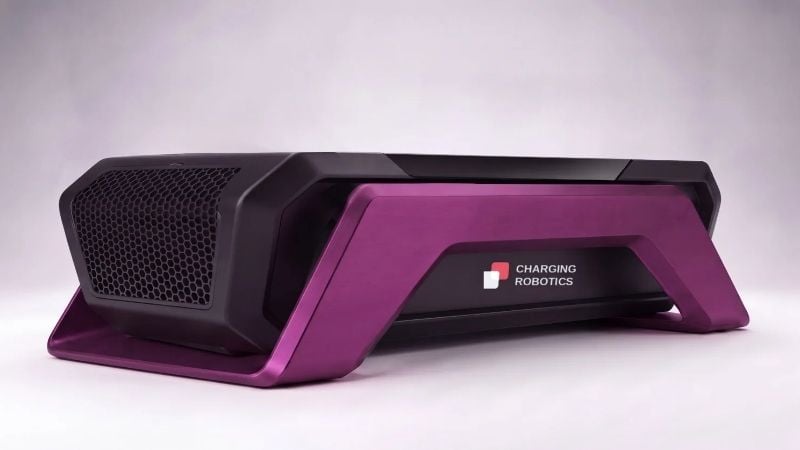
The wireless charging unit. Image used courtesy of Charging Robotics
Wireless Charging Systems
Wireless EV charging is an option for companies operating buses, delivery vans, municipal vehicles, and EV taxis, but it has not been widely commercialized for privately owned EVs.
Most wireless systems use inductive charging, which transfers power from an external transmitter to a receiver on the vehicle. Capacitors installed in both the ground transmitter and the vehicle's underside receiver tune both coils to the same frequency. As high-frequency AC passes through the transmitter coil, it generates a magnetic field that efficiently transfers power across the air gap without cords or physical contact.
The basics of wireless charging. Video used courtesy of WiTricity
In fleet depots, the transmitting coils are embedded in the pavement or on slightly raised ground pads that vehicles can park over. This allows vehicles to charge overnight or whenever they are not in use. Power ranges vary by vehicle size and use. Typical ranges are 3.7-11 kW for passenger EVs and taxis, 11-75 kW for light delivery vehicles, and 75-500 kW for heavy-duty trucks and buses.
While many companies are working on stationary wireless charging, others are developing dynamic wireless charging, which can charge moving vehicles. This can support fleets or general public use on highways.
For example, Electreon Wireless partnered with local transit operators to embed under-road inductive charging coils along municipal bus routes and layover zones in Tel Aviv. As electric transit buses travel over the electrified asphalt or pause at stops, underbody receivers draw approximately 90 kW of continuous power directly to the battery. This dynamic top-up eliminates dedicated charging downtime and allows operators to equip buses with significantly smaller, lighter battery packs.
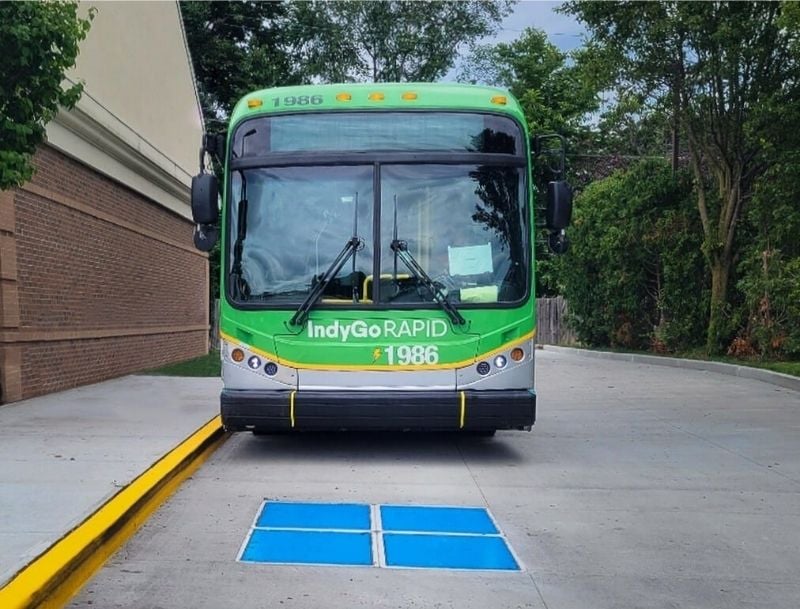
An EV bus approaching an inductive charging pad designed by InductEV. Image used courtesy of Electreon
Dynamic charging systems are still in pilot stages. In France, highway operator VINCI Autoroutes and Electreon deployed an electric road system along a 1.5 km stretch of the A10 autoroute near Paris designed for long-distance commercial trucks and passenger EVs. The charging system delivers power levels exceeding 200 kW to charge batteries on the move.
Other dynamic charging pilots are underway in Detroit, Orlando, Los Angeles, as well as sites in Norway, Sweden, Germany, and Italy.
Additionally, major automakers are promoting wireless charging, including Tesla, BMW, Honda, Toyota, Porsche, and Genesis.
How Charging Robotics Is Different
Like most wireless charging technologies, the Charging Robotics unit uses resonant inductive charging. Unlike conventional wireless charging, the Charging Robotics ground unit can physically adjust the charging coil under the car to align with the receiver so that the vehicle can park over the unit without precise positioning or adjustments.
A motorized alignment mechanism inside its floor unit shifts the internal transmitter coil under the vehicle frame. The unit tolerates about ±10 cm (about 4 inches) of offset in any direction and can still deliver 95% power transfer efficiency.
Additionally, the Charging Robotics system can charge up to four ground units with one central power box, making it efficient for tight spaces and EV fleets.
The central power cabinet contains cloud-connected AI software that continuously monitors live battery data from the fleet, including current charge levels, battery health, and departure schedules. Using this real-time telemetry, the system automatically controls how much power to route to each floor pad, prioritizing vehicles that need to leave soon while keeping the facility's total power draw low enough to avoid expensive peak grid fees.
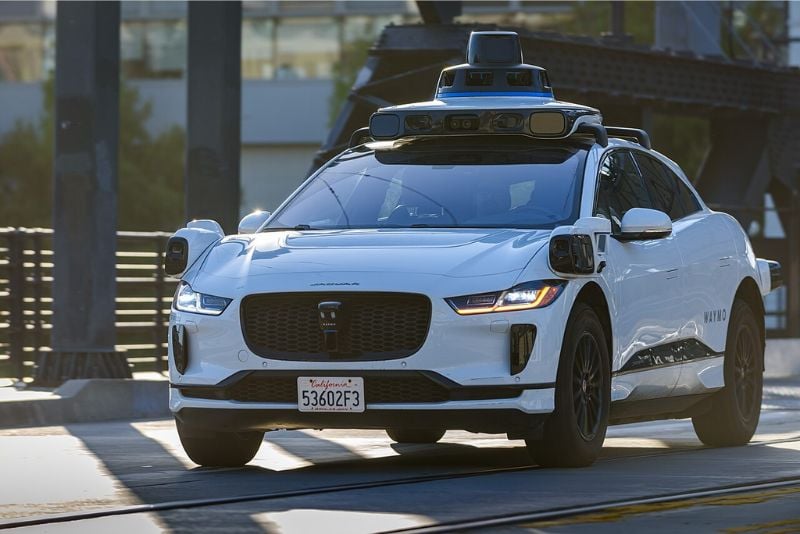
A Waymo autonomous vehicle. Image used courtesy of Wikimedia Commons
For human-driven EVs, the driver uses a mobile app to start and pay for the charging session. Autonomous robotaxi fleets bypass the app and instead use the fleet’s central dispatch software, which communicates directly with the cloud-connected power cabinet via APIs. This lets the self-driving vehicle automatically authenticate, reserve a bay, align over the ground unit, and balance power delivery without a phone app, driver, or depot attendant intervening.
Charging Robotics has piloted its wireless charging system at one automated parking facility in Tel Aviv.