Facebook
 Google
 GitHub
 Linkedin
Wireless Retrofit Extends Smart Meter Range
The Antenna Company and Texas Metering are collaborating to enhance wireless connectivity for off-network smart meters.
Accurate and efficient smart meter systems are necessary to enhance grid management and provide reliable service to customers. However, a significant challenge in deploying these systems is ensuring robust wireless connectivity, especially for off-network smart meters that operate beyond traditional communication ranges.
To address these issues, Texas Metering & Device Company (TMD) and The Antenna Company are collaborating on an advanced retrofit solution to extend smart meters’ wireless range. The partnership could lead to an automated, accurate billing system that benefits utilities and users.
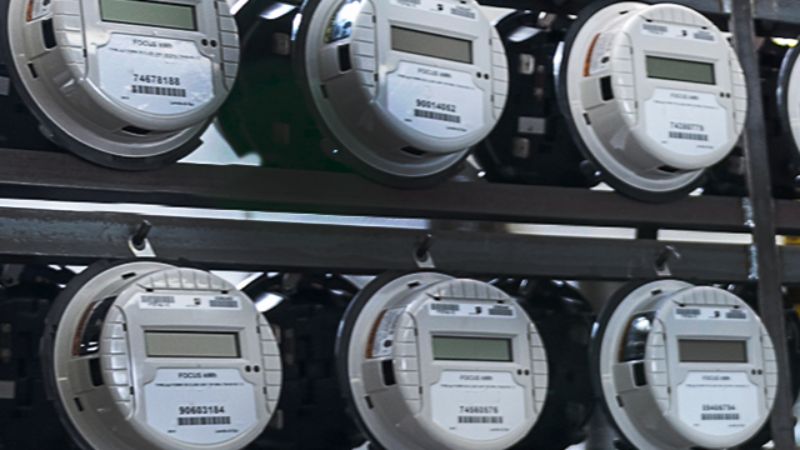
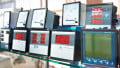
Smart meters. Image used courtesy of TMD
The Smart Meter Connectivity Conundrum
Smart meters are advanced electronic devices that measure and record energy consumption in real time. Unlike traditional analog meters, smart meters use wireless communication technologies to transmit data directly to utility companies, eliminating manual meter readings and human error.
Smart meters typically employ wireless protocols such as cellular networks (4G LTE, P-LTE), mesh networks, or short-range radio frequency (RF) communication. They collect detailed energy usage data at frequent intervals, often hourly or even more frequently, allowing for more accurate billing and better energy management.
However, smart meters face significant challenges in wireless connectivity. One issue is signal attenuation, which occurs when the meter is located in areas with poor network coverage, such as basements, metal enclosures, or remote locations. This can result in missed readings or incomplete data transmission.
Further, interference from other electronic devices or physical obstacles can disrupt the wireless signal. In urban environments, for example, the high density of smart meters can lead to network congestion and potentially cause delays.
Smart Meter Revolution
The Antenna Company and TMD have jointly developed a novel wireless retrofit solution to extend the range of electric utility smart meters.
The solution combines The Antenna Company's high-efficiency IP67-rated LTE antennas (AC94541-01) and RF Coupler technology (AC20424-01) high-voltage isolator with TMD's Advanced Metering Infrastructure expertise. The result is a retrofit kit designed to improve wireless connectivity for off-network utility smart meters. The solution supports multiple communication protocols, including cellular 4G LTE/P-LTE, Anterix 900 MHz spectrum, and short-range/mesh networking connectivity.
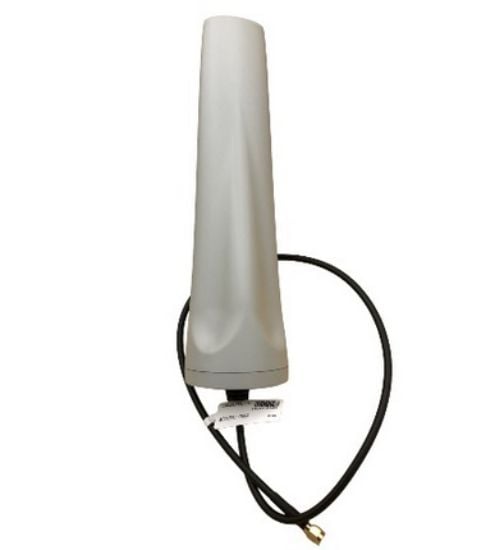
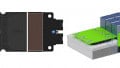
The AC94541 antenna. Image used courtesy of Antenna Company
The RF Coupler is an isolator within this system to improve signal integrity and reduce interference. The LTE antenna, which offers ultra-low insertion loss, is omnidirectional and ruggedized, enabling enhanced durability and wide-angle signal reception. Together, the antenna provides excellent multiband coverage with performance optimized in the range of 410 MHz to 470 MHz.
According to the companies, the solution promises to significantly reduce the need for manual meter reads and associated truck rolls.
The Road Ahead for Smart Meters
Smart meters have become more important in utility management with the growth of renewable energy and distributed energy resources. Efficiency and accuracy in smart meters will be a central focus for designers. With a high-performance and reliable solution, the Antenna Company and TMD are advancing the needed technology.
Related Content