Facebook
 Google
 GitHub
 Linkedin
How Modern Infrastructure Saves ABB Energy and Costs
ABB’s sustainable initiatives could help save more than $150,000 in annual energy costs.
As global energy demand rises, industrial facilities face more pressure to reduce their environmental impact while optimizing operational costs. Energy-intensive sectors, including manufacturing and power distribution, often rely on legacy infrastructure that is inefficient and costly to maintain. Aging high-voltage air conditioning (HVAC) systems, outdated lighting, and limited energy monitoring capabilities exacerbate resource consumption and greenhouse gas emissions.
Learn how an ABB facility reduces energy consumption. Video used courtesy of ABB
ABB Electrification’s initiative has shown extensive energy and cost savings at its Florence, South Carolina, facility. Its efforts highlight the importance of updated infrastructure in decreasing global energy consumption.
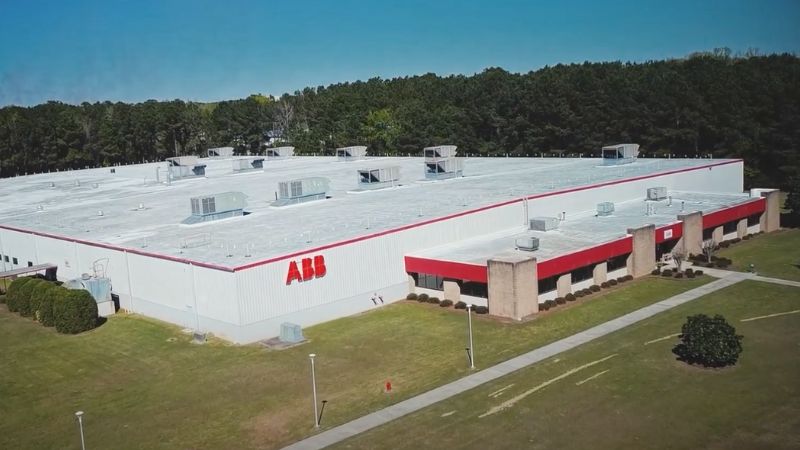
ABB’s service site in South Carolina. Image used courtesy of ABB
Effects of Outdated Infrastructure
To minimize building energy consumption, air conditioning systems need efficient operation and regular maintenance, as they account for approximately 40% of a building’s energy use.
Generally, AC performance is measured using the seasonal energy efficiency ratio (SEER) for cooling and the annual fuel utilization efficiency for heating. Recently, technological advancements have raised industry standards, resulting in modern systems with SEER ratings often exceeding 16, compared to 10-12 in the 1990s.
One difference is that older AC systems use R-22 refrigerants, which exhibit inferior heat transfer properties compared to modern R-410A refrigerants. Consequently, these legacy systems require more electrical energy to heat or cool a room.
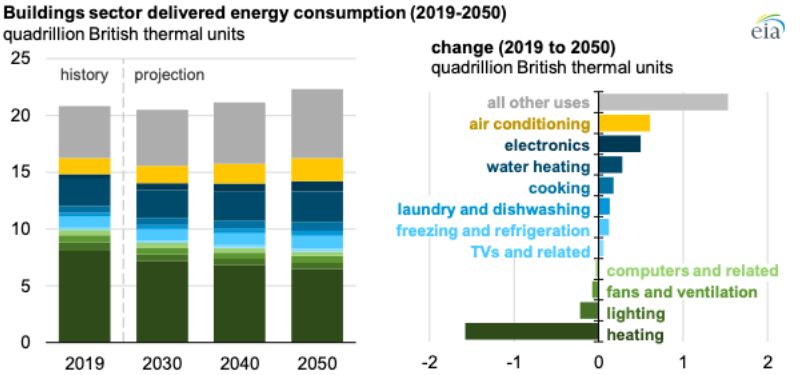
Prediction of air conditioning energy requirements. Image courtesy of Energy Information Administration
Similarly, physical deterioration, including degraded motor windings, creates additional electrical resistance and reduces thermal efficiency. The additional electrical resistance inhibits the current flow and produces undesirable power losses, which ultimately limit electrical efficiency.
To complicate matters, older HVAC infrastructures lack precise, actionable data, leaving inefficiencies unaddressed. Adding energy sensors to legacy systems could help optimize energy usage, for example, through submetering to monitor the energy consumption of particular electrical equipment.
ABB’s Energy Saving Initiative
ABB’s Florence, South Carolina facility is a 150,000-square-foot building that implemented comprehensive energy optimization measures, projected to save over $150,000 annually.
The retrofit initiative included upgrading outdated air conditioning systems with modern automated controls, replacing natural gas heating with electric solutions, and enhancing water conservation through narrower flow pipes and low-flow faucets. Meanwhile, advanced LED lighting replaced inefficient 240 V metal halide units and is expected to deliver cost recovery in under three years.
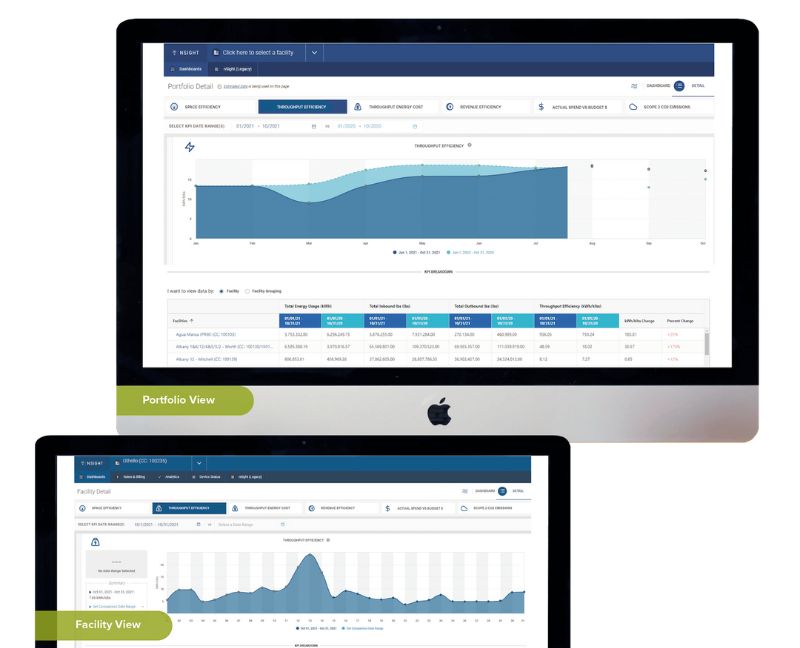
Ndustrial’s energy management platform. Image used courtesy of Ndustrial
A key architectural feature of the facility integrates Ndustrial’s state-of-the-art energy monitoring software. The system, which utilizes over 20 sensors placed on critical equipment, provides granular data on power consumption to identify inefficiencies such as unoptimized air compressor usage during idle periods.
Future Prospects
The facility’s next step involves installing a solar farm with 1,500 panels covering three acres to generate 840 kW of power. A battery energy storage system will complement it to ensure a consistent power supply. These enhancements are designed to eliminate up to $15,000 in monthly electricity costs and progress the facility toward energy self-sufficiency.