Facebook
 Google
 GitHub
 Linkedin
73 Charging Points for Tuscany: Siemens’ Electric Bus Project
Siemens eMobility powers up electric vehicle charging systems for electric buses and logistics.
Siemens eMobility will supply advanced charging systems for bus depots and logistics hubs in Italy.
The company will install 73 charging points for an electric bus fleet in Tuscany, part of a new project with public transit operator Autolinee Toscane. This move aligns with Autolinee Toscane’s push toward a zero-emission fleet, which already includes 2,700 electric buses across Italy.
In a separate agreement, Siemens will supply 300-400 kW chargers and renewable energy integration technology for 120 IPlanet logistics sites.
Both projects support Siemens’ growing electric vehicle charging segment, with 100,000 charging stations and 800 completed projects in dozens of countries.
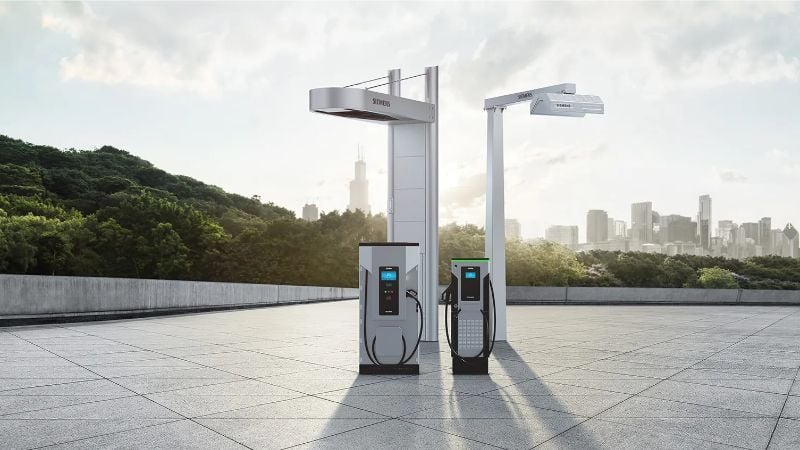
Siemens’ Sicharge UC bus depot charging system. Image used courtesy of Siemens eMobility
Italy’s Charging Infrastructure Expansion
The European heavy-duty charging market is accelerating partly due to the EU’s Alternative Fuels Infrastructure Regulation, which includes legally binding requirements for public charging infrastructure. Among electric buses and trucks, at least 15% of the European transport network must have fast-charging stations every 74 miles by 2025, ramping up to 50% by 2027 and 100% by the decade’s end. Each milestone requires a minimum output expanding over time to support the growing fleet of electric buses and trucks in urban areas and across Europe’s transport system.
Siemens’ latest projects in Italy come as the country’s National Integrated Plan for Energy and Climate aims to have 6.6 million EVs on the road by 2030, including 4.3 million battery EVs (BEV) and 2.3 million plug-in hybrid EVs (PHEV). Italy also targets 110,000 public charging points by 2030, a significant jump from the current 54,000 sites operating nationwide as of March 2024.
Progress has been slow, with only half a million electric cars (BEV and PHEV) on Italian roads today. Motus-E counted 277,365 BEVs in December 2024. The country’s PHEV stock is about the same level, 250,000, according to the latest data (2023) from the International Energy Agency. Another 24,000 electric vans and buses are operating across Italy.
Electric Bus Charging
Siemens’ Sicharge UC charging system will power multiple bus depots throughout Autolinee Toscane’s public transport network in Tuscany, with over 70 charging points bringing 100-150 kW of capacity per unit. The project also includes Siemens’ medium- and low-voltage distribution systems with IoT-enabled switches.
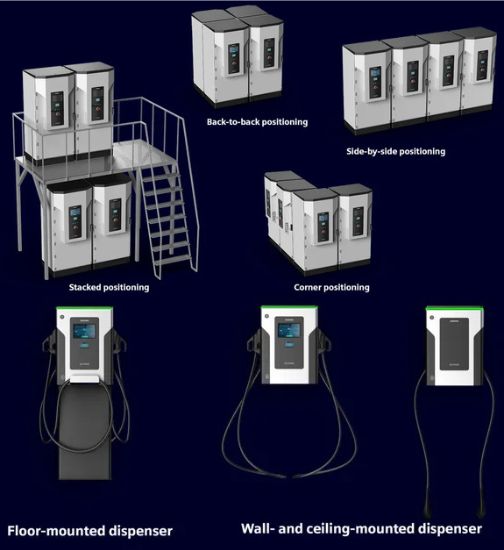
Sicharge UC combines up to four 150 kW units at a single charging point. Image used courtesy of Siemens
Sicharge UC offers a compact design and flexible installation. The modular setup allows scalability, with the opportunity to combine up to four units to provide 600 kW at a single point.
Autolinee Toscane will use Siemens’ DepotFinity platform to monitor its charging operations and implement optimized smart charging based on each vehicle’s battery functionality and distance traveled. The cloud-based software offers several useful features for electric fleets, such as scheduled charging, dynamic load management, and dispatch functions.
EV Charging for Logistics
Siemens has partnered with Italian EV charging developer IPlanet to install remotely monitored 300-400 kW charging points across 120 logistics sites. Siemens’ chargers include interactive displays with accessibility features and integrated point-of-sales systems compliant with the EU’s Alternative Fuels Infrastructure Regulation. Each point will be managed through independent connectivity channels.
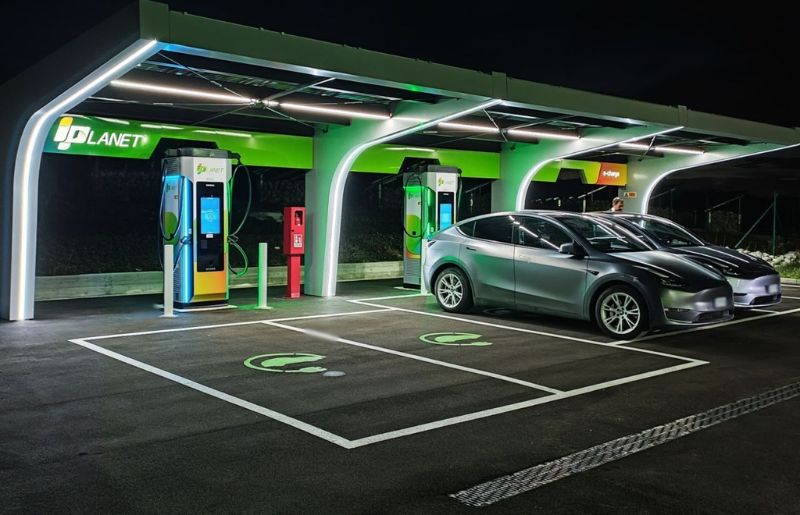
An IPlanet charging station. Image used courtesy of Siemens
IPlanet will also receive Siemens’ medium- and low-voltage distribution systems with scalable transformer stations, renewable energy integration, and telecontrol features.
Many IPlanet service areas already get their power from on-site solar photovoltaic modules integrated with battery energy storage systems. IPlanet is a joint venture between Italian fuel giant Italiana Petroli (IP) and Macquarie Capital, an investor and consultant. The company was formed in 2024 to support Italy’s EV transition, including at IP’s refueling stations.
IPlanet will transition over 500 IP fuel stations into EV charging points by 2032, starting with a $208 million investment to add 300 stations over the next three years.