
 Facebook
 Google
 GitHub
 Linkedin
Summer Peaks: Can Virtual Power Plants Handle the Heat?
Electricity use will grow significantly in the next five years, causing higher summer demand. Can virtual power plants handle the peak load growth?
Electricity use is expected to grow significantly in the coming years, with high-power data centers, manufacturing facilities, and crypto mining as the main drivers. This demand growth is also expected to cause higher summer peaks, with peak demand increasing by 38,000 MW over the next five years—the same as adding an extra California to the grid.
Where and when the summertime peaks will occur is unknown, but peak load growth is likely to exacerbate the challenges within the grid, which is already strained in peak times. A potential solution to these challenges is virtual power plants (VPP)—a connected network of distributed energy resources (DER) and energy storage systems that supply and stabilize power to the grid when required. Over 500 VPPs are already deployed across North America, but more VPPs could be necessary with rising demands.
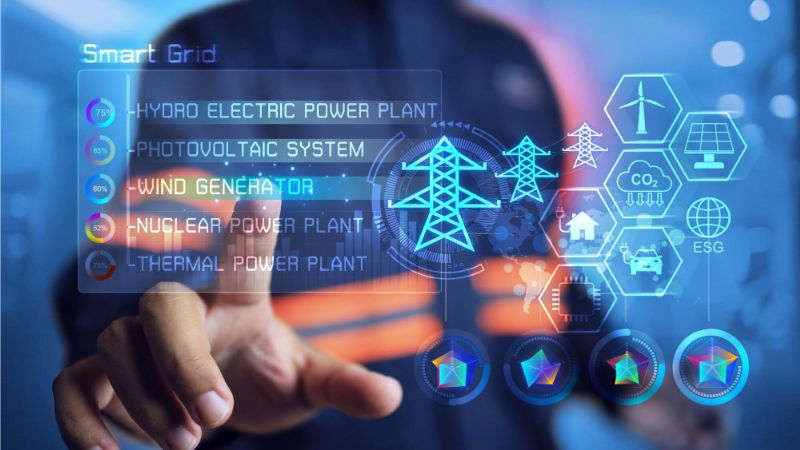
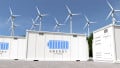
Virtual power plant concept. Image used courtesy of Adobe Stock
Infrastructure Deployment in Under 12 Months
More traditional infrastructure will be needed to sustain the increased load growth and meet peak demand. Typically, it takes many years to decades to integrate new infrastructure into the grid. However, VPPs can act as a buffer in the short term to combat increasing energy demands and provide peak demand reliability solutions. Creating a VPP can occur in less than a year.
For example, the Ontario Independent Electricity System Operator enrolled 100,000 homes in six months into a VPP and reduced peak summertime demand by 90 MW. The California Public Utilities Commission (PUC) launched a Demand Side Grid Support project. VPPs established 142 MW of committed capacity within a year, which continues to grow today. In Texas, the local PUC launched a pilot VPP capped at 80 MW within four months and plans to expand the pilot.
Leveraging Existing Infrastructure
VPPs can use existing DER infrastructure to support the grid in peak times. Public and private companies can use their customers’ DER assets, such as home solar and vehicle-to-grid charging, in the VPP, eliminating the need to build new infrastructure and making grid integration easier and cheaper.
For example, PG&E and Sunrun in California could use 8,500 of their customers’ batteries within six months to cover the extra energy demand during summer evening peaks. Arizona Public Service has been turning its customers’ thermostats into smart systems that can interact with the grid. Over 83,000 thermostats have been enrolled so far, helping people make conscious energy savings—and the saved energy can support the grid.
Adapting to Changing Grid Environments
Summer peaks need short-term solutions, but the grid must adapt to unpredictable and changing grid conditions caused by extreme weather changes and unexpected load growth. VPPs can adapt because they comprise various grid services that can be deployed in these changing environments.
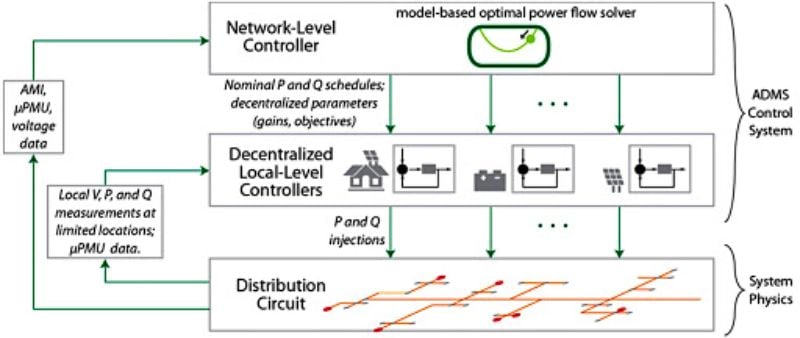
Virtual power plant and DER integration. Image used courtesy of Lawrence Berkeley Laboratory
For example, Rocky Mountain Power uses batteries in the hottest month to support the grid and provide power to combat the summer peaks. For other months, the batteries are integrated into utility operations for grid services such as capacity and DER integration support. National Grid uses VPPs to provide non-wire alternatives to overcome local capacity limitations. It also utilizes customers’ DERs to reduce loads on the grid in peak times. Finally, Puget Sound Energy employs grid technologies, such as smart thermostats, water heaters, and electric vehicles (EVs), to provide summer peak management and load balancing when required.
Improving Grid Resilience
Beyond providing power during peaks, VPPs can enhance grid resilience during major disruptions—such as extreme weather events that cause power outages—by supplying energy to the local population and businesses.
For example, Green Mountain Power in New England uses residential batteries to increase resilience during weather and peak events. Holy Cross Energy in Colorado employs DERs to help with energy resilience during major fires impacting the local grid. Utility companies and automotive manufacturers also use EVs as a backup power source via vehicle-to-home and vehicle-to-grid support operations.
VPPs: The Ideal Short-Term Solution
VPPs are the ideal short-term solution for managing changing grid loads and increased grid demand. They are adaptable, versatile, and always available to support the grid in peak summer months. While more people can enroll in local VPPs to increase grid capacity, the long-term solution should still rely on new infrastructure—including the transition to smart grids—to ensure society’s growing energy demands will be met for years and decades.





This article is somewhat misleading. Using t-stats to reduce power load is just basic demand response, and yes, given enough t-stats on your grid, one can reduce load somewhat significantly. However, assuming that just because I have a battery/solar at my house does not mean i can affect the grid, other than using those devices to reduce my utility load. There seems to be a misconception that my battery/solar can just output electrons into the universe. Realty is a) if my house is on a standard 8 houses/transformer setup, and I ‘let the power go’, then 2 things will happen. First, my house will get its share first, so unless either i turn the house off, or i have some sort of diverter switch from the inverter out, my house gets the immediate excess. Next, if there is still excess, my neighbors will get what ever that amount is, based on their immediate load requirements.
So, now if all 8 houses on the secondary have solar/battery and we all release at exactly the same time, then ok some percentage of that energy will now start to flow up the feeder line, until it hits the next secondary xformer. So, yes technically we might reduce some overall load, but now the penetration on each substation/feeder has to be huge to make any dent on that substation. So, there is a lot of if’s to make any sort of predictive capability as to how much energy i’m going to get at any given minute. Also, there is no mention of what utilities are going to pay individuals for that energy, or is there now additional wear/tear on the xformers because they are already running hot, and now have to contend with larger amounts of ‘backward’ flow. So, lots of issues, and no clear sets of solutions that can work in all areas.