Facebook
 Google
 GitHub
 Linkedin
8k Designs! MIT Data Uses AI, ML to Optimize Electric Vehicles
MIT’s DrivAerNet++ offers thousands of 3D car designs with aerodynamic data to empower manufacturers to innovate and release more sustainable vehicles.
Automotive development is often a slow process. It’s a mixture of engineering and art, with manufacturers spending years crafting and fine-tuning designs through physical testing, aerodynamic development, and simulations. The details of these tests aren’t normally made publicly available.
Learn how DrivAErNet++ could streamline auto design. Video used courtesy of Angela Dai
However, Massachusetts Institute of Technology (MIT) engineers aim to reshape how designers approach auto and electric vehicle design. They’ve developed a collection of 3D car designs—DrivAerNet++—for artificial intelligence-powered automotive design and research.
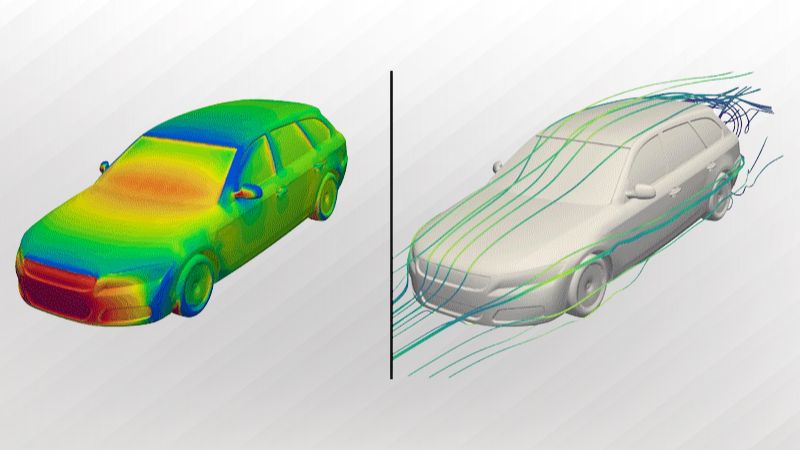
3D renderings of car design. Image used courtesy of MIT/Mohamed Elrefaie
Streamlining the Car Design Process
DrivAerNet++ comprises a collection of over 8,000 3D car designs based on the world’s most common vehicles. The simulation-based data enables precise aerodynamic analysis.
The system generates car designs using AI tools like Midjourney, OpenArt, and Recraft. Each design is 3D and provides key details, including parameters, dimensions, aerodynamic coefficients, and extensive information on airflow and surface characteristics. It also includes segmented car parts for point cloud data.
DrivAerNet++ is a rich dataset that supports several machine-learning applications, including data-driven design optimization, surrogate model training, CFD simulation acceleration, and geometric classification.
Mohamed Elrefaie, a mechanical engineering graduate student, explained that DrivAerNet++ will revolutionize AI applications in engineering. “This dataset lays the basis for the next generation of AI applications in engineering, promoting efficient design techniques, cutting R&D costs, and driving improvements toward a more sustainable automotive future,” he told MIT News.
The Goals of DrivAerNet++
This extensive dataset aims to expand current aerodynamic datasets. These datasets have limitations, such as simple 2D cases, oversimplified models that lack details for accurate analysis, and the absence of industry-standard automobile designs. These limitations limit the effectiveness of generative AI models and real-world applications.
Industry-Grade Details
DrivAerNet++ contains over 39 terabytes of publicly available data to address resource gaps. It offers diverse details to accelerate automotive design and model training by launching car designs with various configurations. Models are divided into categories: estate back, fastback, and notchback. They also include underbody types. Lastly, they offer different wheel variations, such as closed, open, detailed, and smooth. Currently, this dataset surpasses all existing ones in quantity and quality.
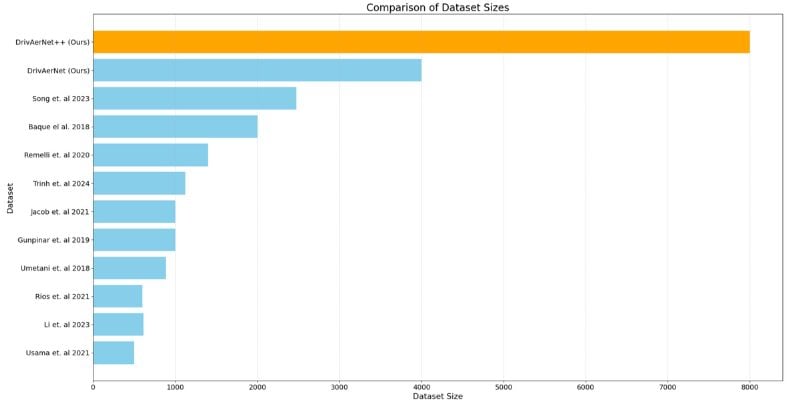
DrivAerNet++ compared to other databases. Image used courtesy of Mohamed Elrefaie
This dataset also delivers high-fidelity computational fluid dynamics (CFD) with advanced turbulence models and accurate meshes, allowing engineers and manufacturers to analyze, understand, and predict airflow around the car.
These details are crucial as companies constantly look for ways to manufacture high-performance vehicles with minimal fuel requirements. In electric vehicles, CFD simulations allow engineers to optimize motor cooling and mitigate the risk of battery thermal runaway, a potential cause of fires.
Teaching AI How to Design Cars
Ultimately, MIT engineers aim to teach AI how to design automobiles to speed up processes. More efficient automobile development will help automakers reduce significant expenses.
According to Faez Ahmed, who leads MIT’s Design Computation and Digital Engineer Lab, this dataset aims to train machine-learning models.
“Often when designing a car, the forward procedure can be so costly that manufacturers can only make minor adjustments from one version to the next,” he told MIT News. “However, if you have larger datasets where you know the performance of each design, you can train machine-learning models to iterate fast, so you are more likely to get a better design.”
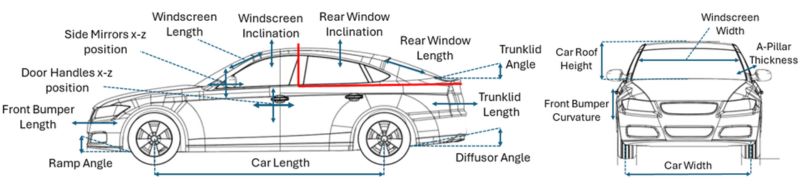
Design parameters. Image used courtesy of Mohamed Elrefaie
Sustainability Push in the Industry
Since an average car generates significant emissions, Elrefaie said that advancing technology is more important than ever. Filling the data gap on aerodynamics—crucial in designing EVs and assessing the internal combustion engine’s efficiency—can help manufacturers create more sustainable vehicles.
“This is the best time for revving car inventions, as cars are one of the biggest polluters in the world, and the faster we can reduce that contribution, the more we can support the environment,” he told MIT News.
Companies Using AI for Automotive Design
Several manufacturers are also exploring generative AI to fuel their design efforts.
Kia Global Design
Kia Global Design collaborated with Autodesk to create a tool incorporating generative AI into the concept design process. The Bridge Inspiration and Design project allows users to input design keywords and upload the initial sketch. The tool then provides similar images based on the input. The user can fine-tune and adjust parameters, such as the number of symmetries in the outputs. It’s an effective way to generate inspiration and boost the brainstorming process.
Toyota
Toyota Research Institute developed a tool to help make design and engineering processes more efficient. According to TRI, the tool combines traditional engineering with generative AI. The designer can use a text prompt to request designs based on an initial prototype in the platform.
The company claims it could also help identify potential improvements. For instance, it could enhance aerodynamics by providing early insights on reducing the drag coefficient of a new design, which is a crucial consideration for EVs.
Welcome a New Era of Automotive Design
DrivAerNet++ represents an influential leap forward in car design and development. It offers publicly available data and tools to empower designers, engineers, and manufacturers to create better options. This dataset is poised to propel a new era of sustainable and high-performing vehicles.