 Facebook
 Google
 GitHub
 Linkedin
Turning Utility Data Into Reliability Gains
Smart meters and grid-edge devices already produce plenty of data. Here's why data quality, access, and governance decide whether AI improves reliability.
Most utilities do not lack grid data. Smart meters, distributed energy resources and grid-edge devices have been generating it for years. The challenge is turning that volume of information into trusted, accessible data that teams can use to make operational decisions.

The challenge is managing data to support operational decisions. Image used courtesy of Adobe Stock
In a typical utility, the information needed to answer a single reliability question may sit across customer information, outage management, Geographic Information System (GIS), asset management, and smart meter systems. Each holds one piece of the puzzle, and most weren’t designed to work together.
This is one reason AI projects stall before delivering real value. Without a strong data foundation, utilities risk adding duplicate records, conflicting results, and more systems to maintain rather than gaining a clearer view of their operations.
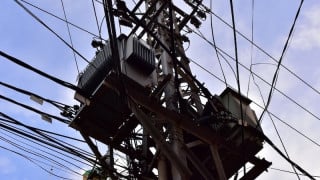
For example, one large U.S. utility company operates approximately 4.4 million smart meters. An early AI analytics initiative examined a seemingly basic question: Is each meter connected to the transformer that utility records indicate? Meters connected to the same transformer secondary share correlated voltage patterns. By comparing those patterns with existing transformer records, the utility company identified meters assigned to the wrong transformer, as well as meters missing from records entirely. The analysis recommended the correct assignments and enabled part of the correction process to be automated without requiring new hardware. The implications went beyond improving records. Accurate connectivity data shows how load is distributed across transformers and how heavily each unit is loaded, which informs reliability and asset management decisions.

Voltage patterns from smart meters helped one utility find meters assigned to the wrong transformer. Image used courtesy of CGI
What Gets Underestimated
Three elements are often underestimated as utilities move from AI experimentation to operational use: data quality, accessibility, and governance.
Data quality must be evaluated in the context of the use case. A record can be accurate enough for the purpose it was originally designed to serve and still be insufficient for an AI application. For example, an asset register that effectively supports a maintenance schedule may lack the fields needed to rank thousands of assets by failure risk.
Accessibility helps determine when and where data can be used. Even if information technically exists within the organization, accessing it might require a request, an export, or a manual join. It may not even be easily available to an engineer making weekly planning decisions.
Governance is what turns pilots into scalable programs. When questions about ownership, standards, and appropriate data use are deferred, individual AI projects can remain isolated pilots. Establishing those practices early makes it easier to implement AI across the organization later.
Rather than solving every issue for every project in a silo, utilities can create governed, reusable data products that bring trusted information together from across the business. That foundation can then support multiple applications, from equipment failure prediction to vegetation management and customer service. This is an important distinction between treating data as a byproduct of operations and managing it as a strategic asset.
From Threshold Alarms to Predictions
Most operational data is still presented through dashboards that describe what has already happened. Those dashboards have an important purpose, but they are inherently backward-looking. This problem becomes even more pronounced when different systems share conflicting information about the same asset, which forces teams to decide which data they can trust. AI gives utilities a chance to move beyond that model by helping anticipate demand spikes, spot early signs of asset degradation, and give field teams information they can act on before a problem worsens.
Demand forecasting can predict potential overloads during extreme weather and help utilities plan staffing and position resources ahead of high-load periods. Predictive asset maintenance is more complex, but early detection of degradation might let a utility replace an unplanned outage with a scheduled repair.
Agentic AI can also take this progression a step further by moving from insights people review to actions systems can execute within defined parameters. The transformer initiative described earlier began to demonstrate that progression. The model proposed corrected meter assignments, and it automated part of the correction process. Although narrow in scope, it shows how AI can move from reporting an issue to helping resolve it.
The same utility company also discovered value that was not part of the first use case. While looking for connectivity errors, its transformer models identified meters drawing load without an active account, revealing instances of energy theft and enabling operating companies to recover revenue. Later, the same underlying data helped identify homes charging electric vehicles and, when charging occurred, allowed the utility company to engage those customers about off-peak rates. Each application built on data the utility was already collecting rather than requiring new sensors.
These examples show how a targeted use case can expose gaps and build capability that informs the next initiative. In that sense, the return on knowledge can be as important as the initial return on investment.
Reaching Field Operations
The value of prediction ultimately depends on whether it changes a decision. In practice, that might mean:
- Field teams: giving a technician immediate access to maintenance history and asset information while on-site.
- Customer service: letting a representative answer an outage or billing question without transferring the customer across departments.
- Inspection: using a drone to assess hazardous infrastructure rather than sending an employee to inspect it manually.
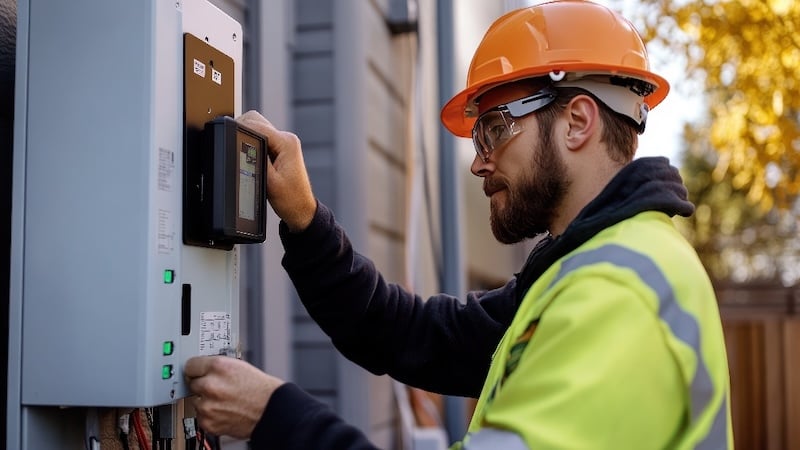
Predictions only create value when they reach the people making decisions in the field and fit into their existing workflows. Image used courtesy of Adobe Stock
Technology alone can’t produce those outcomes, though. Utilities also need to integrate AI into existing workflows and help employees understand how these capabilities affect their roles and decisions.
Governance, Controls and Literacy
As AI becomes more deeply embedded in a utility company’s operations, it must manage several distinct risks. These might include malicious use of AI capabilities, inadvertent exposure of sensitive customer data, or employees relying on AI-generated outputs without appropriate scrutiny. Utilities also have to consider the risk of moving too cautiously and overlooking problems where AI could add meaningful value.
Strong governance, data controls, and AI literacy are necessary for helping organizations manage these kinds of risks. It starts with a framework for responsible adoption. It also requires a prioritized list of safety and asset management issues where AI could improve outcomes, reviewed routinely. Once the framework is established, AI literacy allows employees to understand not only how to use AI-generated insights, but also when to question them. A ranked list of at-risk assets, for example, is only valuable if the people responsible for those assets recognize the model’s limitations and can question its conclusions.
That trust can be difficult to rebuild once it is lost. For example, if a model repeatedly sends crews to inspect assets that turn out to be functioning normally, employees may begin to discount future recommendations, including ones that matter.
Predictive models are often initially tuned to identify as many failures as possible, which can result in false positives. Field teams should understand that trade-off before they begin receiving model-generated recommendations. Utilities can then track performance over time, including the percentage of flagged assets that result in confirmed findings. Those measures give supervisors a practical way to evaluate the system and explain how AI-informed decisions are made.
For utilities, governance also plays an important role in building regulatory confidence. Utilities cannot trade transparency, cybersecurity, or reliability for speed in critical infrastructure. The utilities making real progress are therefore not simply pursuing the newest model. They are applying AI to specific business problems and building architectures and governance practices that can change alongside the technology.
Recent regulatory activity underscores that need. On July 16, 2026, the Federal Energy Regulatory Commission directed the North American Electric Reliability Corporation (NERC) to develop mandatory reliability standards covering computational loads. This category includes data centers, with the first set due December 31, 2026. NERC had also issued a Level 3 alert in May calling for action on modeling, studies, and instrumentation related to these loads. These developments increase the importance of utilities understanding and demonstrating load behavior. How difficult that becomes will depend in part on whether the underlying asset and interconnection data are trusted, accessible, and reusable.
Governance does not necessarily have to add layers of bureaucracy. At the utility described earlier, governance was incorporated into the data platform from the beginning, with clear stewardship across the business units sharing the data. Teams applying AI to new problems could work within established standards rather than seeking approval at every step. AI literacy worked similarly because business teams understood their data well enough to question model outputs when results didn’t match their existing knowledge.
Where Utilities Should Start
Building an enterprise data and AI foundation can sound like a large transformation program. In practice, utilities can begin much more narrowly:
- Identify one problem that matters to the business.
- Identify the systems that contain the information needed to address it.
- Determine whether that data is accessible and trustworthy.
- Test whether it can produce an actionable answer.
A successful application creates immediate value while establishing capabilities that can be reused elsewhere. An unsuccessful one can be equally informative if it exposes weaknesses in data quality, accessibility, or governance before the organization attempts to scale.
Utilities that repeat this process can build governance practices, workforce readiness, and a stronger data foundation through practical experience rather than planning alone. As the grid becomes more complex, that foundation will increasingly determine whether growing volumes of data translate into better reliability decisions.