Facebook
 Google
 GitHub
 Linkedin
Fleets Are Electrifying. How Can Utilities Plan for the Impact?
As companies switch to electric vehicle fleets, charging infrastructure must expand, and utilities must prepare.
As more industries and public entities adopt electric vehicle fleets, concerns grow about the power grid’s ability to handle the power demand, especially during peak loads. Utilities and industry will need to plan ahead to manage the expected surge in fleet electrification.
To proactively address power needs, Duke Energy has partnered with Electrada to create a fleet charging microgrid using renewable energy, the “first-of-its-kind” in the U.S. In another innovation, ICF has released PowerGuide, a cloud-based platform to help utilities streamline the integration of fleet charging.
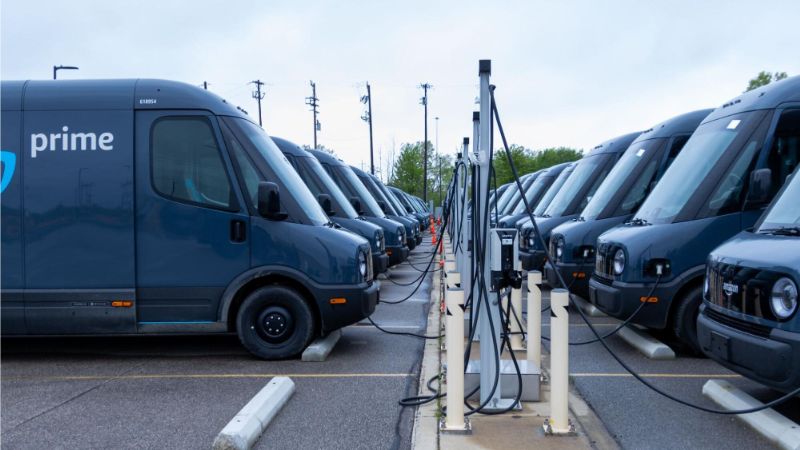
A fleet of electric delivery vehicles. Image used courtesy of Adobe Stock/Kirkam
Electric Vehicle Fleets
Companies using delivery vehicles are electrifying their fleets to save costs and meet decarbonization goals. Light-duty delivery vans have led the way. The United States Post Office has used various EVs as mail delivery cars since the 1990s. UPS has a fleet of over 1,000 electric and plug-in hybrid electric vehicles, and FedEx implemented 150 EVs in Southern California, with plans to be carbon neutral by 2040.

Mail delivery EV. Image used courtesy of USPS
School and city buses are also going electric. According to the World Resources Institute, about 5,000 electric school buses serve 254,000 students in 49 states and American territories. Chicago has 47 electric city buses. Denver, Boise, Seattle, and New York are also electrifying their bus fleets.
Electric heavy-duty vehicles, including industrial, mining, and long-haul trucks, face challenges in limited range and performance in harsh conditions. Yet, technology is advancing, encouraging many companies to integrate these EVs into their fleets. Tesla is developing a semi-truck promising 300 to 500 miles per charge and a charging time of 30 minutes for 70% capacity. Tesla states the cost of ownership will be lower than that of conventional diesel trucks.
All these vehicles have two problems in common: EV charging infrastructure is lacking, and utilities are unprepared for the challenges and opportunities fleet charging presents.
The First Fleet Microgrid
Duke Energy believes charging microgrids could be the solution to charging EV fleets. The company has built a microgrid for carbon-free charging using solar, hydrogen, and battery storage. The Duke Energy + Electrada Fleet Mobility Microgrid will assist businesses in transitioning their fleets to electric vehicles and meet sustainability goals.
The microgrid in Mount Holly, North Carolina, is designed to charge light-, medium-, and heavy-duty EV fleets. It includes six fleet charging stations ranging from 120 to 300 kW and two Level 2 chargers.
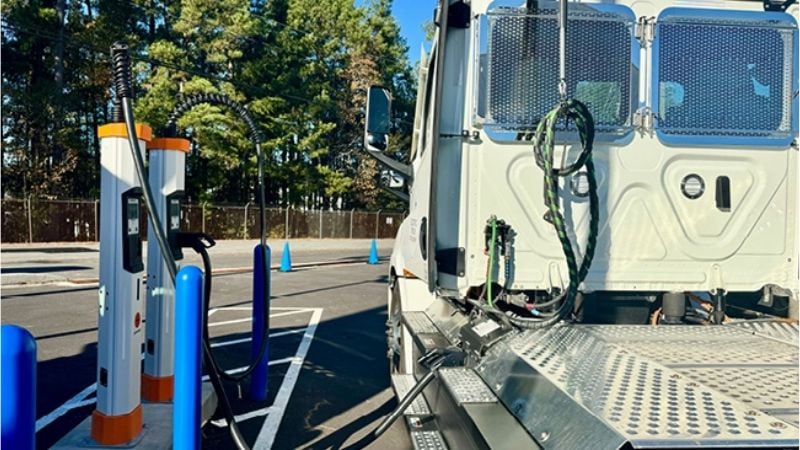
Electric truck. Image used courtesy of Duke Energy
Vehicles can charge directly from the microgrid at the Duke Energy Emerging Technology Office in Mount Holly or the Duke Energy grid. Daimler Truck North America will be one of the charging center’s first users. Its largest manufacturing facility on the East Coast is adjacent to the charging center.
The system was designed for flexibility because the North Carolina center is intended to demonstrate EV fleet charging microgrids for future ventures. Duke will study how the chargers’ performance and optimal energy management and distribution of microgrids.
Entrada provides “behind the meter” services to ensure reliability and consistency, with a 99% uptime guarantee.
Preparing for Fleet Charging Infrastructure
Transitioning to electric fleets requires hundreds of decisions about charging infrastructure and grid operations. ICF International has launched the PowerGuide cloud-based platform to help make those decisions easier.
“Utility customers are trying to navigate a complex landscape to make decisions about their fleet electrification programs,” ICF executive vice president for energy, environment, and infrastructure Anne Choate stated in a press release.
The cloud-based platform allows utilities and fleet owners to analyze and visualize data such as costs, benefits, and implementation of EV chargers. According to ICF, PowerGuide assists users in making informed decisions about vehicle costs, grid impacts, maintenance schedules, and benefits. Utilities can identify businesses and communities that could see environmental benefits and emissions reductions with electrification.
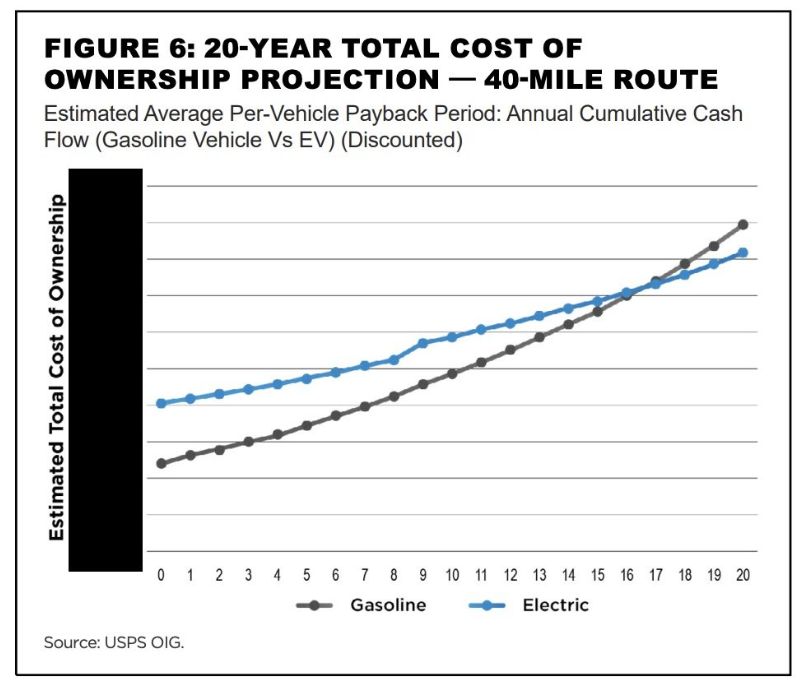
Cost of ownership over time of electric vs. gasoline vehicles. Image used courtesy of USPS
The database includes information about 200 fleets in 16 U.S. states and 600 EV makes and models. Central Hudson, a New York utility, will use PowerGuide to streamline planning and understand fleet electrification opportunities.
ICF plans to add features such as charging optimization, dynamic rate modeling, and grid or facility infrastructure upgrade analysis. It also expects to expand PowerGuide to other sectors, such as building decarbonization.