Facebook
 Google
 GitHub
 Linkedin
Soaring Success? Airborne-Wind-Energy Research Takes Off
Researchers hope studying wind and flight patterns will boost airborne-wind-energy development.
Airborne wind energy (AWE) offers a promising way to generate renewable electricity. Using kites and drones, AWE harnesses the wind at higher altitudes more efficiently and consistently than conventional windmills.
University of Bristol researchers studied optimizing drone flight patterns for maximum electricity generation. Their findings could contribute to net-zero goals and advance AWE technology toward full utilization.
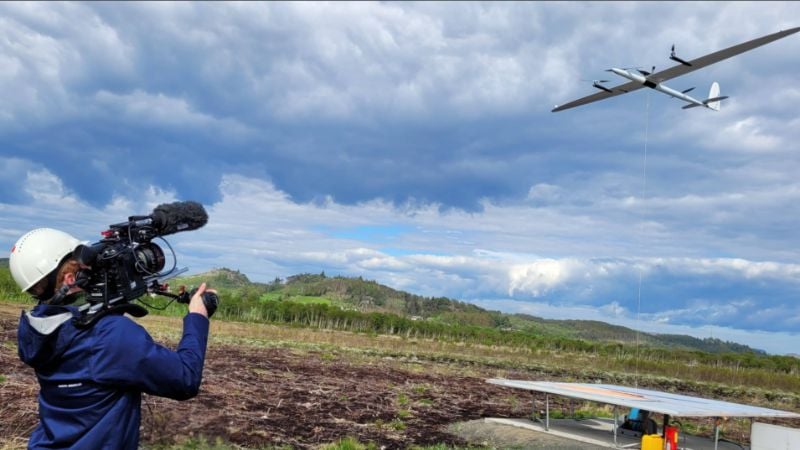
Recording a tethered wind drone flight. Image used courtesy of Kitemill
Understanding Airborne Wind Energy
High-altitude airborne wind energy offers an innovative and novel renewable energy technology.
Unlike traditional wind energy systems relying on tall ground-based or offshore wind turbines, AWE utilizes floating devices like balloons, kites, drones, and tethered wings positioned high in the atmosphere. These devices typically fly in crosswind or transverse patterns to capture the substantial wind energy available at altitudes exceeding 200 meters. At these heights, wind speeds are generally faster and more stable than near the earth's surface, enabling AWE systems to generate more consistent and potentially higher amounts of electricity.
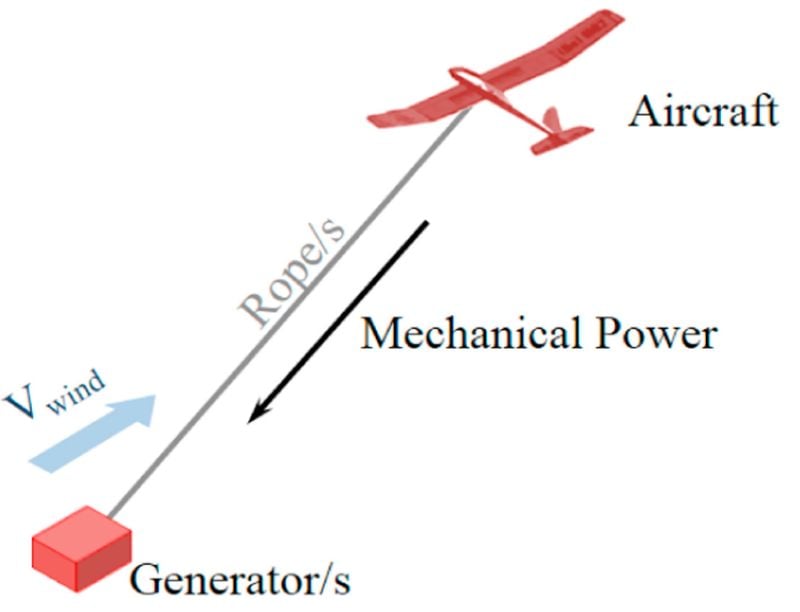
Converting wind energy to electrical power. Image used courtesy of Cherubini
AWE systems must function effectively in diverse environmental circumstances, including fluctuating wind speeds resulting from altitude-dependent wind profiles and sudden changes due to gusts and turbulence. However, the stochastic nature of unpredictable wind conditions poses challenges in developing the AWE device’s control systems. Typically, the closed-loop control system is retrospectively validated using randomly generated wind scenarios, and if the controller fails to meet all criteria, it requires either recalibration or complete redesign.
Moreover, navigating intricate flight patterns while enduring strong aerodynamic forces poses a challenge for AWEs, as even minor errors could lead to control loss and crash.
Harnessing Wind With Precision
Dr. Duc H. Nguyen, a lecturer in Flight Dynamics and Control at the University of Bristol, recently secured a £375,000 grant from the Engineering and Physical Sciences Research Council to advance research on AWE systems with drones.
These systems utilize drones tethered to ground stations to harness wind power at higher altitudes. The drone flies in crosswind patterns, causing the tether to pull against a generator on the ground. This tension drives the generator, converting mechanical energy from the wind into electrical energy, which is then transferred for use.
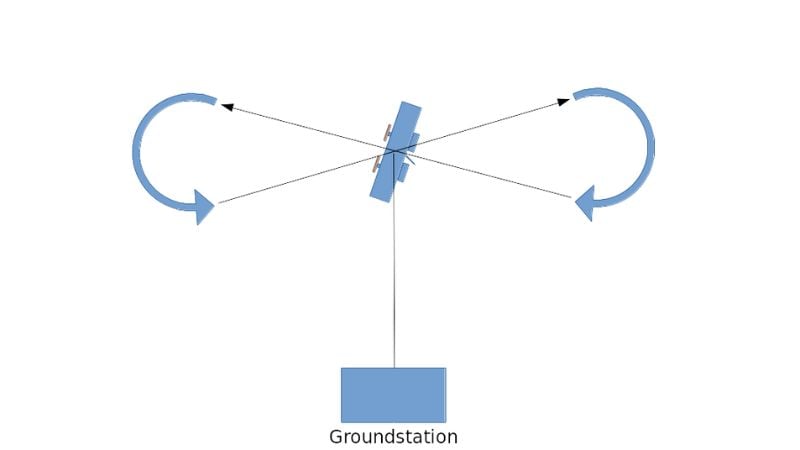
A tethered energy drone with its flight pattern. Image courtesy of Wikimedia Commons
The major challenge in developing these systems lies in the intricate flight patterns and strong aerodynamic forces AWE drones encounter. These issues could lead to instability and reduced efficiency. Researchers will address this challenge by employing bifurcation and continuation methods, which are numerical techniques traditionally used in aircraft dynamics studies.
Bifurcation and continuation methods are mathematical tools for analyzing dynamical systems under varying parameters. Bifurcation methods identify critical points where system behavior undergoes significant changes, such as spin, flutter, and oscillations. Continuation methods track solutions as flight parameters vary, offering insights into system evolution.
Future Prospects
By harnessing wind power at higher altitudes with tethered drones, AWEs have the potential to reduce carbon footprints and enhance energy flexibility and accessibility for the modern grid. While challenges remain, such as ensuring safety and optimizing performance, the University of Bristol’s collaborations with industry leaders like Kitemill and ongoing research efforts signal a bright future. With projections estimating AWEs to generate €70 billion annually by 2050, continued development and strategic partnerships will be essential for realizing this technology's full potential.