Facebook
 Google
 GitHub
 Linkedin
Securing and Scaling a Connected Grid: Communications Architecture
Modernizing the grid into a distributed, data-driven system requires secure and flexible communication networks to handle the growing complexity of connected devices.
This article was co-authored by Eric Edevold, Digi International.
Electric power systems are undergoing a structural transformation. What was once a centralized and predictable network is now a highly distributed, data-driven environment shaped by distributed energy resources (DERs), intelligent field devices, and increasingly dynamic load patterns.
As utilities modernize grid infrastructure, communications networks play an expanded role beyond basic connectivity. These systems now support secure, real-time data exchange across thousands of distributed endpoints, from substation gateways and protection relays to recloser controls and DER interconnection points, while enabling the operational intelligence needed to manage a more complex grid.
At the center of this shift is the need for communications architectures that are scalable, secure by design, and flexible enough to support diverse deployment environments, from transmission substations to edge-of-grid distribution assets.
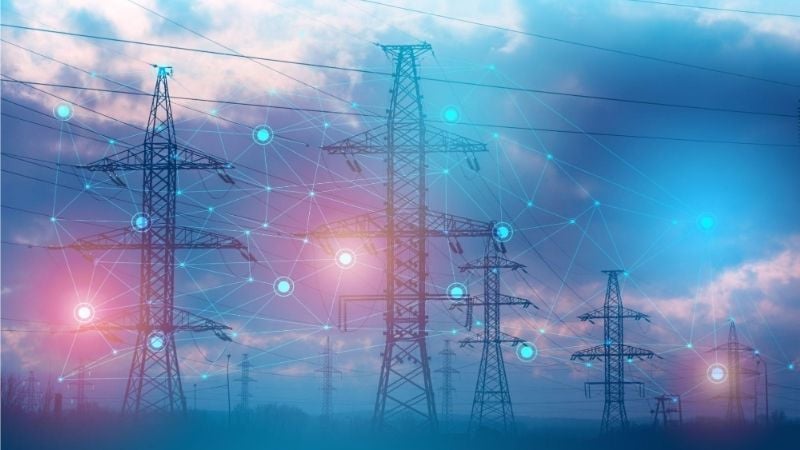
The modern power grid.
The Expanding Role of Data in Grid Operations
Utilities are collecting more operational data than in the past. Intelligent electronic devices (IEDs), line sensors, digital fault recorders, and DER assets deployed across substations, feeders, and distributed energy sites continuously generate data on power quality, equipment health, and system performance.
This data feeds into SCADA, ADMS, and DERMS platforms, enabling real-time monitoring of grid conditions, improved load balancing and forecasting and helping to identify early indicators of equipment failure. Its value, however, depends on the reliability of the communications infrastructure that carries it. Gaps in connectivity, whether at a pole-top device or within a substation LAN, can create blind spots and reduce the effectiveness of even the most advanced monitoring systems.
To support these demands, communications networks must handle high device density, maintain consistent uptime, and deliver low-latency data across geographically dispersed environments. In practice, this often involves deploying layered architectures that combine private LTE and 5G networks operating in licensed spectrum bands, public cellular networks with priority access services, RF mesh networks for distribution automation and AMI backhaul, and fiber or microwave backhaul in transmission and substation environments.
Security in a Highly Distributed Network
As the number of connected endpoints increases, so does the attack surface. Every connected endpoint—whether a substation router, capacitor bank controller, or DER gateway—represents a potential entry point that must be secured.
Utilities are responding by adopting security-first approaches that emphasize strong authentication, encryption, and secure device identity from the outset. This includes aligning with established frameworks such as NERC CIP, Zero Trust principles, and IEC 6235, and placing greater focus on trusted hardware sources and supply chain validation.
Security considerations now extend across the full lifecycle of deployed infrastructure. Grid equipment often remains in service for many years, so communications platforms must evolve to meet changing security requirements. This includes supporting IPsec and TLS encryption for wide-area communications, MACsec (IEEE 802.1AE) for high-speed Layer 2 encryption within substation LANs, and cryptographic agility to adapt to evolving standards, all of which enable security enhancements without requiring hardware replacement or large-scale field intervention.
Designing Communications Architectures for Scale
Modern grid deployments can include tens of thousands of connected devices, each of which must be provisioned, monitored, and maintained over time. Managing infrastructure at this scale requires a structured approach to communications architecture and centralized visibility across large device fleets.
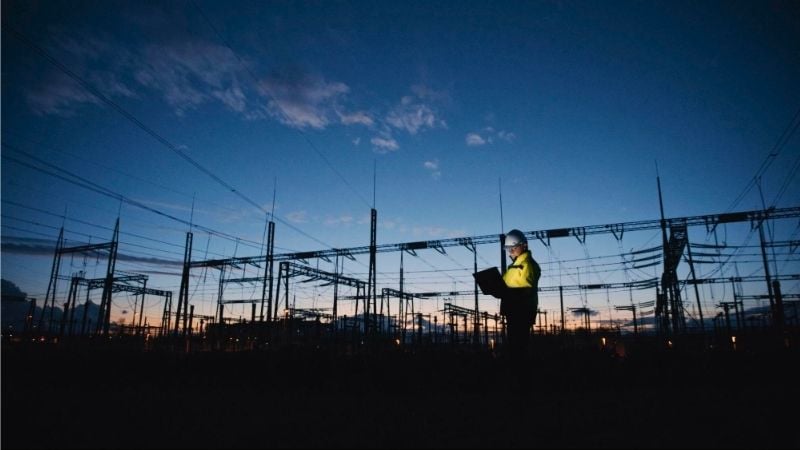
Grid communications.
Utilities are increasingly emphasizing platforms that enable devices to be remotely configured, monitored, and updated consistently. This includes the ability to push firmware and security updates over the air (OTA), monitor connectivity health across multiple carrier and private networks, and enforce consistent security policies, helping to reduce operational overhead and limit the risk of configuration inconsistencies across widely distributed assets.
Resilience is also a key consideration. Communications architectures often include multiple connectivity paths so devices can maintain communication when primary links are disrupted. This may involve primary private LTE with public cellular failover, dual-carrier cellular configurations across multiple providers, or hybrid WAN designs combining cellular, RF mesh and fiber.
At the same time, not all grid assets require the same level of connectivity. Transmission substations and critical feeders may require high-bandwidth, low-latency links with full redundancy, and MACsec-enabled Ethernet. Distribution automation devices may rely on RF mesh or private LTE, while lower-priority endpoints such as environmental sensors may use cost-optimized public cellular connections. This level of flexibility helps utilities balance reliability with cost and complexity.
There is also a growing focus on processing data closer to where it is generated. Edge-capable industrial routers and substation gateways allow faster local response to events such as faults or load fluctuations while reducing the volume of data that must be transmitted back to centralized systems.
Addressing Environmental and Operational Constraints
Communications infrastructure must perform reliably across a wide range of environmental conditions. Devices are often deployed in locations exposed to temperature extremes, moisture, dust, and other environmental stressors.
In these settings, reliability is closely tied to maintaining visibility into system conditions. Connectivity failures can limit situational awareness and delay response times.
To address this, utilities are selecting industrial routers, communication modules, and substation switches designed for harsh environments and long operational lifecycles, along with connectivity solutions that maintain performance during periods of peak demand or network stress. These deployments are expected to operate for extended periods with minimal maintenance, underscoring the importance of durability and stability at the device level.
Enabling the Next Phase of Grid Intelligence
As grid modernization continues, the ability to use data effectively is becoming a defining factor in operational performance.
Utilities are using advanced analytics and machine learning to detect anomalies, predict equipment failures, and optimize energy distribution. These capabilities rely on consistent data collection and efficient processing across large numbers of connected devices.
Edge computing is playing a larger role in this shift. By enabling data processing closer to where it is generated, edge-capable systems support faster, localized decision-making and reduce reliance on centralized infrastructure for time-sensitive operations. This also creates a foundation for introducing new capabilities over time without requiring significant changes to deployed hardware.
Building a Secure and Scalable Foundation
Grid modernization is not only about adding new technologies. It requires building a communications foundation that supports a long-term, more distributed, dynamic, and data-intensive system.
Secure, scalable connectivity supports day-to-day operations by enabling visibility across distributed infrastructure, helping protect critical systems from evolving threats, and allowing utilities to manage devices consistently across large deployments. It also supports long-term investment by providing the flexibility to adapt to changing operational requirements.
As utilities continue to navigate this transition, communications networks will remain central to enabling reliable, secure, and increasingly intelligent grid operations.
All images used courtesy of Digi International
Related Content