 Facebook
 Google
 GitHub
 Linkedin
Accelerating Market Entry With Power Supplies Certified to 61010-1
Independent IEC/EN 61010-1 approvals for power supplies can help OEMs save time, reduce cost, and minimize risk when bringing new test and measurement or laboratory environments to market.
This article is published by EEPower as part of an exclusive digital content partnership with Bodo’s Power Systems.
Step inside any test and measurement or laboratory environment, and chances are it will be filled with high-performance electronic devices that help scientists and engineers perform their daily work. Oscilloscopes, signal generators, environmental chambers, centrifuges, and spectrometers – these are all critical tools of the trade.
In more specialized environments, the scope widens to include in vitro diagnostic analyzers, incubators, sterilization equipment, and automated sample-handling systems. Whatever the equipment’s purpose, there is one common requirement: the absolute necessity for precision, reliability, and safety in operation.
Why IEC/EN 61010-1 Approvals Matter
Equipment like this depends on the supply of safe, compliant power. And that’s where IEC/EN 61010-1 comes in. This international safety standard for electrical equipment defines how such systems must be designed to ensure safe operation. It covers aspects such as electrical insulation, creepage and clearance distances, leakage current, temperature limits, fire protection, and behavior under fault or abnormal conditions.
IEC/EN 61010-1 is a comprehensive standard, running to hundreds of pages, and is widely used by OEMs to demonstrate compliance with regulatory requirements when bringing test and measurement or laboratory equipment to market. Increasingly, however, IEC/EN 61010-1 compliance is also being covered at the component level. Power supply manufacturers, for example, are now offering independently approved IEC/EN 61010-1 solutions, rather than products that are simply “designed to meet” the standard.
For OEMs, this shift in approach offers significant operational advantages. Independent IEC/EN 61010-1 approval of component parts managed in the supply chain means the OEM will be freed from certain documentation burdens and will incur lower development costs, while helping them speed up time-to-market. It can also reduce the chance of expensive redesigns or compliance issues that typically occur later in the product lifecycle.
For many OEMs who are not power supply specialists, the power supply unit (PSU) is just one product in a much broader and more complex system. Independent IEC/EN 61010-1 approval of the PSU therefore allows them to focus on their core technology and intellectual property, freeing up teams to apply their expertise in value-added areas. In short, independent IEC/EN 61010-1 approval helps OEMs save time, reduce cost, and minimize risk, allowing them to be more flexible and innovative when bringing products to market.
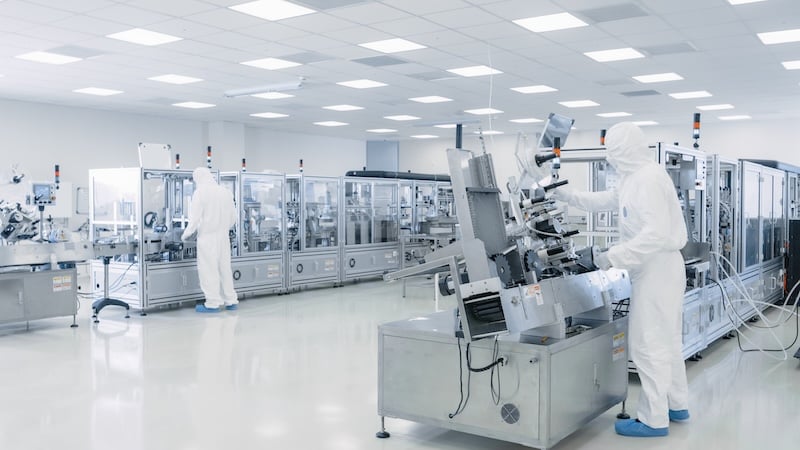
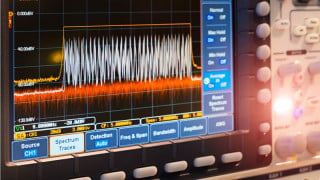
Figure 1. Modern laboratory and test environments rely on multiple electronic systems, making safe, low-noise, and compliant power supply design essential for reliable operation and user performance. Image used courtesy of Bodo’s Power Systems [PDF] and Gorodenkoff/stock.adobe.com
“Designed To Meet” Versus “Certified” or “Approved”
To understand the practical implications of this shift in approach, it is important to distinguish between the terminology “designed to meet” and “certified” or “approved”.
With “designed to meet”, the supplier is effectively claiming that the product has been developed in line with the requirements of the standard, but has not undergone independent verification through accredited laboratory testing and certification. It is, therefore, an intent-based statement, but lacking in independent proof.
By contrast, “certified” or “approved” goes much further than that. It confirms that an accredited test laboratory has tested representative sample products in accordance with the defined clauses of the standards and has issued detailed certificates and test reports. With certified PSUs, suppliers can provide reports covering dielectric strength (hipot), leakage/touch current, creepage and clearance verification, thermal performance, and flammability. These reports are recognized by test houses and can be used as supporting evidence during system-level certification.
It is important to stress that the switch from “designed to meet” to “certified” in the supply chain does not eliminate OEMs’ responsibility for compliance with IEC/EN 61010-1. While component approvals reduce the need for repeated component tests, OEMs still need to take ownership of validating the final assembly. That said, it does provide a route to lower program risk, reduced certification time and cost, and simplified procurement and regulatory acceptance.
PSU suppliers can increasingly provide certificate packs that confirm certificate scope against product conditions. This means OEMs can present the evidence to their chosen test lab to secure documented waivers. In one recent real-world example, a TDK-Lambda customer confirmed the waiver of a 52-hour high-humidity hipot test, yielding significant time and cost savings during the development process.
Early lab engagement is always recommended. Ideally, OEMs would present the certificate pack and request a written test scope showing which PSU tests will be waived. This, anecdotal evidence has revealed, is arguably the single most effective way to convert component certificates into real schedule and cost savings.
Technical Implications for PSU Selection and System Design
To realize the full benefit of an independently certified PSU, it is worth assessing how certification translates into practical design considerations. Certification defines the conditions under which the PSU has been proven to operate safely, and these conditions must be preserved within the end application. Therefore, when choosing a PSU for 61010-1 equipment, several key attributes need to be evaluated in the context of the overall system design.
At the most fundamental level, electrical safety integrity must be maintained. Certified PSUs are tested for specific insulation classifications and working voltages, including primary-to-secondary isolation. Engineers must ensure that these ratings align with the requirements of the end equipment and that system-level design, including PCB layout, mechanical spacing, and enclosure design, does not compromise critical creepage and clearance distances required for safe operation.
System-level electrical behavior is equally important. While a PSU may meet leakage or touch current limits under test conditions, these values can change once integrated into a complete system. Additional conduction paths through the chassis, interconnections, or multiple circuits can increase overall leakage. As a result, verification must be carried out at the final assembly level, alongside proper implementation of earth bonding and continuity for accessible metal parts.
Thermal performance is another key parameter. PSU certification is typically based on defined ambient temperatures and cooling conditions, such as specific airflow levels. If the PSU relies on system-level cooling, for example, through forced airflow from chassis fans, OEMs must ensure that these conditions are replicated in the final design. Any deviation may impact both safety margins and long-term reliability.
Mechanical integration also plays a role in maintaining compliance. Certified PSUs may be approved only for certain mounting orientations or require specific spacers, clearances, or insulating materials. These installation requirements must be followed precisely, as changes in positioning or mounting can affect thermal behavior, insulation distances, and overall safety performance. In addition, where PSU functionality, such as fan control or protection features, is influenced by system firmware, this behavior must be considered during safety and functional testing.
Ultimately, IEC/EN 61010-1 compliance is a system-level outcome. Decisions made in electrical, mechanical, and thermal design, as well as areas such as EMC or enclosure sealing, can all influence safety performance. Close coordination across disciplines is therefore essential to ensure that the conditions defined by PSU certification are maintained throughout the final product.
The Modular MU Series: A Practical Example
Having established that independent IEC/EN 61010-1 approvals for PSUs are a decisive advantage for OEMs building measurement, laboratory, and life science equipment, it is worth taking a closer look at a practical example of a next-generation product that has been designed accordingly.
TDKLambda’s MU series power supply certification provides documented evidence of reinforced insulation, validated working voltages, and measured leakage/touch current (normal and single-fault, where applicable). It also covers creepage and clearance verifications, temperature rise tests under defined conditions, and flammability ratings and material declarations.
Because the MU series is modular – offering selectable output voltages, multiple output rails, optional control interfaces, and configurable mounting/airflow – designers can tailor the unit to system power, thermal and mechanical constraints without starting from scratch. When those modular configurations are delivered with 61010-1 test reports and certificates, much of the component-level safety evidence is already available for the technical file. That reduces redundant lab testing, lowers redesign risk, simplifies multiregion approvals, and speeds time to market, while still allowing the OEM to optimize performance, space, and cost for their specific application.
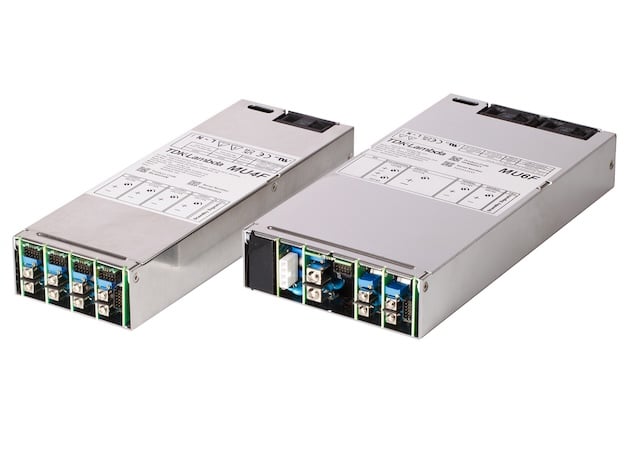
Figure 2. The IEC/EN 61010-1-certified MU4 and MU6 models. Image used courtesy of Bodo’s Power Systems [PDF]
Independently Certified PSUs
In conclusion, a PSU independently certified to IEC/EN 61010-1 can provide third-party evidence for key parameters that test houses commonly accept as component-level proof. For measurement, laboratory, and life science equipment manufacturers, it has been shown to reduce engineering hours through fewer iterations, resulting in fewer test cycles and faster lab acceptance.
It also delivers operational savings, with fewer expedites and better schedule predictability, along with reduced warranty/recall risk. Using certified components lowers the risk of field safety incidents stemming from PSU integration errors. Ultimately, it presents an effective means of reducing certification burden, lowering integration risk, and cutting time-to-market.
This article originally appeared in Bodo’s Power Systems [PDF] magazine.